Who Pays for Africa's Wildlife?

Key Takeaways
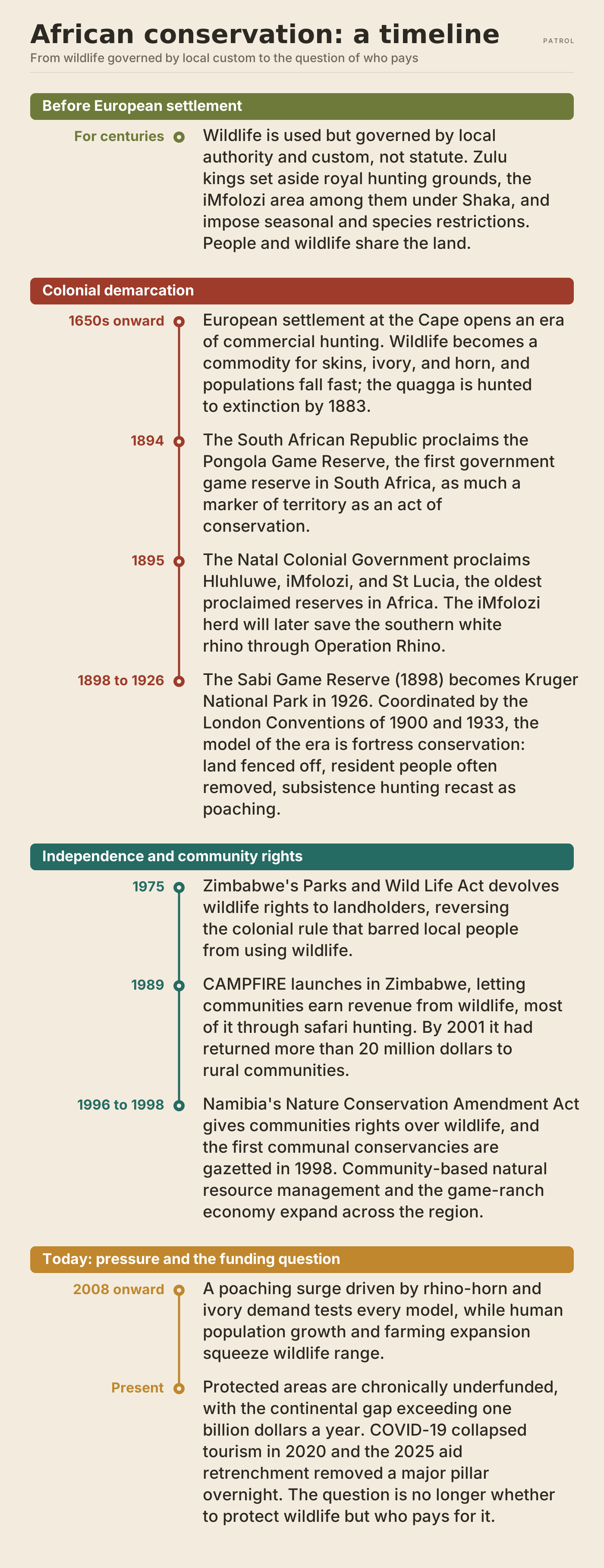
- African conservation is chronically underfunded: available money meets only 10 to 20 percent of needs, with an annual gap exceeding one billion dollars.
- Funding flows from seven distinct streams, sorted by origin and by whether it is earned, granted, or market-generated, each with its own reliability and risk.
- Diversity determines survival: when USAID collapsed in 2025, aid-dependent projects stopped overnight, while those with diversified private funding barely felt the impact.
- Earned revenue does the heavy lifting: safari hunting and game ranching sustain roughly 90 percent of the continent that photographic tourism cannot reach.
- Newer tools like carbon credits and debt-for-nature swaps promise scale but carry the heaviest governance risk, from suspended Kenyan projects to over-issued Zimbabwean credits.
There is little doubt that conservation in Africa is woefully underfunded. A revealing IUCN assessment found that available conservation funding across the continent meets only 10 to 20 percent of needs.
This funding comes from a small number of distinct sources, each with its own rationale, reliability, and values, but it is both inadequate and unevenly distributed.
Categorizing income streams by origin (domestic or international) and by whether they are earned, granted, or generated in the market is critical for pinpointing limitations.
There are essentially seven categories:
- Domestic public finance
- Self-generated revenue
- International public finance
- International private finance
- Domestic private and commercial finance
- Market-based mechanisms
- Structured and blended finance
1. Domestic public finance
African government allocations to wildlife authorities.
The Kenya Wildlife Service, Tanzania's TANAPA and TAWA, Zimbabwe's parks authority, etc., are funded from national treasuries.
Many African governments spend a larger share of their economic resources on their protected area networks than other countries do, yet the amounts remain entirely inadequate.
Environmental and conservation issues are right at the bottom of the totem pole when compared to more pressing concerns such as health, education, and housing.
There is also the ever-pervasive scourge, corruption.
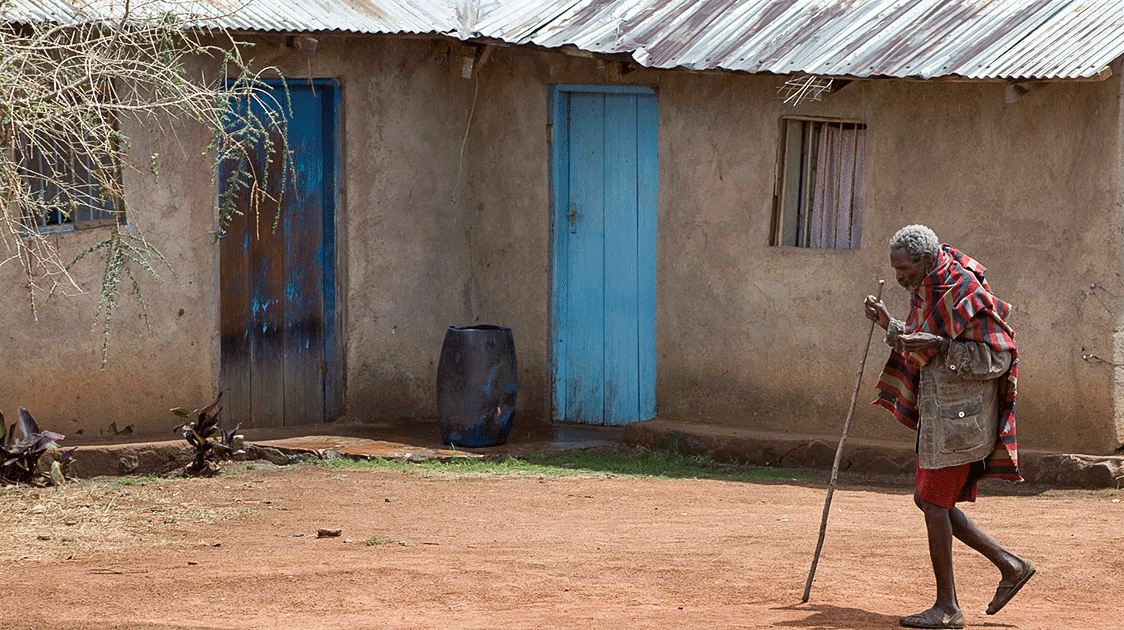
The most-cited savanna study, Lindsey and colleagues in PNAS, estimated that areas holding lions need between USD 1,000 and 2,000 per square kilometer each year to function, against a continental shortfall exceeding USD one billion annually.
In Zambia, an earlier analysis found that its wildlife authority was operating at USD 20-60 per square kilometer against a requirement of USD 358-455.
Some authorities in Africa are semi-autonomous parastatals and are allowed to retain revenue they earn, which blurs the line with the next category.
Domestic public finance is the most stable source in principle, but the weakest in practice.
2. Self-generated revenue
The money the protected areas earn.
Photographic tourism supplies gate fees, concession and lease fees, and bed levies, but it is heavily concentrated in a handful of flagship destinations, constituting a fraction of Africa’s 8,600+ protected and conserved areas
COVID-19 exposed a crippling overreliance on tourism as the primary source of income for many parks.
Safari hunting generates concession fees, quotas, and the community wildlife areas built around them, and operates on land unsuitable for photographic tourism, which is most of the continent.
The IUCN and Conservation Capital review of Eastern and Southern Africa identifies self-generated revenue, particularly from nature-based tourism fees and the sustainable use of wildlife through hunting and wildlife ranching, as the principal market-based financing categories for protected areas, while noting they are inadequate on their own to close the gap.
A distinct subset falls within this category: community-based natural resource management (CBNRM), in which wildlife user rights are devolved to communities.
They retain wildlife revenue from tourism joint ventures and safari hunting rather than passing it to the central government.
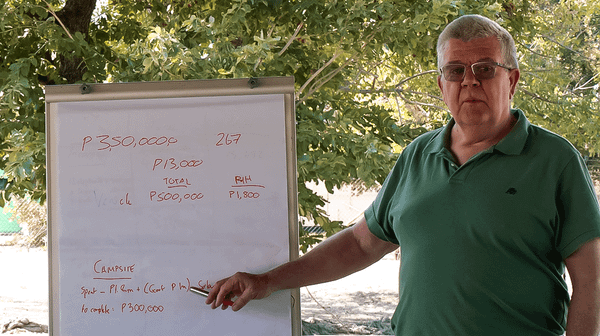
Zimbabwe's CAMPFIRE program, initially supported by USAID, generated nearly USD 30 million for participating Rural District Councils between 1989 and 2006, with approximately 90% of that income derived from leasing sport-hunting rights to commercial safari operators, according to Russell Taylor's landmark 2009 study, Community-Based Natural Resource Management in Zimbabwe: The Experience of CAMPFIRE.
More recent data published by CAMPFIRE show that the program generated a further USD11.9 million between 2009 and 2016, although annual revenues declined after 2013 because of Zimbabwe's economic challenges and reduced demand following restrictions on elephant trophy imports into the United States.

Namibia's network of 86 communal conservancies, together with community forests and other community-managed natural resource areas, contributes to one of the world's largest community conservation landscapes, with almost half of the country now under some form of conservation management.
Safari hunting has proved more resilient than photographic tourism through shocks such as COVID-19.
3. International public finance
Donor government money is delivered bilaterally or through multilateral institutions.
Bilaterals include the former USAID, Germany's KfW and GIZ, France's AFD, the European Union, and the Nordic agencies.
Multilaterals include the World Bank, the Global Environment Facility, and newer climate and biodiversity windows such as the Green Climate Fund and the Global Biodiversity Framework Fund.
The scale is significant: in 2023, USAID alone provided USD 375 million to biodiversity programs, with USD 146 million going to Africa, more than any other continent.
The abrupt shutdown of USAID in 2025 cut ranger salaries and forced reserves to reduce patrols across Africa, with Kenya's conservancies losing an expected USD 13 million for the year.
Other bilateral channels continue, among them the UK's Biodiversity Challenge Funds, the Darwin Initiative, and the Illegal Wildlife Trade Challenge Fund, which help underwrite wildlife-crime work across the continent.
The traceable footprint of this category runs deep: donor contributions to standing endowments such as Mozambique's, 38 percent from KfW and 22 percent from the World Bank and GEF, show how far public money reaches even into structures designed to outlast it.
4. International private finance
Non-governmental money raised and spent across borders has three sub-streams.
Conservation NGOs act as both fundraisers and implementers, among them WWF, the Wildlife Conservation Society, Fauna and Flora, The Nature Conservancy, and the African Wildlife Foundation.
The Frankfurt Zoological Society is one of the oldest implementers on the continent, co-implementing with Tanzania's national parks authority across the Serengeti ecosystem, and is unusual in that it also holds its own endowment of more than 60 million euros.
There is also a delegated-management variant, in which organizations take over the operation of state parks under long-term agreements.
African Parks is the best-known model.
Peace Parks Foundation co-manages eight protected areas across roughly 60,000 square kilometers and anchors Southern Africa's transfrontier conservation areas, and FZS co-manages Gonarezhou National Park in Zimbabwe through a joint trust with the parks authority.
The second sub-stream is foundations and high-net-worth philanthropy, including the Wyss Foundation, the Bezos Earth Fund, and family trusts. This pool is partly bridging the aid gap.
Organizations built on diverse private funding rather than a single government source weathered the USAID cuts with minimal disruption, while those dependent on aid suspended work overnight.
Congress has also created a US Foundation for International Conservation that adds one dollar for every two raised privately.
Philanthropy is more flexible than bilateral aid, moving quickly and with fewer strings, which is part of why it absorbed some of the shock.
But it is less predictable, arriving in irregular contributions rather than steady tranches, and more donor-directed, following a funder's chosen species or park rather than the places of greatest need.
The third sub-stream is the hunting community, routinely left out of conservation-finance taxonomies: dedicated foundations and the individual hunters and operators who fund projects directly.

The Safari Club International Foundation reports having provided more than 80 million dollars to conservation since 2000, working across more than a dozen African countries.
It also convenes the annual African Wildlife Consultative Forum with range-state wildlife authorities, communities, researchers, and stakeholders, a policy platform that has run since 2001.
The Dallas Safari Club Foundation has channeled more than USD 5 million to projects over five years for anti-poaching, habitat, and human-wildlife conflict work.
Conservation Force, founded in 1997, is as much the legal and policy engine of this stream as a grant maker, litigating trophy-import and species-listing decisions while funding and administering field programs, among them the Robin Hurt Wildlife Foundation's community and anti-poaching work in Tanzania.
Beyond the foundations, individual hunters and safari operators fund ranger salaries, equipment, and patrols directly, such as Mozambique's Coutada 11, a contribution that rarely appears in any total.
These philanthropic flows are self-reported and modest against the continental gap, but they are catalytic and targeted, concentrating on the hunting-viable landscapes that sit outside the photographic-tourism and large-NGO footprint.
The much larger commercial hunting economy sits apart from this. That earned revenue is counted under domestic private finance.
5. Domestic private and commercial finance
Private landowners and companies fund conservation from their own operations.
The largest example is the game ranching economy of South Africa and Namibia.
South Africa has between 9,000 and 10,000 commercial game ranches covering more than 17 million hectares, about 14 percent of the country's land area, a sector that has grown into a multi-billion-rand industry surpassing dairy and sugar.
A 2025 peer-reviewed study put the contribution of hunting tourism, trophy, and domestic biltong hunting combined to South Africa's economy at USD 2.5 billion a year, supporting roughly 95,000 jobs, the earned counterpart to the hunter philanthropy in stream four.
Because private land conservation must be financially self-sustaining, it generates income through hunting, live sales, game meat, and tourism, and it employs more people per hectare than livestock farming on marginal land.
Its conservation weight is real: by 2024, roughly two-thirds of South Africa's white rhino were in private hands, up from about 57 percent in 2020, a shift driven as much by the collapse of state herds as by private growth.
6. Market-based mechanisms
Revenue from selling an environmental service rather than a tourism or hunting experience.
Carbon is by far the largest, spanning REDD+ and avoided-deforestation credits, soil carbon, and biochar.
Global REDD+ transactions were worth on the order of 1.3 billion dollars in 2021. The category also carries the heaviest governance risk.
Kenya's Northern Kenya Rangelands Carbon Project, which sold soil-carbon credits to Meta, Netflix, and NatWest across 1.9 million hectares, was suspended by Verra in 2023 after a report questioned its additionality and methodology, and a Kenyan court later found two of its conservancies unconstitutionally established.
Human-rights groups have documented restricted land access and abuses tied to the same model.
Zimbabwe's Kariba REDD+ project, once one of the largest in the world, follows a similar storyline.

It raised more than 100 million dollars from buyers including Volkswagen, Gucci, and Nestle, its developer, South Pole terminated its role in 2023, and a two-year Verra review found that 57 percent of its roughly 27 million credits had been issued in excess.
Biodiversity credits remain embryonic, and payments for ecosystem services, mostly watershed and catchment schemes, stay small-scale.
7. Structured and blended finance
Financial structures that take money from the above-mentioned streams and lock it into a lasting form, converting one-off grants, donations, and revenue into predictable, income-generating capital rather than spending it directly.
Mozambique's BIOFUND, part of the Conservation Finance Alliance network, had built an endowment of roughly USD 60 million by the end of 2024 and now frames financial resilience as a condition for withstanding instability in international funding.
Environmental funds raise capital as endowment, sinking, and revolving funds.
Debt-for-nature swaps restructure sovereign debt against conservation commitments: Gabon's 2023 deal refinanced USD 500 million and is expected to generate about USD 163 million for conservation over 15 years, the largest such deal in mainland Africa, following the Seychelles blue bond that pioneered the structure in 2018.
These instruments draw scrutiny too, with analysts flagging high transaction costs and the risk of bluewashing due to weak oversight.
Two newer instrument types push this category further.
Outcome-based bonds tie investor returns to conservation results: the World Bank's Wildlife Conservation Bond, the USD 150 million rhino bond maturing in 2027, funds black rhino protection at Addo and Great Fish River, and pays investors only if the population grows, with the success payment underwritten by the Global Environment Facility.
Permanent-finance vehicles aim to end the annual-grant cycle altogether.
The KfW-backed Legacy Landscapes Fund guarantees USD one million a year for at least fifteen years to each of a planned thirty-plus parks, North Luangwa among them, each matched by a private co-funder.
And at COP30 in late 2025, the Tropical Forest Forever Facility launched with more than USD 6.7 billion pledged, a results-based mechanism to pay forest nations, including those of the Congo Basin, for keeping forests standing.
Both are permanent models that conservation needs as aid recedes, but neither has been proven at scale.
No single lifeline
No single stream keeps African conservation afloat, and none is close to sufficient on its own.
The seven work as an uneven, overlapping patchwork, some stable but underfunded, some lucrative but fragile, some promising but unproven.
The 2025 aid shock made the lesson plain: the projects that survive are the ones that never depended on one source.
The question is no longer whether wildlife is worth protecting, but who pays to protect it and how conservation holds its ground as a land use in the face of growing human needs.