Clicks That Kill: Meta's Algorithm of Extinction
By Dr. Daniel Stiles
Key Takeaways
- The report “Clicks That Kill ”documents hundreds of accounts across dozens of countries openly trading live tigers, great apes, elephants, rhinos, and pangolins on Facebook and Instagram. A parallel ECO-SOLVE study logged nearly 22,000 ad posts for over 266,000 wildlife products in under two years.
- Meta's systems connect traffickers to each other, suggest them as "People You May Know," and steer users toward more trafficker accounts. Meta does not just host this market, it amplifies it.
- Its monetization programs reward high-volume posting and take a cut. The report finds circumstantial evidence that traffickers are enrolled, meaning Meta could be profiting from wildlife crime.
- Meta cut its fact-checkers in 2025 and is replacing human moderators with AI. Suspended accounts reappear within 24 hours, leaving enforcement a game of whack-a-mole.
- With over US$200 billion in 2025 revenue tied to engagement, the report argues Meta tolerates the trade because stopping it would hurt profit, while its Section 230 legal shield may be cracking.
"Meta's platforms have become a one-stop shop for wildlife criminals. The algorithms don't just allow this trade — they fuel it. Meta can and must halt this illegal business now and be held accountable. Meta must now help reverse the damage from this illegal trade." - Steven Galster, Founder, Freeland
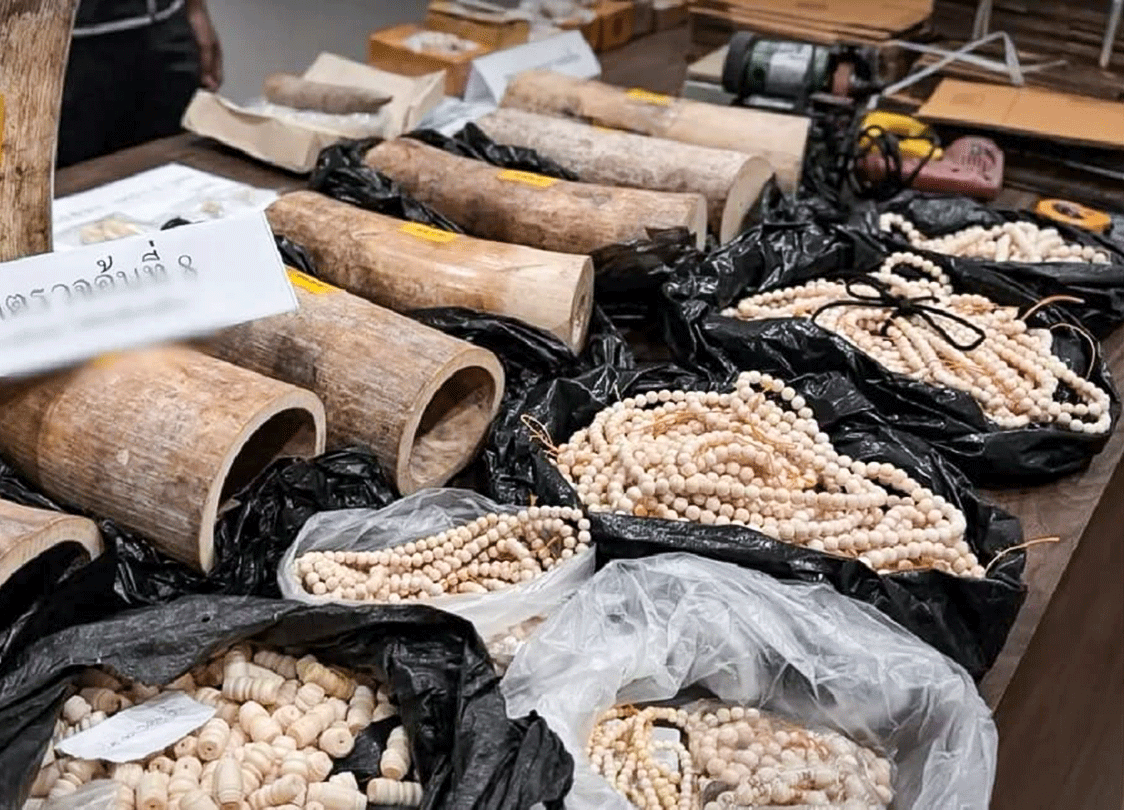
A landmark investigative report released by a coalition of international conservation organizations provides damning evidence that Meta — the parent company of Facebook, Instagram, WhatsApp, and Messenger — hosts the largest known illegal wildlife marketplace in the world. The report, titled Clicks That Kill: Meta's Algorithm of Extinction, documents how Meta's own algorithms and monetization programs are not only failing to stop wildlife trafficking — they are actively promoting and amplifying it.
The report was produced by Freeland, PEGAS (Project to End Great Ape Slavery), International Wildlife Trust, Education for Nature Vietnam, and Liberia Chimpanzee Rescue & Protection.
Wildlife trafficking on Meta platforms has been known for many years, but the scale of the trade has not been appreciated before this report and another one by ECO-SOLVE released just before it. The ECO-SOLVE report detected 21,904 advertisement posts on Facebook alone for 266,535 wildlife products between April 14, 2024, and March 1, 2026.
Many of the live-animal and product posts feature African species. Meta forms the largest black-market bazaar in which African species are illegally funneled to the world, contributing significantly to biodiversity loss and the severe loss of ‘wildlife power’ that drives essential ecosystem functions, as Patrol reported earlier in 2026.
Key Findings
Meta hosts the world's largest illegal wildlife black market.
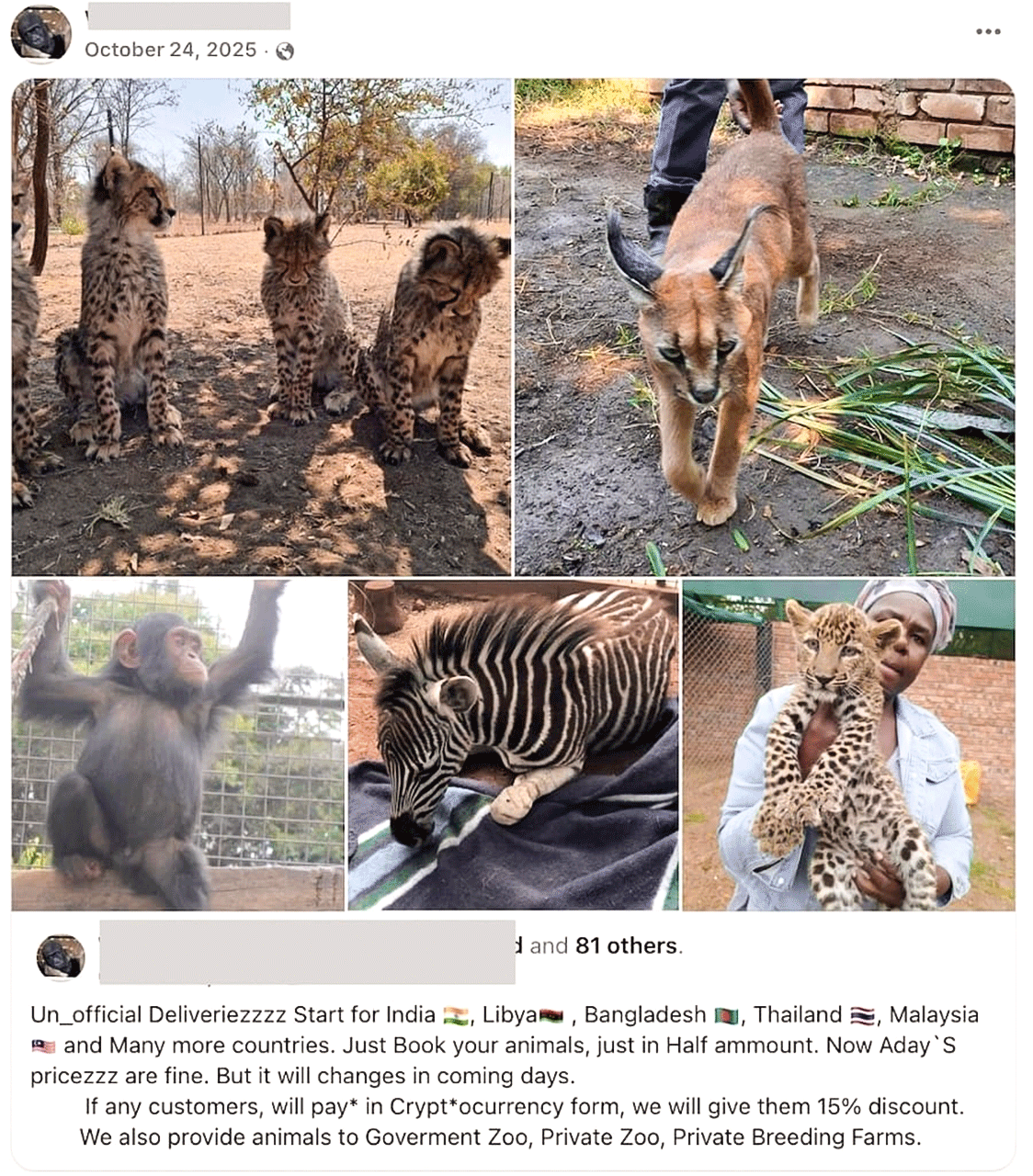
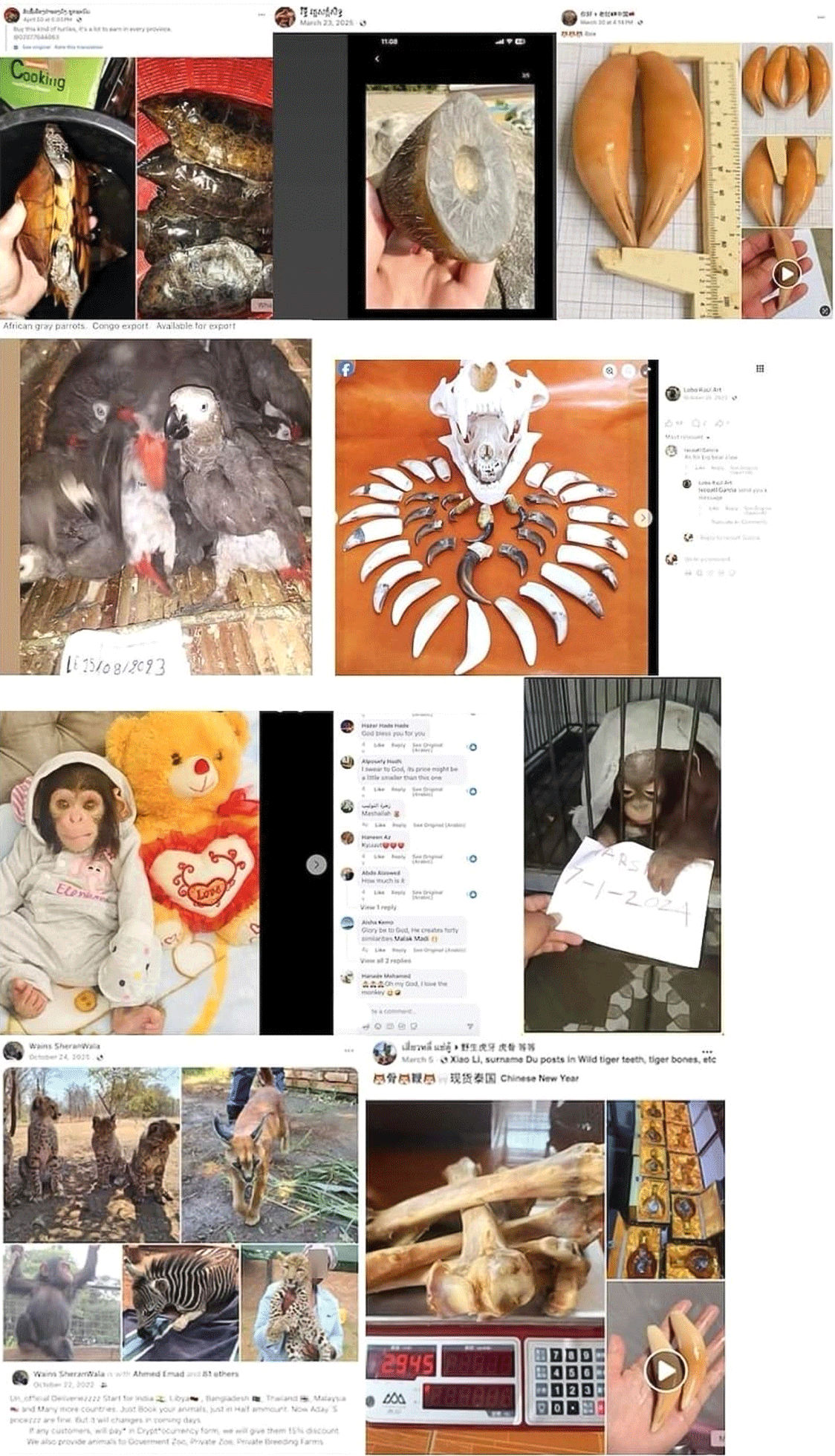
The researchers documented hundreds of accounts from dozens of countries openly trading live tigers, orangutans, chimpanzees, gorillas, elephants, rhinos, pangolins, and scores of other CITES-listed endangered species — and their bones, skins, meat, and organs — on Facebook and Instagram.
Meta ignores its own regulations and laws. These wildlife trade posts, in most cases, not only contravene Meta’s own Community Standards and Commerce Policies but are also illegal under national laws and CITES regulations.
Meta's algorithms actively connect and reward wildlife traffickers.
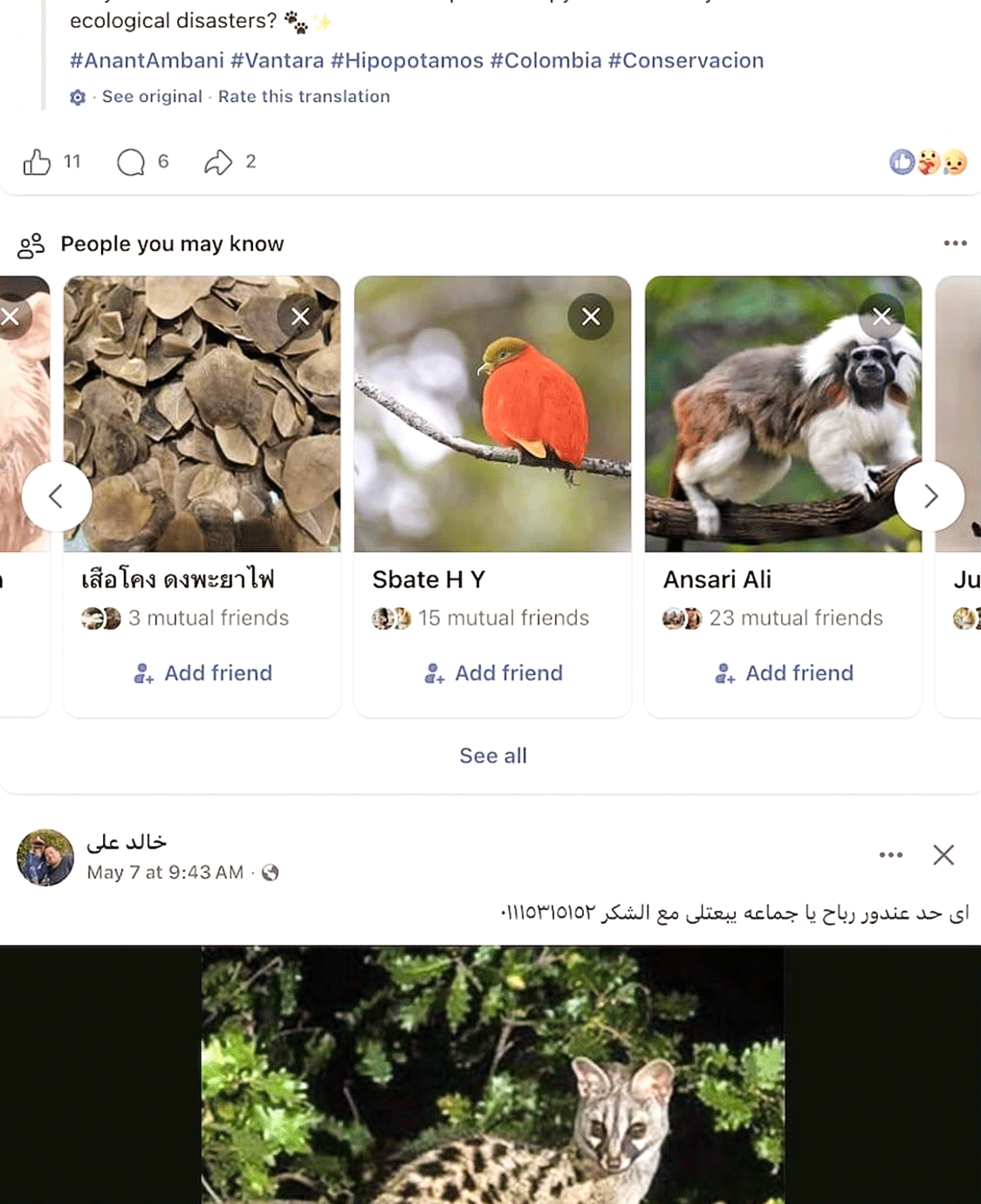
The report presents evidence that Meta's recommendation algorithms direct users scrolling through wildlife content toward other wildlife-trafficker accounts, suggest wildlife criminals as "People You May Know," and place commercial advertisements directly on trafficker profiles.
Meta may be paying wildlife traffickers.
Through its Content Monetization programs — including In-Stream Ads, Facebook Stars, and Creator Subscriptions — Meta is financially incentivizing content creators to maximize post volume.
The report finds circumstantial evidence that wildlife traffickers are enrolled in Content Monetization programs, meaning Meta is potentially paying them to traffic endangered species. Meta takes a cut of the subscription income from services that creators set up themselves.
Meta has dismantled its own enforcement capacity.
In January 2025, Meta eliminated its independent fact-checkers. In March 2026, it announced the phaseout of human content moderators in favor of Artificial Intelligence.
The report documents that despite Meta's stated Community Standards prohibiting wildlife trade, warnings issued to trafficking accounts are routinely ignored — and traffickers whose accounts are suspended typically resume business on a new account within 24 hours.
Meta's legal shield is wearing thin.
Meta has relied on the U.S. Communications Decency Act Section 230 (CDA 230) to claim immunity from liability for third-party content.
The report argues that Meta's algorithmic promotion of traffickers, the high potential that it is monetizing trafficking content, and its guidance to content creators on maximizing engagement may constitute content creation — not mere hosting — eroding its CDA 230 protections. Furthermore, CDA 230 provides no protection under the laws of most other countries where Meta operates.
The public health stakes are real.
The unrestricted cross-border trade in wild animals without veterinary screening creates conditions for zoonotic disease spillover. COVID-19, most likely originating from the unregulated wildlife trade, is cited as the clearest recent warning.
Lip service
For years, Meta has been issuing pledges to eliminate wildlife trade posts from its platforms, first with IFAW and later, in 2018, after joining the Coalition to End Wildlife Trafficking Online.
Most recently, Meta was one of 11 tech companies pledging (again) to eliminate illegal wildlife listings online, this time in the context of the United for Wildlife Business Forum, convened by His Royal Highness The Prince of Wales.
The author met with Max Slackman in 2018 at the launch of the Coalition to End Wildlife Trafficking Online, who, at the time, was Facebook’s animal policies manager.
We discussed what Facebook could do beyond simply removing posts or suspending accounts, which are ineffective whack-a-mole actions.
Basically, nothing was the answer.
Meta has cutting-edge technology, increasingly bolstered by AI tools.
It can remove posts with nudity or certain prohibited words in seconds, yet posts displaying live tigers or chimpanzees, or products made of ivory or rhino horn, with text plainly offering them for sale, remain up indefinitely.
Why is Meta not taking effective action?
The answer is financial profit.
Meta raked in over US$200 billion in advertising and other revenue in 2025. Ad revenue is based on user engagement – “clicks” – the more eyes for the longest periods of time on a page attracts the most ad revenue.
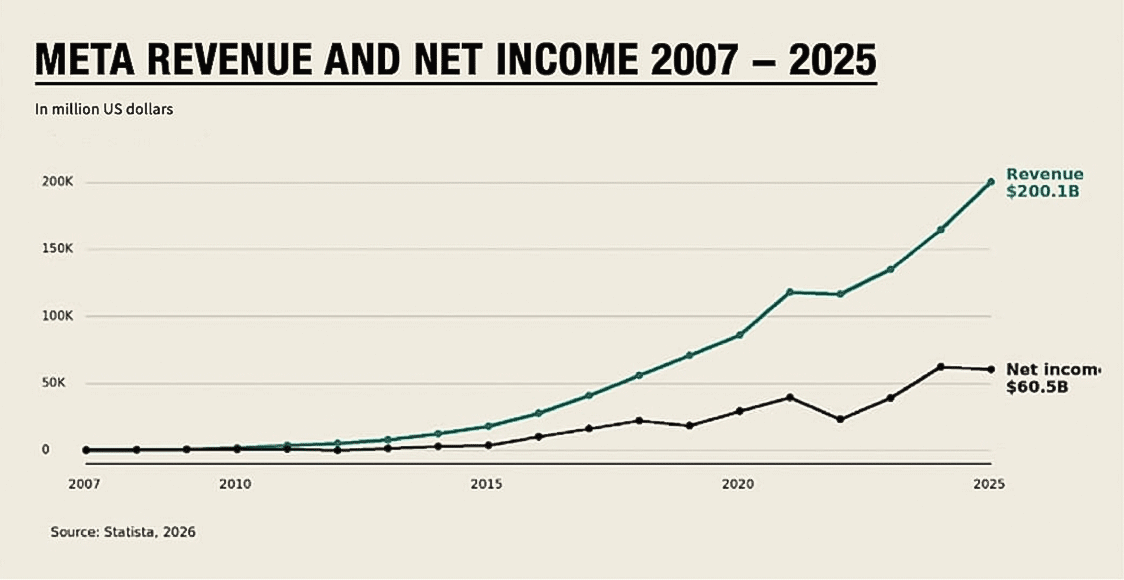
Meta has used Machiavellian tactics in bringing onboard untold thousands of users as content creators, in effect transforming them into employees.
If Meta cracked down on every type of illegal or unethical posting, it would take a significant hit to its bottom line, affecting its stock price.
This explains why Meta not only allows wildlife trafficking, but it also allows child sexual exploitation, human trafficking, drug trafficking, rage-bait posts spreading disinformation, and a host of other harmful content.
The business model demands maximum profit at all costs. Ethics or concern for ecosystem collapse – the death of Nature – do not have a column in the Meta accounting spreadsheet.
Initial reaction from Meta
AFP journalist Sara Hussein was the first to break the story about the Clicks That Kill report. AFP contacted Meta for a right-of-reply response.
Meta declined to respond to questions from AFP and pointed to policies that restrict the sale of endangered species on its platforms.
Patrol contacted the Meta person whom AFP had engaged with, described on her LinkedIn page as a Policy Communications Manager.
As with AFP, Meta has so far declined to respond to the report or answer any questions, but simply asked for account links that could be “investigated”.
These accounts will no doubt be closed by Meta, whacking more moles, who will pop up with new names quite quickly.
But the business model carries on, resulting in the world's forests and savannahs being denuded of wildlife to prop up Meta’s share price and make Mark Zuckerberg a very rich man.
Dr. Stiles started in anthropology and archaeology, researching past and present natural resource use among hunter-gatherers and pastoralists, and later moved to the UN system, working on desertification control. In 1999, he began investigating wildlife trade, producing reports and publications for UN agencies, the IUCN, TRAFFIC, and various NGOs.