The Curse of Timber Poaching in Africa
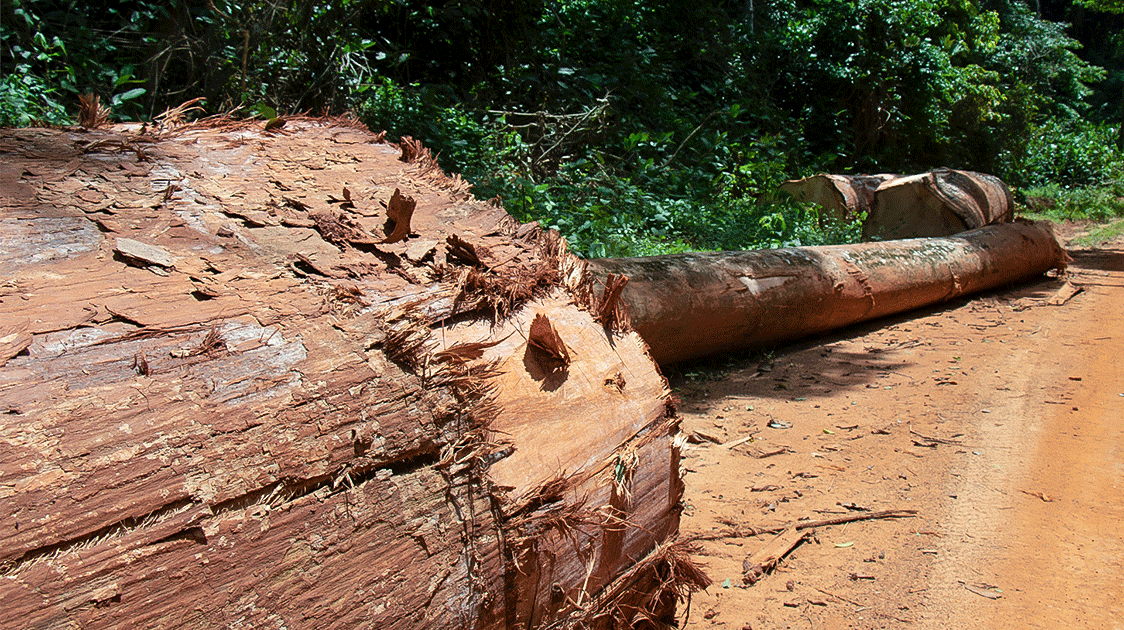
Africa loses an estimated US$17 billion per year to illegal logging. The damage is not only ecological. Illegal timber funds militias, finances cross-border trafficking networks, and bypasses the tax revenue that legitimate forestry would deliver to producer countries.
According to research compiled by the Africa Center for Strategic Studies, the share of timber harvested illegally varies sharply by country: around 50 percent in Cameroon and Equatorial Guinea, 70 percent in Gabon, and 80 percent in Liberia.
Across the continent, illegal logging and forest crime are estimated at US$30 to US$100 billion annually, or 10 to 30 percent of the entire global timber trade. In several major source countries, the illegal share is larger than the legal one.
The scale
Patrol covered the on-the-ground reality of how this works in Tackling Illegal Activities, which documents how the Lugenda Wildlife Reserve in northern Mozambique addresses charcoal production, illegal timber harvesting, wildlife poaching, and overfishing as interconnected enforcement problems rather than separate ones.
The largest single documented African case is the Cameroon-to-China rosewood flow. Investigators tracked over 1.4 million kosso logs, worth around US$300 million, that were illegally sourced from Cameroon and shipped to China via Nigeria in 2017.
That was a single trade route in a single year.
The broader picture: 26 mammal species are classified as endangered or critically endangered in Cameroon’s rainforests, much of it linked to timber-driven habitat loss.
The rosewood crisis
The dominant story in African timber crime since around 2010 is rosewood.
China’s hongmu (literally "red wood") furniture market drives demand for several distinct hardwood species sold under the same trade name.
African producers were peripheral to this market in 2008. By 2018, Africa’s share of rosewood exports to China had risen from 40 percent to 90 percent.
Three African species carry most of the trade:
• Pterocarpus erinaceus (kosso). West Africa. The primary driver of the Cameroon-Nigeria-China route. Listed on CITES Appendix II in 2017.
• Pterocarpus tinctorius (mukula). Southern and Central Africa. The dominant rosewood story in Zambia, DRC, Mozambique and Malawi.
• Dalbergia melanoxylon (African blackwood, mpingo). East Africa. Used for instruments and high-end carving.
Mukula in particular illustrates the structural problem.
Research by CIFOR documents that the Zambian government has cycled through export bans, production bans and transportation bans since around 2014, each ban round short-lived and of ambiguous legal standing.
The Environmental Investigation Agency’s 2019 Mukula Cartel report sets out how political and financial elites have used the cycle of bans as a private revenue source: licences and permits become tradable assets, and the rule cycle itself creates the rent.
Trafficking routes are fluid. When Mozambique and Angola banned log exports in 2017, traffickers shifted to Namibia.
When Zambia tightens, trade flows through the DRC and Malawi. The Durban port handles a large share of the southern outflow. The Tanzanian border carries the northern outflow from Mozambique. The trade is largely indifferent to national borders.
How the trade works
Organised timber crime operates through a chain that closely maps onto wildlife trafficking networks.
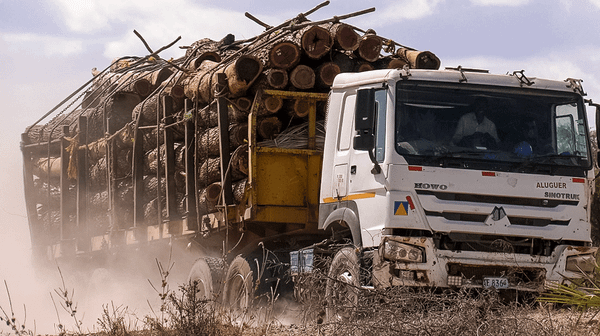
Artisanal extractors cut the trees. They are usually rural community members operating with chainsaws and limited oversight. They earn short-term income but capture a small fraction of the export value.
State-embedded actors issue documentation, look away at checkpoints, or actively facilitate movement. The CIFOR research on mukula identifies political and financial elites as the principal beneficiaries of the cycle of bans and permits.
Foreign actors finance the operation and provide market access. The Chinese buyer is the typical financier for rosewood.
Buyers often work directly with rural cutters to bypass formal channels and reduce the share captured by middlemen.
Cross-border laundering moves timber across multiple jurisdictions to obscure its origin. False species declarations are routine, particularly for look-alike species where field identification is difficult, and lab analysis is rare.
Mixing illegal and legal stock at sawmills further obscures provenance, and once timber is processed into pulp, only laboratory analysis can recover species and country of origin.
The single most consistent feature across these networks is that the rural cutter is the lowest-paid participant in a chain in which most of the value is captured by financiers, transporters, and exporters.
Connection to armed groups
Timber finances insurgencies and armed groups in several active conflict zones.
In the Central African Republic, when the Séléka rebel coalition took control in 2013-14, international timber traders paid them at least 3.4 million euros in protection fees to continue extracting and exporting.
The exporters were Western and Asian companies operating through CAR.
In the eastern Democratic Republic of the Congo, the Allied Democratic Forces and other armed groups draw operational financing from the timber trade alongside artisanal gold and charcoal.
In Senegal, the Movement of Democratic Forces of Casamance (MFDC) has sustained a low-level insurgency since 1982. MFDC operations have been financed almost entirely by illicit rosewood logging routed through The Gambia.
Mongabay’s 2014 reporting identified this pattern across the continent. It has intensified since.
Regional hotspots
Central Africa
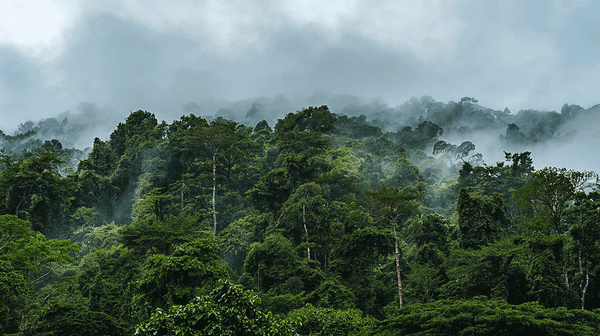
The Congo Basin carries the heaviest pressure.
Uganda is the transit hub for an estimated 80 percent of the illegal timber from DRC moving through East Africa. Cameroon, Equatorial Guinea, Gabon and Republic of Congo are all significant exporters of illegally harvested timber.
Patrol covered the Cameroon picture in The $200 Poacher vs. The $50,000 Safari Hunter and Conservation vs. Livelihoods, both Bénoué Complex stories.
West Africa
Nigeria has shifted from a source country to a major transit hub. Domestic forests are largely depleted. Most timber moving through Nigerian ports is sourced from Cameroon and re-declared.
The Gambia plays a similar role in the Casamance rosewood trade.
Southern Africa
Zambia, Mozambique, DRC and Malawi form the mukula corridor. Trafficking routes shift in response to enforcement. South Africa’s Durban port is the established export route for Zambian mukula moving south.
East Africa
Tanzania exports African blackwood (mpingo). Trafficking from northern Mozambique into Tanzania has been documented on a large scale.
Patrol’s Islands of the Gods covered the Ssese Islands case in Uganda, which shows what happens when forest pressure is concentrated on a finite area.
The EU Deforestation Regulation
The largest regulatory shift affecting African timber exports in this decade is the EU Deforestation Regulation (EUDR), formally Regulation (EU) 2023/1115.
It applies to large and medium operators from 30 December 2026, and to small and micro operators from 30 June 2027, following the European Council's adoption of a one-year postponement in December 2025.
EUDR requires that timber and six other commodities (cattle, cocoa, coffee, palm oil, rubber, soy) entering the EU come from land that was not deforested after 31 December 2020, and that operators submit due diligence statements with geolocation data for every consignment.
For African producers, the implications are large. According to White & Case analysis, Africa’s exports of EUDR-affected commodities totalled US$40.2 billion from 2021 to 2023, with 27.4 percent going to the EU.
The Commonwealth Secretariat estimates that sub-Saharan Africa risks losing up to US$11 billion in annual export revenue if producers cannot meet EUDR requirements.
The producers most exposed are smallholders. Geolocation and due diligence requirements favour large concessions and certified operations.
The regulation has been delayed twice, partly because of these capacity concerns.
Whether it ultimately reduces deforestation depends on whether African producers receive the support to comply, or whether non-compliant timber simply diverts to markets that ask fewer questions. China asks fewer questions.
Why bans don’t work alone
The Zambian mukula case is the clearest recent test of what bans achieve on their own. Multiple log export bans, multiple production bans, multiple transportation bans.
The trade continues. Three structural reasons explain why.
The Chinese market does not require compliance. As long as buyers will pay cash on delivery in Lusaka or Mansa, supply will be sourced.
Bans without alternatives raise rents. When a ban is enforceable in name only, the price of a permit (whether real or fake) rises. The cutters see the same income. The intermediaries make more.
Devolution of property rights is the only model that has reliably reduced unsustainable extraction.
Prof Brian Child’s Patrol piece on property rights and economic efficiency sets out the underlying argument.
Where forest communities have secure, long-term rights over the resource and its income, they have an incentive to manage it sustainably. Where they do not, the cutter takes the short-term cash because there is no future to invest in.
Technology
Detection technology has improved. None of it removes the need for ground-level enforcement.
Satellite monitoring platforms like Global Forest Watch deliver near-real-time deforestation alerts. The constraint is not detection, it's response capacity. An alert means nothing if there is no one to investigate within a week of the cut.
Wood identification has advanced. Stable isotope analysis and DNA-based species identification can now distinguish look-alike species and verify origin with reasonable accuracy.
The constraint is laboratory access and chain of custody.
Acoustic monitoring uses microphone arrays to detect chainsaws in protected areas, sometimes in real time. Rainforest Connection runs this technology in West and Central African forests.
Drones and AI are useful for surveillance over difficult terrain, but are limited by battery life, weather and the underlying problem that detection does not equal arrest.
Patrol covered the broader technology picture in its Tactics & Technology section.
The same constraint applies to timber as to wildlife: technology amplifies a working enforcement system. It does not substitute for one.
Frequently asked questions
How does timber poaching differ from wildlife poaching?
Timber poaching targets high-value tree species rather than animals. The supply chains, transit routes, financing structures and the criminal actors are often the same. A rosewood log and an ivory tusk can move through the same trader’s network and exit through the same port.
Which species are most targeted?
Three groups dominate. African rosewoods, including kosso (Pterocarpus erinaceus) and mukula (Pterocarpus tinctorius). African blackwood (Dalbergia melanoxylon) for instruments and high-end carving. Tropical hardwoods, including teak and mahogany substitutes.
Most of these species are slow-growing, with maturity periods measured in decades or centuries.
How is illegal timber laundered into a legal supply?
False documentation declaring illegal timber as legally harvested. Species substitution, where high-value species are declared as lower-value lookalikes.
Cross-border re-export, where timber moves through one or more countries before final shipment, so the paper trail loses the origin. Mixing illegal with legal stock at sawmills. Processing into pulp, after which species and origin can only be recovered through laboratory analysis.
Who benefits financially?
Not the cutter, mostly. The rural extractor typically earns the smallest share per cubic metre. Intermediaries, transporters, exporters and the foreign buyer capture most of the value.
Political and financial elites who control permits and licences are the largest single beneficiaries in several producer countries.
Are local communities involved?
Yes, but typically as cutters or carriers rather than as decision-makers or financiers. The community's share of revenue is small, and the long-term cost is large. The forest they relied on for non-timber products, including honey, firewood, medicinal plants, and game, is gone within a few seasons.
What is the role of Chinese demand?
Decisive. The rosewood crisis since 2010 has been driven almost entirely by Chinese demand for hongmu furniture. When Chinese buyers shifted from Southeast Asian rosewoods (after CITES listings depleted supply) to African rosewoods, the African trade scaled in under a decade.
China is now the destination for the majority of African rosewood exports.
How is timber poaching connected to armed groups?
Through protection fees, direct extraction, taxation of trade flows, and laundering of revenue. The Séléka in CAR, the ADF in eastern DRC, and the MFDC in Casamance all draw substantial financing from the trade.
In each case, timber revenue is more reliable than narcotics or arms because the extraction infrastructure is already in place.
Does the EU Deforestation Regulation fix this?
Not on its own. EUDR raises the compliance bar for timber entering the EU market and gives producers an incentive to invest in traceability.
It does not affect timber flows to China, the Middle East or domestic African markets, which together account for the majority of demand for the most threatened species. If African producers cannot meet EUDR requirements, non-compliant timber will divert to markets with weaker rules.
Where Patrol covers this
The articles below treat specific aspects of forest and timber crime in more depth.
• Tackling Illegal Activities. Charcoal, timber, poaching and overfishing in Mozambique’s Lugenda Wildlife Reserve.
• Islands of the Gods. Forest pressure on Uganda’s Ssese Islands.
• Honey for Money, But Bees Need Trees. Why standing timber matters beyond its sale value.
• The $200 Poacher vs. The $50,000 Safari Hunter. Bénoué Complex economics.
• Conservation vs. Livelihoods. Cameroon enforcement case study.
• Property Rights and Economic Efficiency. Prof Brian Child on devolved rights and sustainable use.
• How to Maintain a Game Reserve in Tanzania. The wider conservation finance picture.
• Mayo Oldiri, Anti-poaching Operations in Cameroon. On-the-ground operations.