Botswana
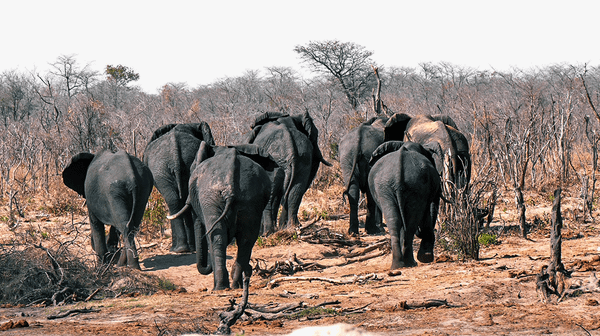
Botswana holds the largest African elephant population, estimated at around 130,000 animals, roughly a third of the continental total.
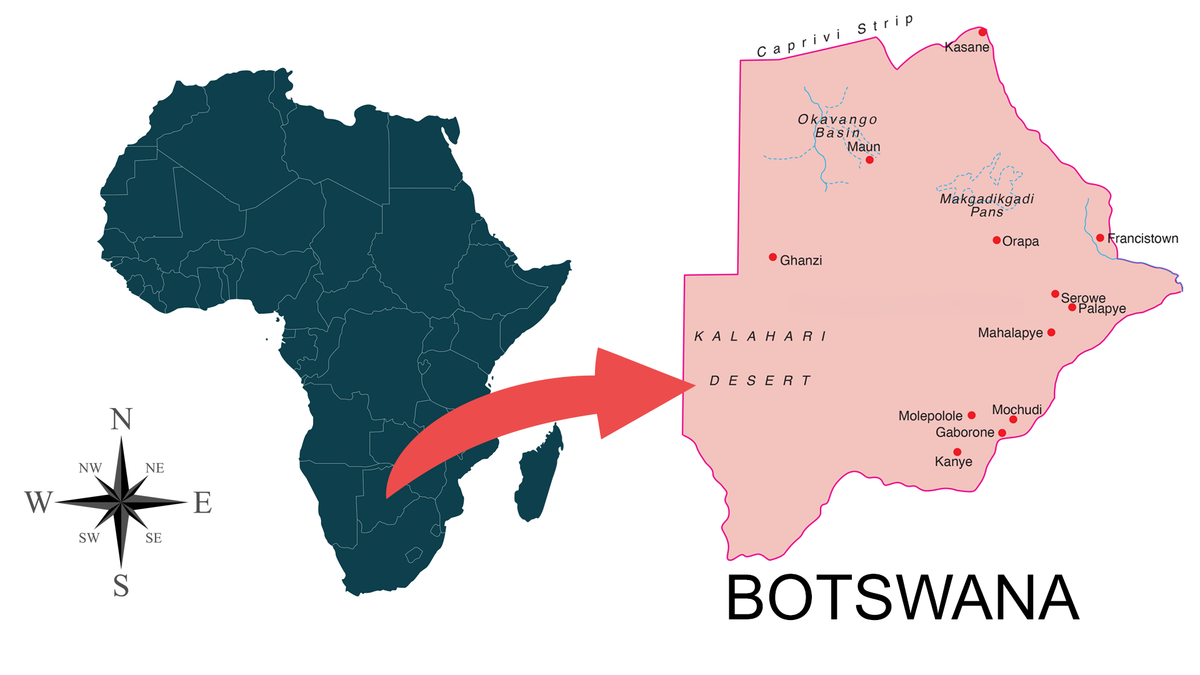
The country covers 581,730 km² and has around 38 percent of its land under wildlife management designation in some form, from full national park status to multiple-use Wildlife Management Areas.
The conservation system rests on three pillars: a stable, relatively well-funded government wildlife authority, a small but politically influential photographic tourism industry concentrated in the Okavango Delta, and a recently restored regulated hunting sector.
How conservation is organized
Department of Wildlife and National Parks (DWNP)
Botswana’s state wildlife authority. By regional comparison, DWNP is comparatively well-resourced, partly because diamond revenue gives the Botswana government fiscal capacity that most African states do not have.
Botswana Defense Force (BDF)
Botswana is the only southern African country where the regular military has a direct, mandated anti-poaching role. The BDF has historically operated alongside DWNP rangers in the Chobe, Okavango, and CKGR landscapes.
The militarized approach has produced one of the lower rates of large mammal poaching in the region, although it has also drawn periodic human rights criticism.
Photographic tourism operators
The Okavango Delta is one of the most lucrative photographic safari destinations in the world. High-end lodge operators invest significantly in anti-poaching, infrastructure, and community work.
Hunting concessions
Botswana banned trophy hunting in 2014 and lifted the ban in 2019. The hunting industry is now rebuilding. Hunting concessions in the Northern Conservation Areas (NG zones) traditionally carried much of the funding load for community conservation outside the national parks.
The post-2014 period demonstrated what happens when that revenue stream disappears: community engagement collapsed in several areas, and human-wildlife conflict rose sharply.
The major landscapes
Okavango Delta
The world’s largest inland delta, around 15,000 km² of seasonally flooded wetland in northwest Botswana.
A UNESCO World Heritage Site since 2014. Moremi Game Reserve sits at the core, with NG concessions and community trust areas surrounding it.
The delta’s waterways are the operational environment for most anti-poaching here, with poling, boat patrols, and aerial surveillance.
Chobe National Park
11,700 km² in the north, on the Chobe and Linyanti rivers.
The largest elephant concentrations in Africa are in the Chobe-Linyanti-Kwando system. Cross-border with Namibia’s Zambezi region and Zambia, Chobe is part of the KAZA Transfrontier Conservation Area, which covers 520,000 km² across five countries.
Central Kalahari Game Reserve (CKGR)
52,800 km² in the center of the country, the second-largest game reserve in the world after Selous.
A semi-arid landscape with seasonal pans and grasslands, holding desert-adapted lion, oryx, and large springbok and wildebeest populations.
The CKGR has been politically contested since the early 2000s over the relocation of Bushman (San) communities living within the reserve.
Makgadikgadi and Nxai Pans
Salt pans and surrounding grasslands in the north-central country. The Makgadikgadi system is one of the largest salt-pan complexes in the world. Wildlife use is highly seasonal, concentrated around the brief annual flush of green growth.
The Pandamatenga corridor
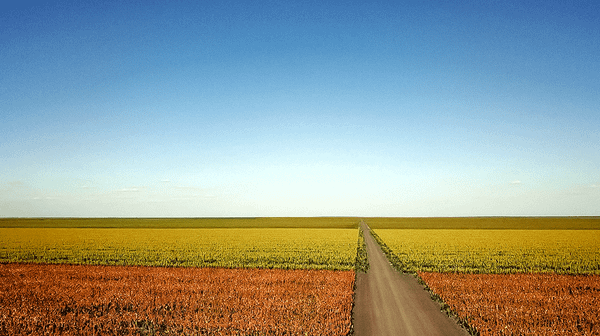
In the northeast, on the wildlife corridor between Chobe and Hwange. The Pandamatenga commercial farming area is enclosed by a 160 km electric fence built in 2002.
The project produces most of Botswana’s commercial cereal output but is located in a wildlife corridor and has been the site of significant human-wildlife conflict.
Patrol covered the project in Botswana’s Agricultural Fortress: Inside the Pandamatenga Project.
Government figures put recent human deaths from elephant attacks in the area in the tens, with over 8,000 recorded human-wildlife conflict cases in the wider Chobe District.
The main threats
Ivory poaching
Lower than in most neighboring countries because of the BDF presence and DWNP capacity. Cross-border pressure from Zambia, Zimbabwe, and Angola is the recurring feature, particularly in the Linyanti-Chobe-Kwando system.
Human-wildlife conflict
The single largest issue in Botswana conservation today. Elephant-related crop damage, lion and leopard predation on livestock, and elephant-related human deaths are all rising, particularly along the Pandamatenga corridor and in the Okavango Panhandle.
The conflict pressure is partly a function of conservation success: more elephants, in the same space, means more conflict.
Bushmeat poaching
A steady but lower-volume workload than in most neighboring countries. Subsistence pressure is moderate by regional standards, partly because livestock-based livelihoods are widespread.
Cattle-wildlife veterinary tensions
Botswana’s veterinary cordon fences (the colonial-era "red line" and its successors) separate cattle ranching areas from wildlife areas to manage foot-and-mouth disease and maintain access to the European beef market.
The fence system also blocks wildlife migration corridors.
The trade-offs are real and continuing.