The Informant Network System

Behind every working anti-poaching operation is an informant network. Rangers cannot see what the surrounding community sees: unfamiliar vehicles, fresh tracks leading off paths, butchery noises at night, the arrival of outsiders, and suspicious gatherings.
The community can see all of it, often days before a patrol would otherwise notice.
LUWIRE, in the Niassa Special Reserve in northern Mozambique, credits its intelligence network with 80 to 90 percent of successful interventions against illegal activities.
The network extends to major towns hundreds of kilometers outside the reserve.
Derek Littleton, who founded the operation, set out the operational logic in Patrolling Versus Intelligence: An intelligence-driven approach has proven the most effective technique due to the vastness of the wilderness they protect.
How a network is built
An informant network is a long-term human project. The standard structure has four components:
A handler
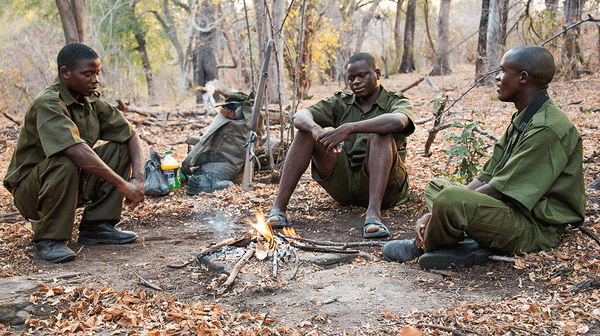
A single person, usually a senior member of the anti-poaching team or a dedicated intelligence officer, who holds the relationships. The handler’s identity is generally known to the network; the informants’ identities are generally not known to anyone else.
Continuity of the handler matters. When the handler changes, the network must be rebuilt almost from scratch.
Source recruitment
Informants come from communities adjacent to the reserve, from market towns where bushmeat or trafficked goods are sold, from transport networks (truck drivers, boda-boda riders, river boatmen), and occasionally from poacher groups themselves.
Some are reformed poachers who know the trade from the inside. Some are community elders. Some are park staff. Each source carries a different reliability profile.
Verification
Every tip is checked against other sources before action is taken. A single uncorroborated report can be deliberate misinformation (a poacher group trying to draw rangers away from a real operation) or an honest error.
Two independent sources reporting the same thing carry weight. Three is rare and significant.
Reward and protection
Informants are paid small cash rewards for actionable tips. A USD 10 payout for an early warning about a poacher’s movements can prevent numerous animal deaths.
Rewards are tied to outcomes (arrests, weapon seizures, snares recovered, animals saved) rather than to volume of tips, which discourages false reporting.
Protection is the other side of the contract: informants whose identities leak are at risk. Long-term informants may be given relocation support when threats become serious.
Why the system works
Three structural reasons explain why informant networks consistently outperform pure patrol-based approaches in remote African reserves.
First, geography. A reserve the size of Niassa cannot be physically covered by rangers alone. Information that moves through community networks reaches places rangers do not.
Second, embeddedness. Community members spot small anomalies (a stranger at a fishing camp, a new vehicle on a back road) that appear insignificant in isolation but take on meaning when combined with other data.
Third, incentive alignment. Where communities derive meaningful income from wildlife, they have their own reasons to keep poachers out. The financial reward for a tip is one layer.
The longer-term economic interest is the deeper one. Property Rights and Economic Efficiency sets out the wider argument for why this works.
Limits and risks
Informant networks carry their own failure modes. False or malicious tips are a continuous risk: a community member may report a rival as a poacher, or a poacher group may feed misinformation to draw rangers away from a real target.
The verification step is essential precisely because of this.
Cellphone networks have complicated the picture. The same tool that lets a community member send a tip discreetly also lets poacher groups coordinate.
Encrypted messaging has made some traditional intelligence-gathering methods harder. The asymmetry is not going away.
Personal security for informants is a serious concern. In areas where poacher groups have local influence (parts of eastern DRC, the Mozambican side of the Kruger border, parts of the Cameroon-Chad border), being identified as an informant carries real physical risk.
Operations that take informant protection seriously sometimes include relocation budgets as a standing line item.
What to look for in a working network
Outcomes matter, not tip volume. A working informant network is measured by arrests, weapon seizures, animals saved, and trafficking shipments intercepted, not by the number of phone calls or messages received.
One accurate piece of intelligence that shuts down a poaching cell is worth more than a hundred low-quality reports.
Continuity matters. A network that has run for ten years carries vastly more value than one that has run for one.
The relationships, the verification baselines, and the source-reliability ratings all compound over time. Operations that lose continuity (through funding gaps, staff turnover, security incidents) lose more than they realize.
Community trust is the substrate. A handler who is widely seen as honest, discreet and reliable can build a network.
A handler who is not cannot. This is one of the reasons informant work is so hard to replicate quickly across operations.