Frame of Reference: Diverging Perceptions of Wildlife Conservation in Africa

By Zig Mackintosh
Key Takeaways:
- African Conservation is caught in the crossfire of competing worldviews.
- Western values center around preservation.
- Animal rights groups believe that animals are sentient beings that deserve rights comparable to those of humans.
- The “conservation through utilization” principle advocates assigning economic value to wildlife.
- Rural African communities view conservation as serving external interests rather than their own.
- African governments must navigate between multiple pressures and priorities.
- The future of African wildlife conservation hinges on bridging the diverse perspectives that diverge.
INTRODUCTION
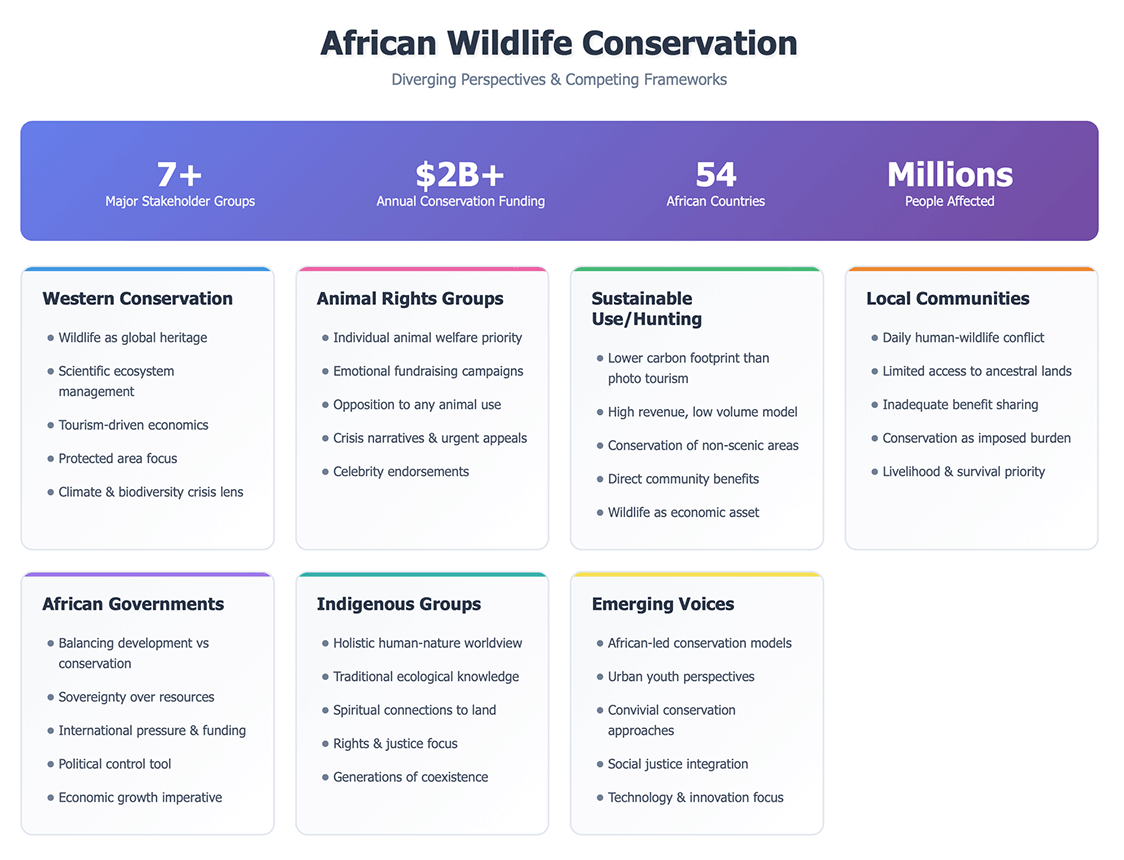
A “frame of reference” refers to the perspectives, influences, experiences, politics, and values through which we interpret the world. Wildlife conservation in Africa today is caught in the crossfire of competing worldviews, economic realities, and cultural values.
How conservation is perceived and practiced depends on who you are and where you come from. What appears as a straightforward imperative to protect wild animals from one perspective can represent economic hardship, cultural disconnection, or neo-colonial interference from another.
Recognizing these diverging frames of reference is crucial for developing effective and rational conservation strategies.
THE WESTERN CONSERVATION PERSPECTIVE
The Preservation Paradigm
The general public in the West has a superficial, passing interest in African wildlife conservation, greatly influenced by endearing documentaries and the “Bambi syndrome”.
Western philosophy centers around establishing and maintaining protected areas, such as National Parks and wildlife reserves. Cordoned off “pristine” areas where nature can thrive without human interference.
These parks are celebrated as sanctuaries for biodiversity and iconic landscapes, often viewed through a lens of recreation, science, and heritage preservation.
This perspective, based on European and North American values, often emphasizes the intrinsic value of wildlife and ecosystems, their role in global biodiversity that transcends national boundaries, and their importance for future generations.
International conservation organizations, predominantly based in the Global North, have invested billions of dollars in African conservation projects. Their frame of reference typically includes scientific research on species decline, ecosystem services, and climate change mitigation.
Tourism and the Economic Argument
From this perspective, wildlife conservation is often justified through economic arguments centered on tourism. Safari tourism generates significant revenue, and the narrative suggests that living wildlife is worth more than dead wildlife. This view frames conservation as an economic opportunity that can drive development while protecting nature.
However, this tourism-centric model creates its own contradictions. The carbon footprint of international travel, the concentration of benefits in the hands of tour operators and governments rather than local communities, and the vulnerability of tourism-dependent economies to global shocks (as COVID-19 showed) all complicate this narrative.

THE ANIMAL RIGHTS PERSPECTIVE
Individual Animals Over Ecosystems
A distinct and fanatical perspective comes from international animal rights organizations that focus on the welfare of individual animals rather than species or ecosystem conservation.
This frame of reference, deeply rooted in moral philosophy about animal sentience and suffering, views each wild animal as an individual deserving of protection regardless of conservation status or ecological role.
These organizations often oppose practices that reputable conservationists might support, such as culling for population management or safari hunting for conservation funding.
Their worldview extends beyond wildlife to encompass opposition to any use of animals, whether for food, traditional medicine, or cultural practices, creating friction with both local communities and conservation pragmatists.
Complications arise when these organizations embed themselves in government environmental agencies, as witnessed in South Africa and Zimbabwe by the extremist animal rights group, International Fund for Animal Welfare (IFAW).
Objectivity and common sense are compromised as policies are manipulated to realize specific radical agendas.
Emotional Appeals and Fundraising Strategies
Animal rights organizations have developed sophisticated fundraising techniques that leverage emotional connections between donors (primarily in wealthy nations) and charismatic African wildlife. These strategies include:
Crisis Narratives: Campaigns often emphasize urgent threats, using language like “last chance to save” or “extinction imminent” to create a sense of immediate crisis that requires a donation. Every poaching incident becomes a fundraising opportunity, with graphic images and emotional stories about orphaned elephants or mutilated rhinos.
Individual Animal Stories: By naming animals and sharing their personal stories, organizations create parasocial relationships between donors and specific animals, such as the rescued baby elephant and the orphaned rhino calf. Monthly updates about “adopted” animals maintain donor engagement and recurring contributions.
Simplified Villains: Fundraising materials often present simplified narratives with clear villains (safari hunting operators and their clients, poachers, corrupt officials, and traditional medicine users) and heroes (rangers, rescuers, donors), avoiding complex discussions about poverty, human-wildlife conflict, or structural inequalities that drive conservation challenges.
Celebrity Endorsements: High-profile celebrities are recruited to visit rescue centers and conservation projects, generating media attention and lending their emotional appeals to fundraising campaigns.
These visits, often carefully choreographed, produce compelling content for social media and donation drives.
The Funding Impact
This approach has proven highly effective at raising money. Some animal rights organizations focused on African wildlife generate hundreds of millions of dollars annually, often dwarfing the budgets of African conservation organizations.
The emotional appeal of saving individual animals resonates with donors who may not be engaged by more complex ecological or community-based conservation narratives.
However, this fundraising success creates several tensions. Local conservation organizations complain about the “charity industrial complex,” where Northern organizations receive the majority of conservation funding while conducting limited on-the-ground work.
The focus on charismatic megafauna can divert resources from less photogenic but ecologically important species or landscape protection.
Conflicts with Other Approaches
The animal rights perspective often clashes with other conservation frameworks. Wildlife management practices accepted by ecologists, such as controlling elephant populations to prevent habitat destruction, are condemned as cruel.
Sustainable use models that allow communities to benefit from wildlife through hunting or resource extraction are opposed on moral grounds, regardless of their conservation outcomes.
This absolutist stance can undermine community-based conservation efforts. When international campaigns successfully ban safari hunting without providing alternative income sources for communities, local support for conservation may evaporate, leading to an inevitable increase in poaching.
Similarly, opposing traditional practices without understanding their cultural context or providing alternatives can generate resentment and resistance.
The emphasis on individual animal welfare can also conflict with ecosystem-level conservation.
Resources spent on expensive veterinary interventions for individual animals might have a greater conservation impact if invested in habitat protection or anti-poaching efforts.
The focus on rescue and rehabilitation centers, while generating compelling donor content, may do little to address the systemic causes of wildlife decline.
THE SUSTAINABLE USE AND HUNTING PERSPECTIVE
Conservation Through Utilization
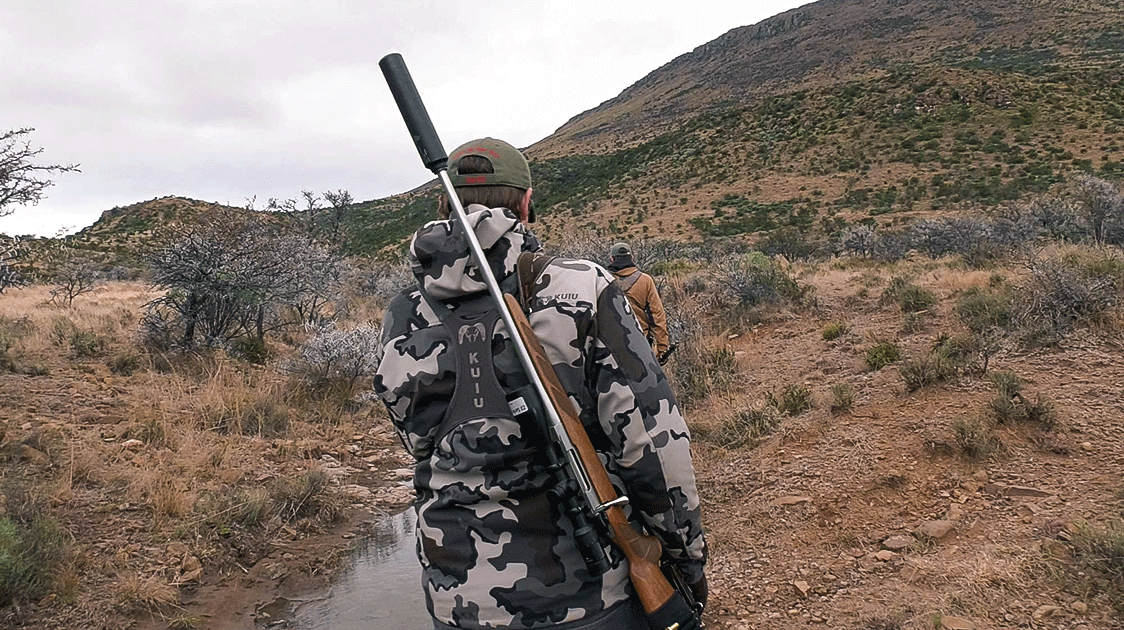
A perspective often discounted in mainstream conservation conversation advocates for the sustainable use of wildlife resources, including regulated safari hunting.
This view, supported by many wildlife economists, some conservation scientists, and rural communities in Africa, argues that assigning economic value to wildlife through controlled hunting can be more effective for conservation than purely protectionist approaches.
Proponents cite countries such as Namibia, Botswana, South Africa, Tanzania, Mozambique, Cameroon, Ethiopia, Uganda, Zambia, and Zimbabwe, where hunting concessions have preserved vast areas of wildlife habitat that might otherwise be converted to agriculture or development.
Private game ranches in South Africa, primarily driven by the hunting industry, have increased wildlife numbers and expanded habitat beyond what government-protected areas could achieve alone.
The Carbon Footprint Argument
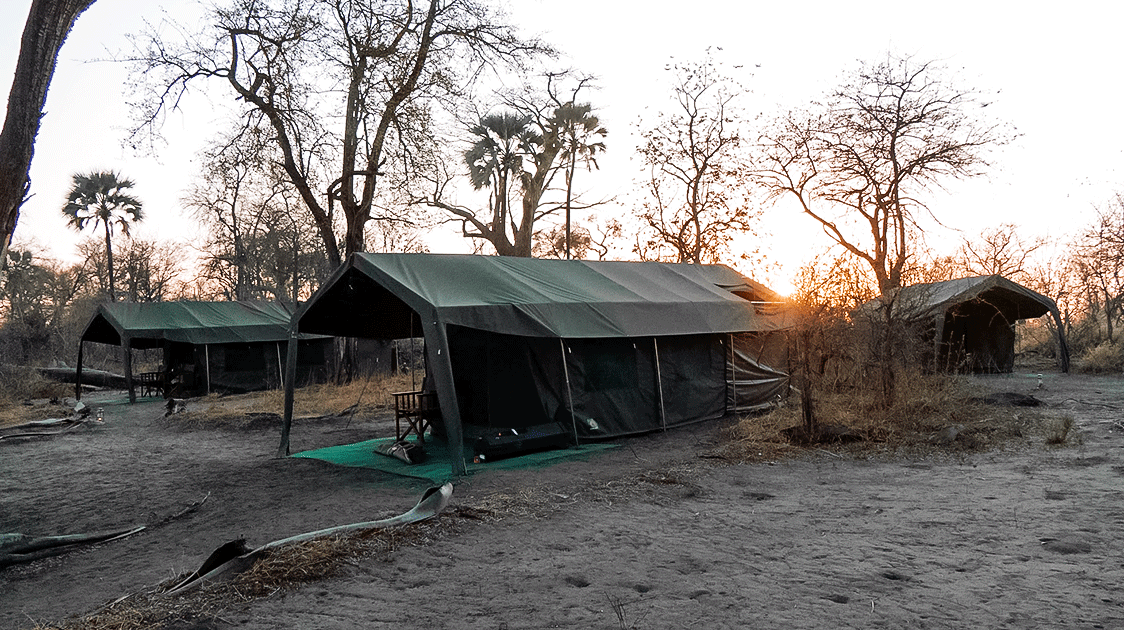
A key aspect of safari hunting is its significantly lower environmental impact compared to photographic tourism, challenging the assumption that non-consumptive wildlife use is inherently more sustainable:
Travel Patterns: A typical hunting safari involves fewer international visitors staying for more extended periods. One hunter might stay for 10-21 days, whereas photographic tourism often involves larger groups making shorter visits. The carbon emissions per dollar of conservation revenue generated are substantially lower for hunting tourism.
Infrastructure Requirements: Hunting concessions typically require minimal infrastructure, basic camps, rough roads, and limited facilities. Photographic tourism requires extensive infrastructure, including luxury lodges, paved roads, swimming pools, and other amenities, which can increase both the environmental footprint and habitat disruption.
Tourist Density: A hunting concession might host a handful of clients per season, whereas photographic operations require a constant stream of visitors to remain economically viable. Lower visitor density means less disturbance to wildlife behavior and breeding patterns.
Remote Area Conservation: Hunting can generate conservation revenue from areas unsuitable for photographic tourism, regions with sparse wildlife, thick vegetation, or lacking scenic appeal. These areas, which constitute the majority of wildlife habitat, would have little conservation value without the revenue generated by hunting.
Economic Efficiency
Advocates of regulated hunting present compelling economic arguments:
Revenue Per Visitor: A single hunting client might spend up to USD100,000 or more on a safari, generating more revenue than dozens of photographic tourists. This high-value, low-volume model can support conservation with minimal environmental impact.
Direct Community Benefits: In well-managed systems, such as Namibia’s communal conservancies, hunting revenues flow directly to rural communities. The CAMPFIRE program in Zimbabwe, despite its challenges, has demonstrated that communities will tolerate and protect wildlife when they benefit from the revenues generated by hunting.
Conservation Funding: Hunting licenses and fees provide crucial funding for anti-poaching efforts, habitat management, and wildlife monitoring in many African countries. In some regions, hunting revenues exceed the combined income from photographic tourism and government conservation budgets.
Land Use Economics: In marginal areas where agriculture yields low returns, hunting can make wildlife conservation a more economically competitive alternative to other land uses. Ranch owners in southern Africa often maintain wildlife populations specifically because hunting makes it profitable to do so.
The Selectivity Advantage
Unlike the animal rights perspective that values every individual animal equally, the hunting conservation model argues that the selective removal of specific animals can benefit populations.
Removing post-reproductive males, problem animals, or surplus individuals in overpopulated areas can improve overall population dynamics while generating conservation funding. This utilitarian approach sees hunting as a management tool rather than simply exploitation.
Challenges and Contradictions
The moral arguments against killing animals are powerful, particularly in Western societies that provide significant funding and political support for conservation efforts.
The hunting perspective also faces practical challenges. International bans on trophy imports, driven by animal rights campaigns, can eliminate the economic incentive for conservation through hunting.
Social media backlash against hunters can damage the broader conservation movement. The controversy surrounding hunting can overshadow its conservation benefits, making rational discussion difficult.
LOCAL COMMUNITY PERSPECTIVES
Living with Wildlife
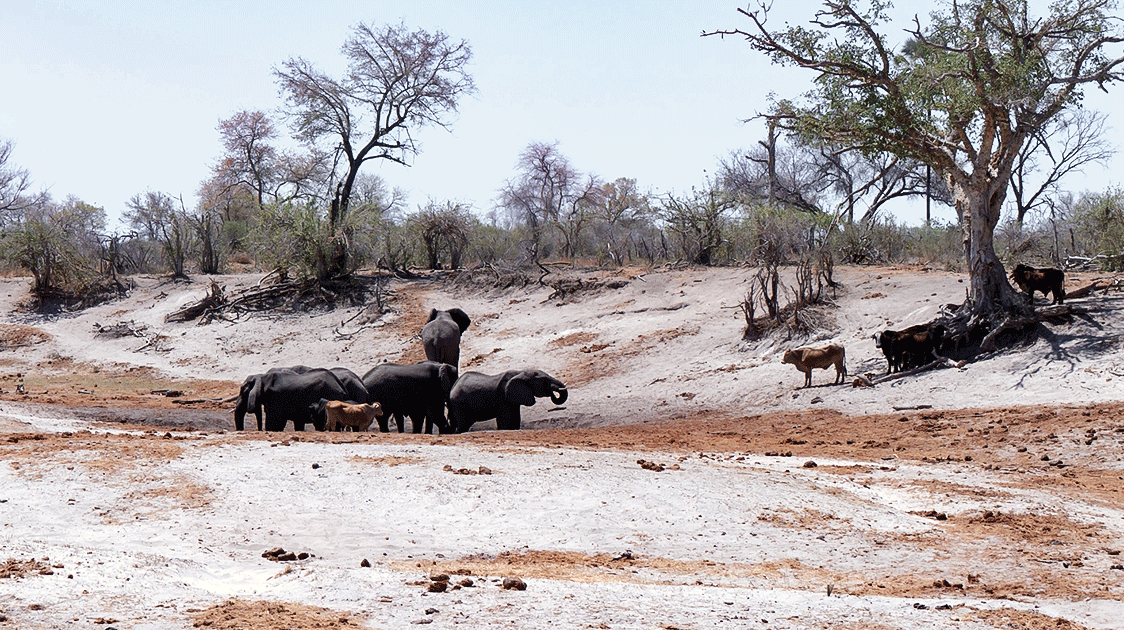
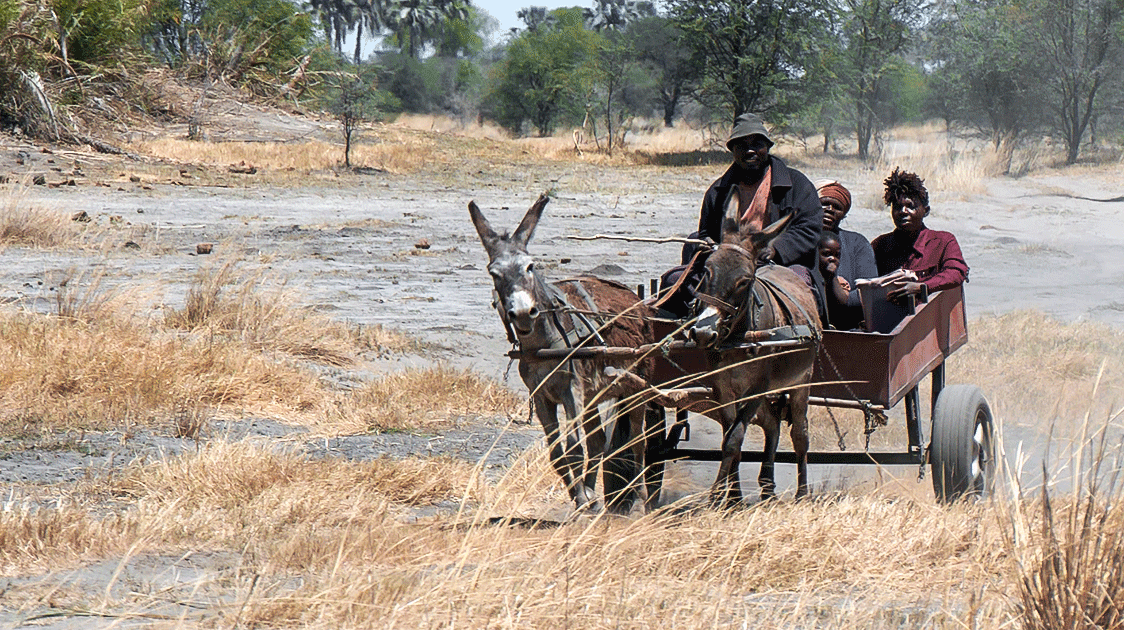
For rural communities living adjacent to protected areas, wildlife conservation often holds a different meaning. Their frame of reference is shaped by daily realities of human-wildlife conflict, restricted access to ancestral lands, and limited economic opportunities.
A farmer who loses crops to elephants or a herder whose livestock falls prey to lions experiences conservation as a direct threat to livelihood and survival.
The imposition of Western conservation models, particularly the fortress conservation approach that excludes human presence from protected areas, is seen as callous.
The promise that conservation will bring development often rings hollow in communities that remain marginalized and impoverished despite decades of conservation interventions.
This creates a frame of reference where conservation is viewed as serving external interests, tourists, international organizations, and urban elites, rather than local needs.
INDIGENOUS AND TRADITIONAL PERSPECTIVES
Holistic Worldviews
Many African cultures have worldviews that don’t separate humans from nature in the way Western conservation often does. These perspectives see humans as part of ecosystems rather than external managers of them.
Traditional ecological knowledge, accumulated over generations, provides insights into sustainable resource use and wildlife management that differ from those of scientific approaches.
Indigenous communities often have spiritual and cultural connections to specific species and landscapes that go beyond economic or scientific value.
Their frame of reference includes ancestral relationships, traditional ceremonies, and cultural identities tied to wildlife and wild places.
The commodification of nature through tourism or carbon markets may be fundamentally at odds with these worldviews.
Rights and Recognition
The indigenous rights movement has increasingly challenged conservation practices that exclude local people from their ancestral lands. This perspective frames conservation as a justice issue, questioning who has the right to make decisions about land and wildlife.
The recognition of indigenous and community land rights is seen as essential not only for social justice but also for effective conservation, as research increasingly shows that indigenous-managed lands often have better conservation outcomes than state-protected areas.
GOVERNMENT AND NATIONAL PERSPECTIVES
Sovereignty and Development Priorities
African governments navigate between multiple pressures and priorities. On one hand, they face international pressure to protect wildlife and meet conservation targets. On the other hand, they must address pressing development needs, including infrastructure, agriculture, and industrialization.
The frame of reference for many governments is shaped by the need to balance these competing demands while maintaining sovereignty over natural resources.
Some governments view wildlife as an asset that can generate foreign exchange through tourism and hunting licenses.
Others see protected areas as untapped resources that could be used for mining, agriculture, or infrastructure development.
The tension between conservation and development is particularly acute in countries facing rapid population growth and urbanization.
The Politics of Conservation
Conservation in Africa is inherently political. Decisions about land use, resource allocation, and wildlife management reflect power dynamics at local, national, and international levels.
Governments may use conservation as a tool for territorial control, international diplomacy, or accessing climate finance.
The creation and management of protected areas can serve political purposes beyond biodiversity protection, including securing borders, controlling populations, and attracting international support.
EMERGING PERSPECTIVES AND HYBRID APPROACHES
African-Led Conservation
A growing movement advocates for African-led conservation that centers African voices, knowledge, and priorities.
This perspective challenges the dominance of international conservation organizations and seeks to develop conservation models rooted in African realities and values.
It emphasizes the need for African scientists, conservationists, and communities to lead conservation efforts on the continent.
Convivial Conservation
Some scholars and practitioners propose “convivial conservation” approaches that transcend the human-nature divide to promote coexistence with wildlife rather than separation from it.
This frame of reference seeks to integrate conservation with social justice, economic equity, and cultural diversity. It challenges both fortress conservation and neoliberal conservation models that rely on market mechanisms.
Urban and Youth Perspectives
Africa’s rapidly growing urban populations and youth demographics bring new perspectives to the conservation field. Urban Africans may have limited direct experience with wildlife, but they often hold strong opinions about conservation, shaped by their education, media exposure, and national identity.
Young Africans are increasingly questioning why conservation seems to prioritize wildlife over people, and they are demanding new approaches that address both environmental and social challenges.
RECONCILING DIVERGENT PERSPECTIVES
The Challenge of Integration
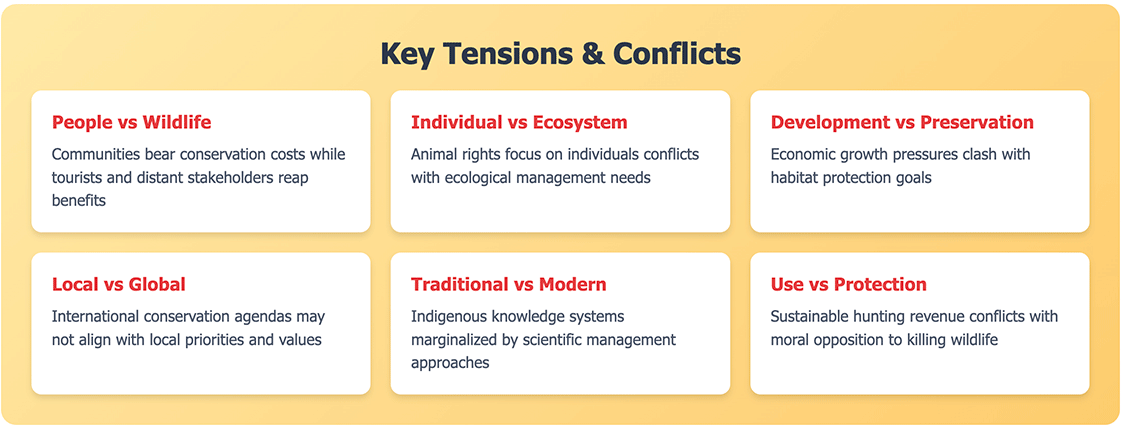
Reconciling these divergent perspectives is the greatest challenge facing conservation in Africa. Each frame of reference contains valid concerns and essential insights.
Western conservationists are justified in their concern about species extinction and ecosystem degradation.
Hunting advocates demonstrate how sustainable use can fund conservation in areas unsuitable for photographic tourism while maintaining a lower carbon footprint.
Local communities are justified in demanding that their needs and rights be respected. Governments face genuine dilemmas in striking a balance between conservation and development.
Indigenous peoples deserve recognition of their knowledge and rights.
Toward Inclusive Conservation
Moving forward requires conservation approaches that acknowledge and integrate multiple perspectives. This means:
- Recognizing that there is no one-size-fits-all solution to conservation challenges.
- Ensuring meaningful participation of all stakeholders in conservation planning and implementation.
- Developing benefit-sharing mechanisms that genuinely improve local livelihoods.
- Integrating traditional knowledge with scientific research.
- Addressing historical injustices and power imbalances in conservation.
- Creating space for African-led conservation initiatives.
- Acknowledging that conservation goals must be balanced with human rights and development needs.
The Role of Dialogue
Creating platforms for genuine dialogue between different stakeholders is essential. This requires moving beyond tokenistic consultation to meaningful engagement where different perspectives are heard and valued.
It means conservation organizations being willing to question their assumptions, communities being involved in decision-making from the start, and governments facilitating rather than controlling conservation processes.
CONCLUSION
The diverging perceptions of wildlife conservation in Africa reflect more profound differences in worldviews, values, and lived experiences. These different frames of reference are not merely academic distinctions; they shape real policies and practices that affect millions of people and countless species.
Understanding these perspectives is not about relativism that treats all views as equally valid, but about recognizing that effective and just conservation must grapple with this complexity.
The future of wildlife conservation in Africa depends on finding ways to bridge these divergent perspectives while respecting their legitimacy.
This requires humility from all parties, recognition that conservation is as much about people as it is about wildlife, and commitment to developing models that serve both human and non-human flourishing.
It also requires honest conversations about how conservation is funded, who controls the narrative, and whose values shape conservation priorities.
Only by taking seriously the different frames of reference through which conservation is viewed can we hope to develop strategies that are both ecologically effective and socially just.
As Africa continues to change, demographically, economically, politically, and environmentally, so too will perspectives on conservation.
The conversation about wildlife conservation is ultimately a conversation about what kind of future Africans want for their continent, and who gets to make those decisions.
Ensuring that this conversation includes all voices, especially those historically marginalized, is perhaps the most crucial conservation challenge of all.
Zimbabwean native Zig Mackintosh has been involved in wildlife conservation and filmmaking for 40 years. Over the years, he has traveled to more than 30 countries, documenting various aspects of wildlife conservation. The sustainable use of natural resources as an essential conservation tool is a fundamental theme in the film productions with which he is associated.