The Plot Thickens on the Case of Legal Rhino Horn Trade in South Africa
By Dr Daniel Stiles
Key Takeaways
- In October 2025, the Northern Cape High Court ruled that breeder Hendrick Diedericks can export horn from captive-bred white rhinos. The government wants to appeal but has not yet been granted leave.
- The arrest of Vietnamese national Huy Bao Tran, tied to dozens of seized and stolen horns, has been cited by the EIA as evidence against legalization, despite no link to the legitimate breeding operations at issue.
- April 2026's Biodiversity Management Plan recommends phasing out captive breeding and blocking trade until vague, unmeasured conditions are met, which the article reads as an effort to kill the CBOs.
- Of 500-plus horns slated for export, 479 are bound for Canada, a country with almost no demand. Breeder Derek Lewitton calls it a legal test case; the EIA suspects a transit route to Asia.
- Lewitton, cleared in 2025 of poaching his own rhinos, argues vested interests are working to keep trade illegal, setting up a genuine two-sided dispute, by design, in this first of two parts.
There have been some significant developments related to the attempts of South African rhino breeders to legalize the export of rhino horn harvested from live captive-bred Southern white rhinos since I wrote about the controversy in Patrol in January, 2026.
This is the first of a two-part pair of articles dealing with (1) the status of where South Africa is currently in the debate over adopting a legal rhino horn trade and (2) a discussion of the various issues and views of those arguing either for or against the trade.
To recap, on 31st October, 2025, South Africa’s High Court in the Northern Cape ruled in favour of Hendrick Diedericks, owner of a registered rhino Captive Breeding Operation (CBO) in the Northern Cape known as Rockwood Conservation.
Diederick sued the South African authorities for refusing to issue him with CITES export permits for his captive-bred Southern white rhino horns, claiming that denying him the permits was contrary to South African law.
The case hinged on whether CITES Article VII, paragraph 5, was incorporated into South African law. The government claimed that it was not.
However, the court ruled that the CITES Articles in their entirety were incorporated into domestic law, and it agreed that Diedericks’ Captive Breeding Operation (CBO) qualified to export rhino horn taken from captive-bred white rhinos.
The government indicated its intention to appeal, and the court has not yet ruled on whether to allow it.
Development One
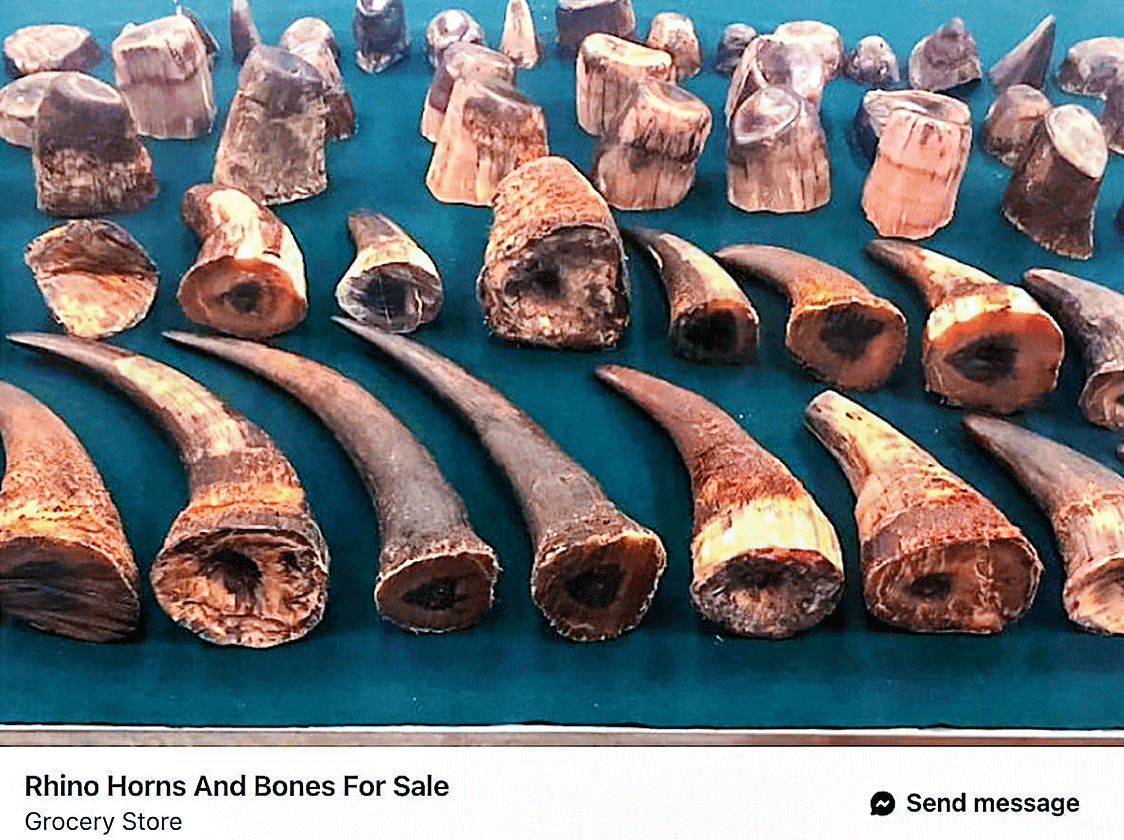
A Vietnamese national wanted in connection with a high-profile rhino horn trafficking operation was arrested at Cape Town International Airport on 24 February, 2026 as he was about to board a flight to Singapore with his family.
The warrant for the arrest of Huy Bao Tran was issued after investigators linked him to the case of two Nigerian nationals, Tunji Olanrewaju Koyi and Koyode Adukunle Ongundele, who were arrested in early December 2025 for possession of 17 rhino horns and 26.2 kg of lion and tiger bones at a storage facility in Kempton Park, near Johannesburg.
Hawks spokesperson Colonel Katlego Mogale said investigations had tied the 17 rhino horns recovered from the storage facility on 1 December 2025 to 98 rhino horns reported stolen a week later in a “staged” armed robbery at Voi Game Lodge in Hartebeesfontein, North West.
Further investigations revealed that the horns belonged to a Vietnamese national who was suspiciously not present at the farm when the alleged robbery occurred.
Voi Game Lodge belongs to Chu Dang Khoa, aka Michael Chu, a dodgy Vietnamese figure in the illegal world of rhino horn and tiger bone trafficking. He was arrested in March 2026.
Huy and Chu were released on bail on 20 March 2026, and the case will be heard in June 2026.
The Environmental Investigation Agency (EIA) US has cited this case as supporting their arguments opposing legalization. However, there is no link connecting this trafficking case with the Diedericks’ case and with any legitimate rhino CBOs.
Derek Lewitton, another rhino CBO in South Africa who was reported on in Patrol in January 2026, was interviewed for this article. He reiterated that EIA’s attempt to refer to the Chu-Huy case as a smear to discredit legal trade was unjustified, as there was no connection between them.

Development two
On 14 April 2026, the South African Department of Forestry, Fisheries and the Environment released the Biodiversity Management Plan for both Black (Diceros bicornis) and White Rhinoceros (Ceratotherium simum) 2025-2035.
The Plan recommended in part:
Where consensus was not achieved (i.e., a majority and minority view were expressed), the majority view became the recommendation as follows:
a. Recommended reversing the trend towards increasing intensive management of rhinos through phasing out captive rhino breeding (including registration of facilities) over time and allowing for a sustainable conservation outcome; and
b. Encouraged that clarity is provided that trade in captive rhino horn would not be supported or approved prior to the Rhino Committee of Inquiry recommendations being met.
Under (b), one of the Actions for Implementation was: “Clarification to the industry that any registrations of CITES Captive Breeding Operations (CBOs), any forms of production or any certification as captive specimens, in terms of the CITES Regulations for international trade, as well as commercial international trade in horns from rhino CBOs, will not be officially supported/and or approved until the recommendations of Option 3 of the COI (Committee of Inquiry) and the Rhino Action Plan are fully addressed.”
Option 3 on the COI states: “Application of current policy, with no immediate intention to trade in rhino horn, but maintaining the option to re-consider regulated legal international trade in rhino horn when requirements are met”.
The requirements to be met are:
a. Security (enforcement, wildlife crime, and disruption of organized crime).
b. Community empowerment (socio-economic impact of poaching on communities and the development of reciprocal partnerships between protected area management authorities and communities).
c. Demand management.
d. Biological management (to meet the requirements for minimum viable populations, including range expansion); and
e. Responsive legislative provisions that are effectively implemented and enforced.
In addition to the five governance challenges, the COI additionally addressed the issues of:
i) how to deal with the demand from consumer countries, and
ii) how to provide sustainable funding for ongoing efforts to reduce poaching and illegal wildlife trade.
The Plan is frustratingly vague about the criteria for assessing whether each requirement has been met. For example, under Security, the CBOs do meet the criterion, but the state-protected areas, by and large, do not.
Is the lack of adequate security in state-protected areas even relevant to considerations of whether to allow rhino horn trade by CBOs?
Pro-trade protagonists argue that legalizing rhino horn trade is a necessary component of reducing poaching and trafficking and providing the necessary conditions to achieve a high level of security.
The same degree of uncertainty applies to the other requirements. And how would phasing out captive breeding allow “for a sustainable conservation outcome”?
In terms of Diedericks use of current South African law to justify receiving CITES export permits, how relevant are government policy recommendations in determining what is legal and permitted and what is not concerning private CBOs?
These recommendations appear designed to eliminate rhino CBOs and to prevent legal trade indefinitely.
Development 3
In May, the EIA US released a report entitled “Sidestepping Ban: a Reckless Gambit for Global Rhino Horn Trade”.
The report addresses the Diedericks court case and details Diedericks’ plans to request the export of at least 502 rhino horns to prospective buyers in eight locations, including Canada, China, Hong Kong SAR, Japan, Laos, Mongolia, the USA, and Vietnam.
The report provides the number of horns that will be exported to each country and the address of each importer.
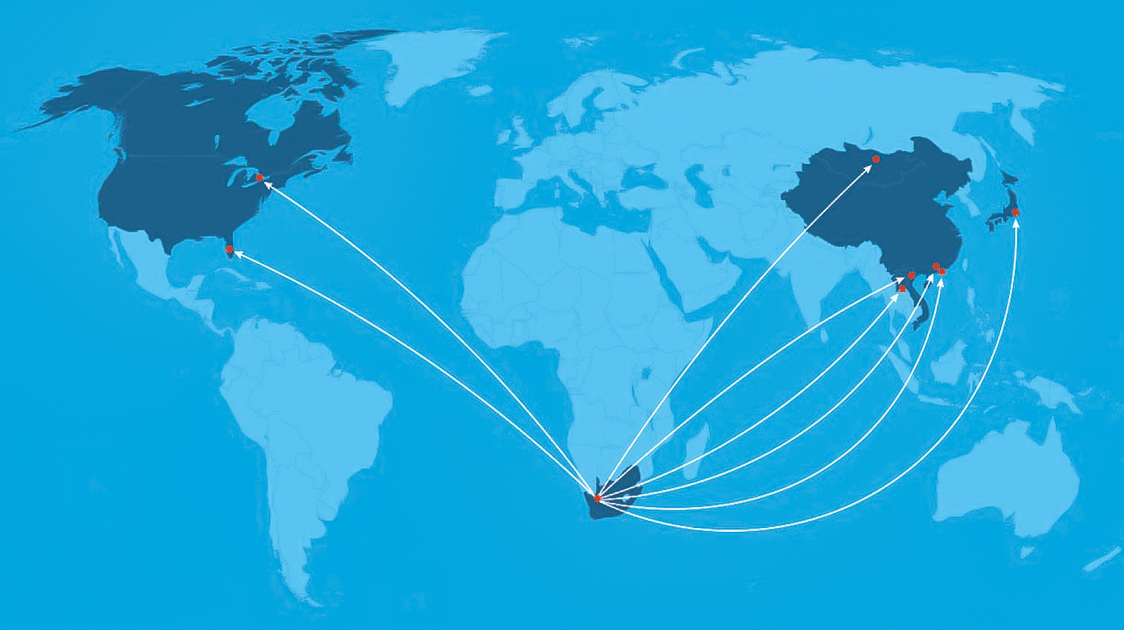
The one planned export request that stands out is Canada. The number of horns indicated on the draft permit is 479, with the purpose indicated as “medicinal”.
The importer is Derek Lewitton, a dual American-South African citizen, the owner of the rhino CBO Black Rock Rhino Conservation in Limpopo province, and the leader of the Rhino Working Group for Wildlife Ranchers of South Africa.
In 2023, the South African authorities raided his game reserve and arrested Lewitton on charges related to unlawful possession of rhino horns, firearms, and ammunition. They accused him of poaching his own rhinos, removing the horns, and not reporting it.
In August 2025, the National Prosecuting Authority withdrew the charges and returned the rhino horn and other items seized during the raid. Lewitton has repeatedly denied any wrongdoing, and the prosecutors were unable to produce any evidence in court of criminal acts he committed.
Lewitton requested that a statement on the police raid and prosecution be included in this article:
“The attack on me and my family was launched specifically to stop us bringing the rhino horn case to court. It was never more than a vile attempt to frighten or disappear us. It is no accident that they dropped all charges against me 8 days after we argued the legalization case in the Northern Cape.
Once the facts of the rhino horn case had been placed before the court and submitted for judgement, the smear against me had no further strategic purpose for the state, so they withdrew the charges before I could prove in court how obviously fraudulent, they had been.”
Lewitton maintains that certain influential parties have vested interests in preventing the legal trade in rhino horn. This could explain why the recent rhino Biodiversity Management Plan appears aimed at closing rhino CBOs and frustrating legal trade.
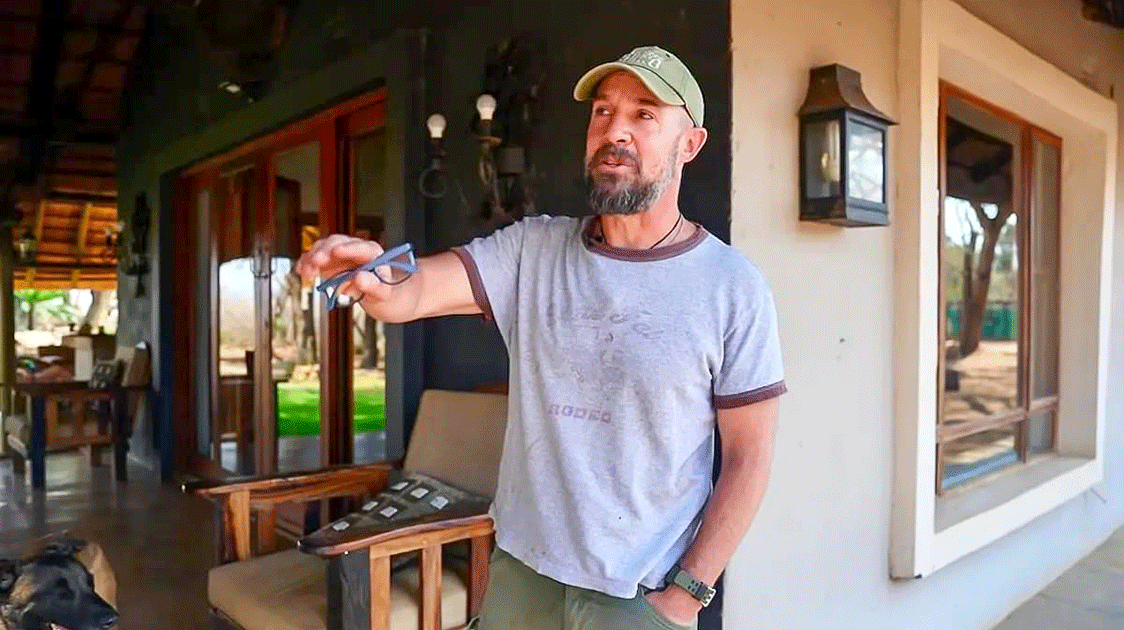
Lewitton, a lawyer by profession as well as a rhino breeder, said he is a partner with Diedericks in the court case and has been providing legal guidance.
“We submitted our rhino horn CITES export permits to the court and the NSPCA (National Council of the Societies for the Prevention of Cruelty to Animals) got hold of them and passed them on to EIA,” Lewitton told Patrol. “The EIA drafted a 400-page brief full of unscientific nonsense arguing against allowing CITES permits to be issued, which NCSPCA submitted.
The court threw it out, as it should have.”
The export of 479 rhino horns to Canada puzzled the author, as Canada has never come up as a major destination for the product and demand would appear to be relatively small.
Google found only one case in 2015 of a Chinese man arrested for smuggling two rhino horns from New York to Richmond, near Vancouver. What was Lewitton going to do with 479 of them?
The EIA and Simon Bloch suggested that the intention was to use Canada only as a transit point for the subsequent shipment of the horn to Asian destinations where it would enter the illegal market.
When asked what he planned to do with the rhino horn should Canada allow import, Lewitton replied, “It’s a test. Canada is perceived as a squeaky-clean country that follows the law. If they allow the import, it demonstrates that what we are doing is legal and legitimate.”
Patrol contacted the Canada CITES Management Authority and asked them if they would allow the import of 479 rhino horns should they receive the request from South Africa. Their response was:
“Canada adheres to its obligations on the trade of rhinoceros horn under the Convention on International Trade in Endangered Species of Wild Fauna and Flora (CITES), through a permitting system for imports, exports, and re-exports.
In Canada, CITES is implemented through the Wild Animal and Plant Protection and Regulation of International and Interprovincial Trade Act (WAPPRIITA) and the Wild Animal and Plant Trade Regulations (WAPTR). WAPPRIITA/WAPTR regulates imports and exports to and from Canada and interprovincial/territorial transport of certain wildlife species.
Canada has strict measures for trade in rhinoceros and prohibits the import and export of raw elephant ivory and raw rhinoceros horn with very limited exceptions (i.e., where destined for a museum or zoo, use in scientific research, or use in support of law enforcement), and prohibit the import of raw elephant ivory and raw rhinoceros horn hunting trophies (WAPTR 12.0, 12.2 and 12.3).
The decision on whether to accept an import would be under the context of WAPPRIITA and the implementing Regulations.
Environment and Climate Change Canada cannot disclose information related to applications for individual CITES permits.
Requests to import rhinoceros horn would be assessed on a case-by-case basis to determine if the request aligns with legislation.
Kind regards,
Hannah Boonstra
Porte-parole, Relations avec les médias | Spokesperson, Media Relations
Environnement et Changement climatique Canada | Environment and Climate Change Canada
“So you won’t actually go through with the export?” Patrol asked.
“No, we have no intention to go through with it,” Lewitton replied. “Submitting an export permit is not an obligation; it is only a request. Unfortunately, the court case has taken so long that Canadian law has changed in the interim; their rhino horn trade restrictions are tighter now.”
Much more of the Lewitton interview will be covered in the second article on this subject.
Hopefully by then the court will have ruled on whether to allow the government’s appeal to be lodged.
Dr Stiles started in anthropology and archaeology, researching past and present natural resource use among hunter-gatherers and pastoralists, and later moved to the UN system, working on desertification control. In 1999, he began investigating wildlife trade, producing reports and publications for UN agencies, the IUCN, TRAFFIC, and various NGOs.