Does Ant Trafficking Need Anti-Poaching?
By Dr Daniel Stiles
Key Takeaways
- Ant trafficking is emerging as a serious new wildlife crime, especially in East Africa.
- Booming demand for exotic pet ants in Asia and beyond drives the trade.
- Smuggling ants can cause real ecological harm, including colony collapse and invasive-species risks.
- Kenya says much of the trade is illegal, with no permits yet applied for and multiple laws being breached.
- The article argues that the biggest enforcement gap is online platforms, where wildlife trade is still widely advertised.
I must have been 8 or 9 years old when my parents bought me a small ant farm as a present.
I used to enjoy watching the ants through a glass pane dig tunnels and crawl around underground, occasionally coming out onto the surface to forage and carry seeds that I would scatter in from time to time back down.
Eventually, they established a thriving colony.
That was several decades ago, and I had almost forgotten about it. I didn’t connect my childhood ant farm to a news story widely reported last year until recently.
The news story in April 2025 reported on four men who were arrested and arraigned before the Jomo Kenyatta International Airport (JKIA) Magistrate’s Court for attempting to smuggle 5,440 giant African harvester ants from Kenya to Asia and Europe.
Lornoy David and Seppe Lodewijckx (Belgian citizens), Duh Hung Nguyen (Vietnamese) and Dennis Ng’ang’a (Kenyan) were convicted and ordered to pay a fine of US$7,700 each or go to jail for 12 months.
They paid the fine, and the foreign nationals left the country.
The article stated that the ants were valued locally at KES1.2 million (US$9,300), and each of the queen ants seized in Nairobi is reported to be worth about US$233 once smuggled to Europe or Asia, totaling US$1,267,520.
Even though many of the ants die en route, the gain for smugglers remains substantial.
The trial of the four suspects in Kenya revealed the modus operandi and criminal actors involved in this illegal wildlife trade. The two Belgians entered Kenya on tourist visas and stayed in Naivasha, a tourist destination renowned for its lake.
The Vietnamese national was described as a ‘courier’ or ‘mule’, while the Kenyan was a broker who reportedly connected the Belgians and Vietnamese to local networks that illegally sell ants.
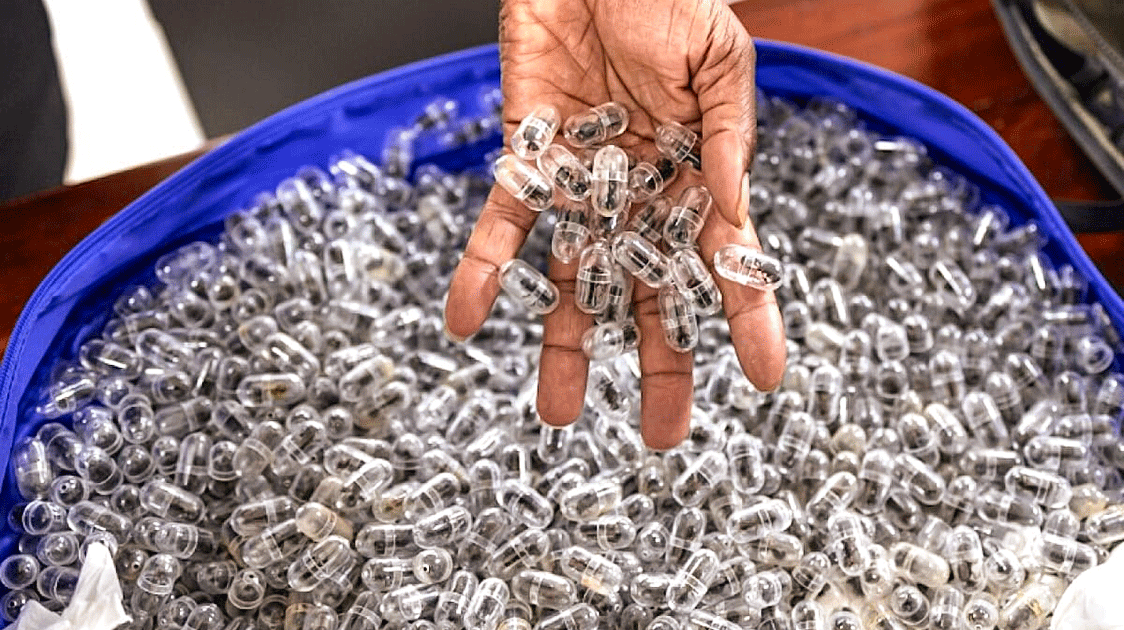
The ants were packed by the Belgians in more than 2,000 test tubes filled with cotton wool to sustain their survival for transport.
I thought this arrest might have been a fluke, but in March this year a Chinese national, Zhang Kequn, was found in JKIA with 2,200 ants in his luggage.
He was sentenced to a 12-month jail term and a $7,746 fine.
The giant African harvester ant species (Messor cephalotes), native to East Africa (Ethiopia, Kenya, and Tanzania), is at the center of the emerging illegal trade.
I remember wondering, why would anyone want ants? Every day I kill hundreds in my house, invaders that crawl around in search of scraps. They are replaced every day by busy queens.
The traffickers are welcome to my place any time; take as many as you want.
My second question was, what harm does it do for the ants to be collected and removed?
Aren’t they simply quickly replaced, like those I wipe up or spray in my house?
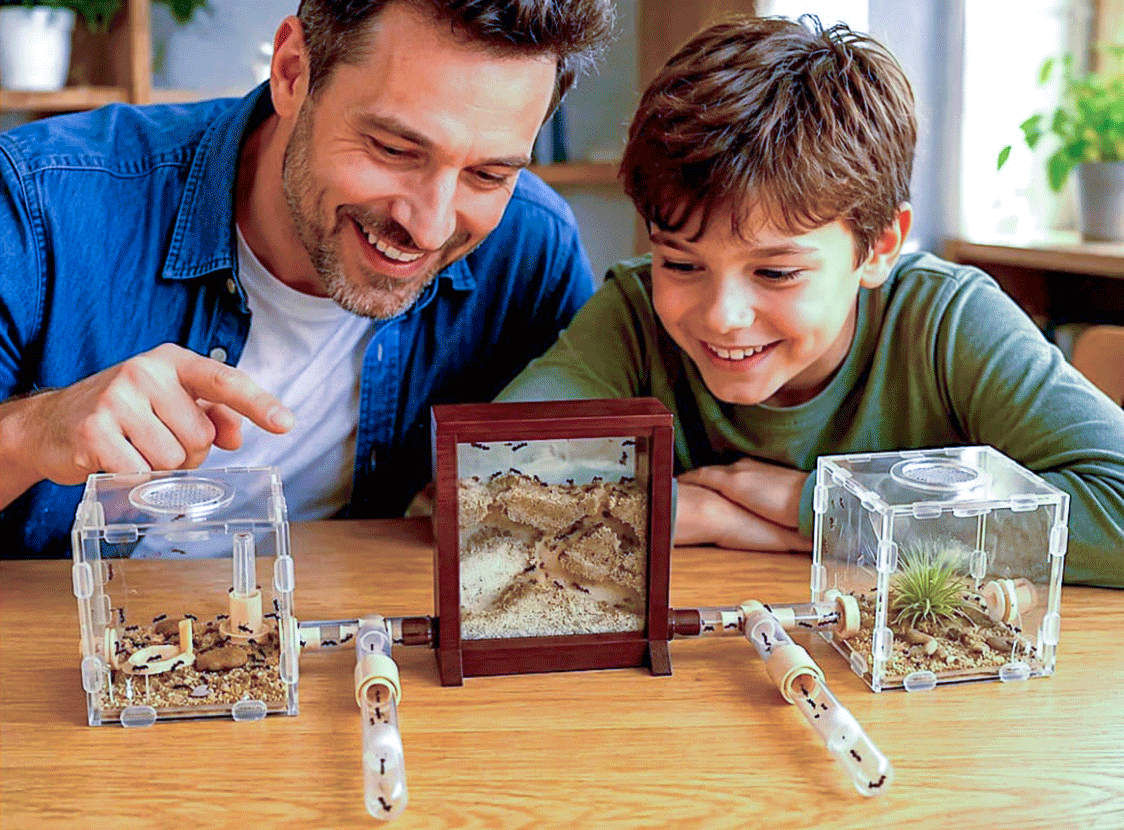
Types of Ants Traded
It’s estimated that there exist over 20,000 species of ants in the world, but only a little more than 13,000 have been named and described.
They range in color from black to brown to red and from tiny house ants (like in my place) to quite large carpenter ants, whose queens measure 20 mm in length.
Collectors, those who buy the ants, prefer the larger, more colorful ones.
Most are used as exotic pets; the rarer species are collectors’ items. Unfortunately, traffickers are not interested in the little pests that invade my house daily.
A study in China, published in 2023, of the online ant pet trade found that 58,937 ant colonies from 209 species were sold by 206 sellers in 89 cities across the country in six months.
More than a quarter of the traded species (56) were not native to China. Trait-based analysis revealed that the most sought-after ants have higher invasive potential than less popular species.
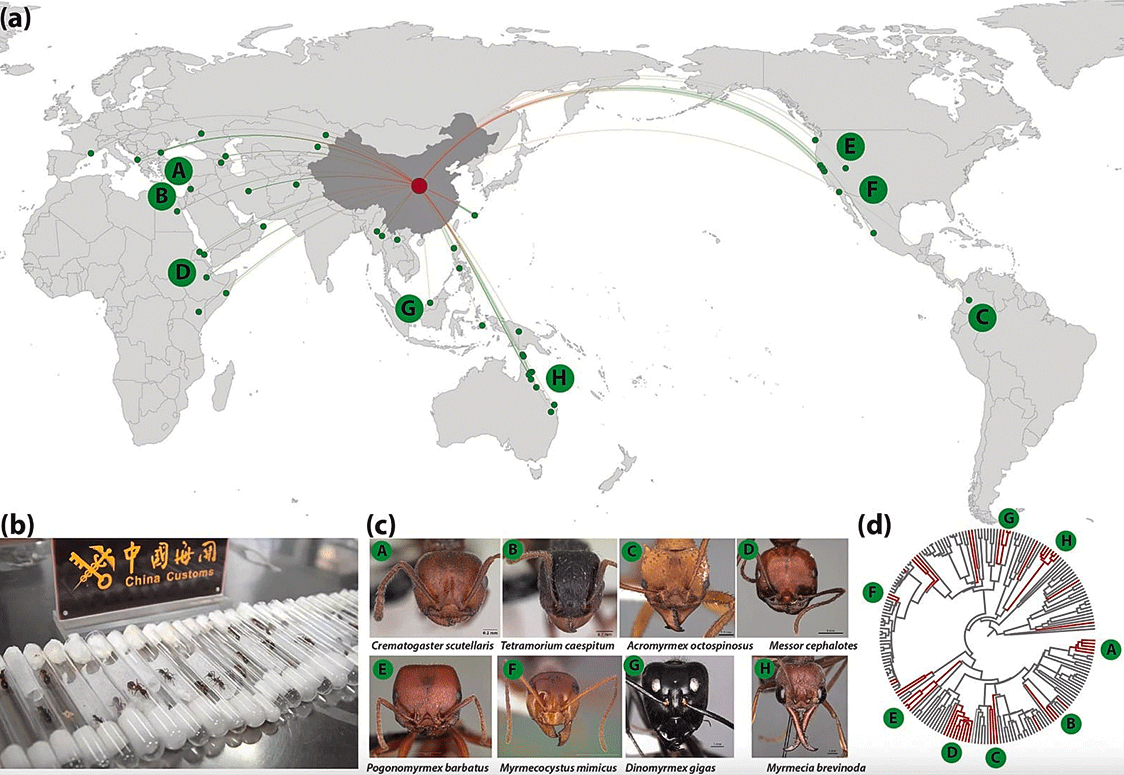
Although the number sold online in China seems high, this would be only a sample of the actual total number sold. Jerome Gippet, a researcher at the Swiss University of Fribourg, conducted a study on the ant trade in 2017. He found that the trade exploded with the arrival of the internet.
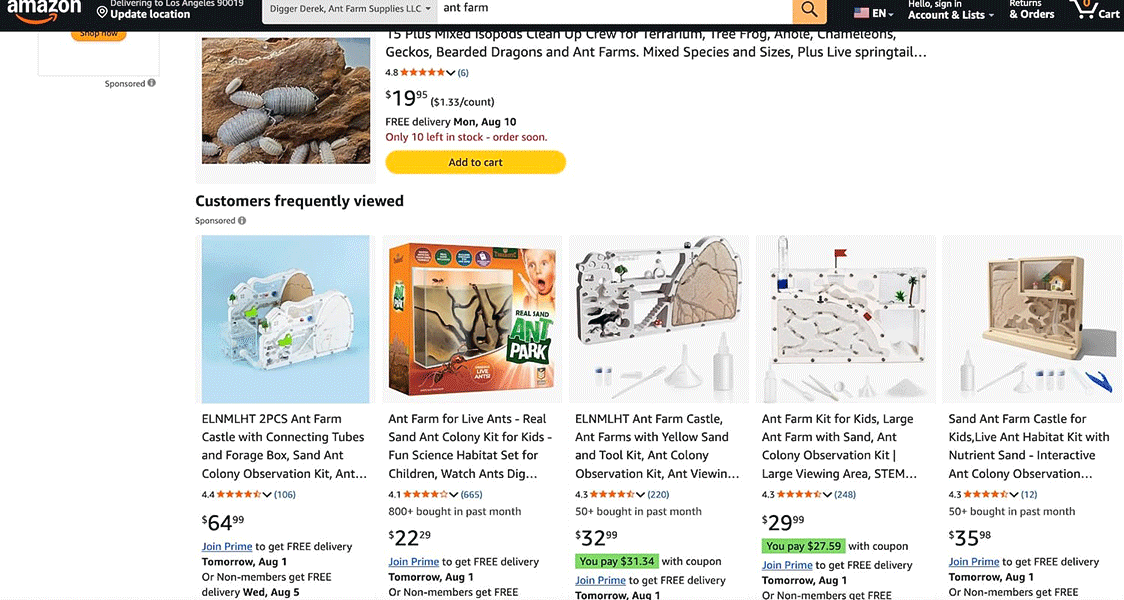
Ants can and have escaped from ant farms, sometimes intentionally emptied out by owners tired of looking at ants crawling around in a formicarium.
If a queen is present and the species is non-native to the location, this poses a serious ecological threat and a possible economic one as well, if the invasive species is of a type that can affect grain production. Patrol published a story in May this year about an invasive ant species that changed lion hunting behavior in Kenya.
Mukonyi Watai, a senior scientist at Kenya's Wildlife Research and Training Institute, shares the fears of ecological harm. "Unsustainable harvesting - particularly the removal of queen ants – can lead to colony collapse, disrupting ecosystems and threatening biodiversity," he told the BBC.
It is possible to collect ants legally in Kenya - in line with various international treaties - with a special permit, which would require the buyer to sign a benefit-sharing agreement with the local community involved to split any profits.
But, according to the Kenya Wildlife Service (KWS), so far none have been applied for - with the paperwork also requiring details of how many ants are being collected and their destination.
Breaking the law
Erustus Kanga, Director General of the KWS, believes that the illegal trafficking of lesser-known yet ecologically critical species, such as ants, is a real concern for Kenya.
“There is rising global demand for these exotic insects, more particularly in Asian countries, and Kenya, being a rich source, becomes a target for traffickers,” Kanga told NWS.
According to Kanga, smuggling live ants breaches multiple layers of law: it contravenes Section 99 of Kenya's Wildlife Conservation and Management Act (2013), which requires permits for collecting wildlife specimens and bars unauthorised export, as well as the Wildlife Research and Training Institute Act, which obliges researchers collecting insects for scientific purposes to secure research, collection and export permits along with ethical and institutional approvals.
It also violates the Nagoya Protocol, which sets out a legal framework for accessing genetic resources and sharing the benefits fairly with the country of origin, and the Convention on Biological Diversity (CBD), which affirms states’ sovereign rights over their biodiversity and regulates access to biological resources for scientific and commercial use.
“The problem arises when collectors bypass these mechanisms and remove biological resources without consent or benefit-sharing arrangements,” Kanga says.
No ant species is listed in any of the appendices of the Convention on International Trade in Endangered Species of Wild Fauna and Flora (CITES).
Increasing demand
Valtino Omolo, Research Officer at ENACT, found that Asia, particularly China and, increasingly, India and Vietnam, has experienced an upsurge in exotic pet ownership and insect-keeping, attributing the rapid growth to a dynamic online trade in rare species fueled by social media activity.
“Asian online marketplaces and social media platforms make it easier for collectors and traders to buy and sell colonies, exchange breeding information, and arrange international shipments,” Omolo said.
“India has a rapidly expanding illegal exotic pet market, and it is not just a consumer but a logistics hub because it has already established trafficking networks that enable the movement of trafficked species through airports and informal channels within Asia, making it a transit point, a redistribution hub or a parallel market for trafficked ants,” said Omolo.
India is home to unique ants like the Harpegnathos saltator, known for unusual behavior and prized by researchers and hobbyists.
Omolo explained that apart from being used in ant farms, trafficked ants are used in research on swarm intelligence, microorganisms and antibiotics.
“Some ants are sold for traditional purposes, such as rheumatism treatments and experimental medicinal compounds,” she said.
“Asia has a booming exotic-pet culture, sophisticated e-commerce networks, growing scientific demand, established trafficking routes, and an expanding middle class that has increased spending on niche hobbies and exotic pets,” the scientist says.
Asia’s large consumer base has driven rare African ants to realize exceptionally high prices, turning small insects into highly lucrative wildlife commodities.
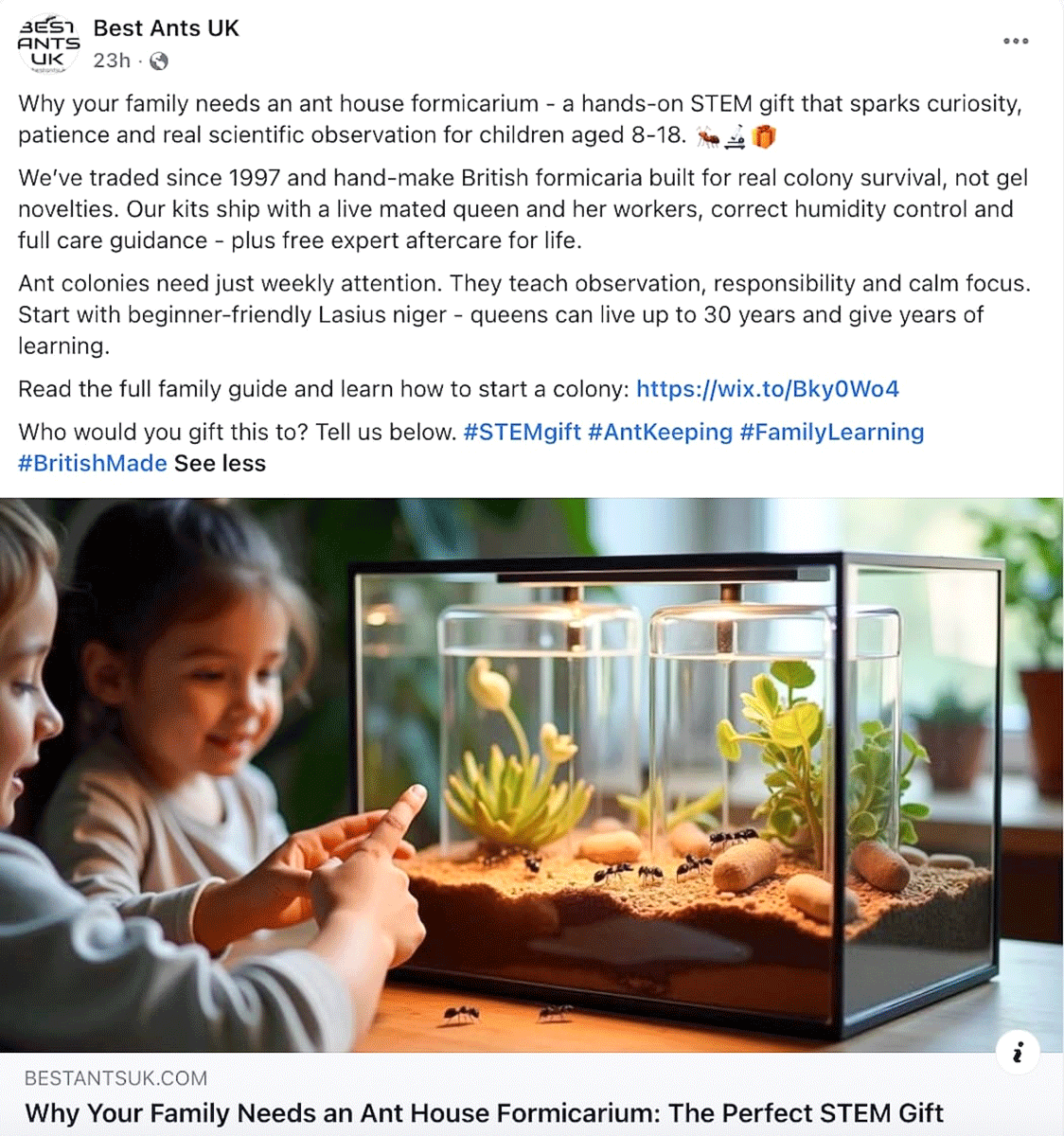
Europe and North America also have growing ant markets, fueled by online companies selling ants and formicaria.
Concluded Erastus Kanga, "The world notices when an elephant or a rhino disappears. But ecosystems can collapse just as surely when we lose the insects that pollinate plants, disperse seeds and enrich our soils. The ants being smuggled today may be small, but the consequences of losing them are enormous.”
Call to CITES
In response to the news articles on the ant smuggling in Kenya, conservationists issued a call for CITES Parties to recognize the emergence of the international ant pet trade as a conservation and biosecurity issue of global concern.
They proposed the following measures:
(1) Initiate a comprehensive review of the ant species currently in the international trade.
(2) Prioritize the assessment of species that exhibit traits associated with invasiveness or are known to be threatened in the wild.
(3) Consider listing all ant species (Formicidae) under CITES Appendix II to enable monitoring and regulation.
(4) Develop identification tools and training resources for enforcement officers to help them detect and manage ant trade cases effectively.
(5) Strengthen collaboration between CITES, IUCN, invasive species experts and entomological societies.
Proactive intervention is critical to prevent irreversible ecological impacts and avoid costly eradication efforts.
The window for preventative action is rapidly closing, and CITES has the mandate and the mechanisms to act
This at least would offer an international regulatory framework with which to control the ant trade.
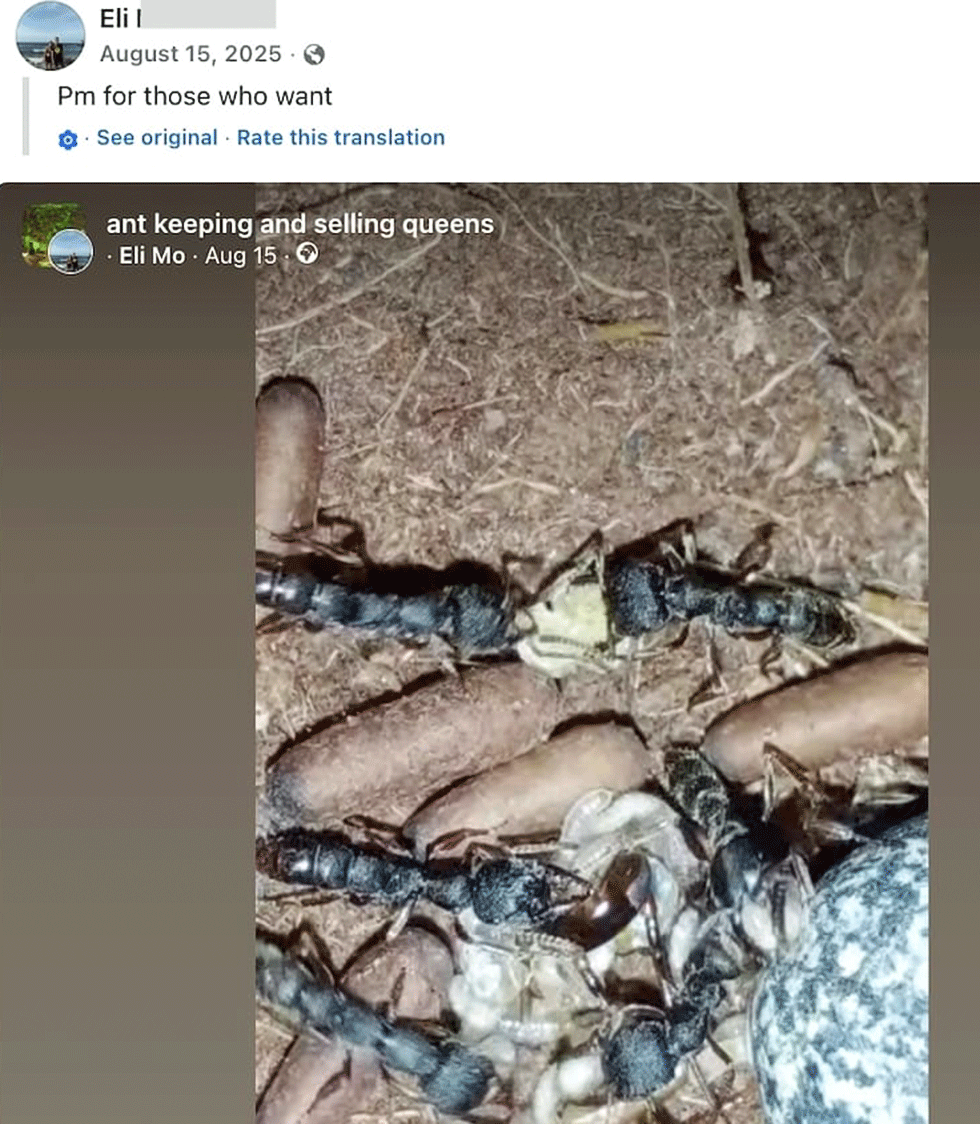
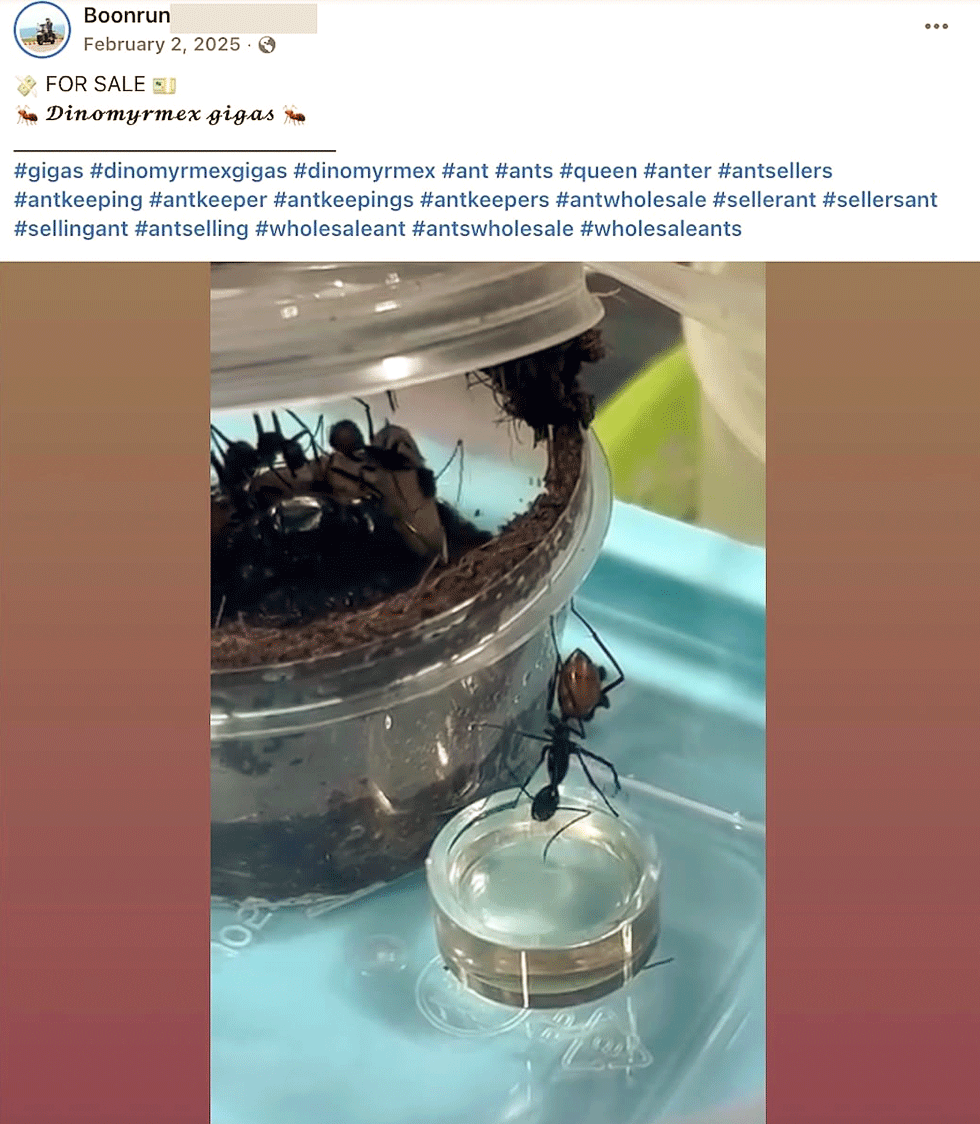
Many individuals in many parts of the world trade ants on Facebook with no regulation at all. Although wildlife trade is prohibited by Facebook’s Community Standards, the parent company Meta takes no action, which Patrol has written about.
Anti-Poaching?
Are anti-poaching measures required to reduce ant trafficking?
The traditional methods that employ ranger or police patrols and drone surveillance would be extremely difficult to implement given the wide distribution of ant nests, which are not confined to protected areas.
Queens only appear at the surface, usually at the beginning of a rainy season, when winged ants swarm for mating.
Another way of controlling ant trafficking was suggested by journalist Charles Onyango-Obbo of Kenya. He argued that Kenya was overlooking a significant global revenue opportunity.
"The ants are not finite items like gold or diamonds. They are biological assets that can be bred and farmed, and their production can be scaled up to thousands a day. Yet we treat them like stolen artifacts," he recently wrote in Kenya's Daily Nation newspaper.
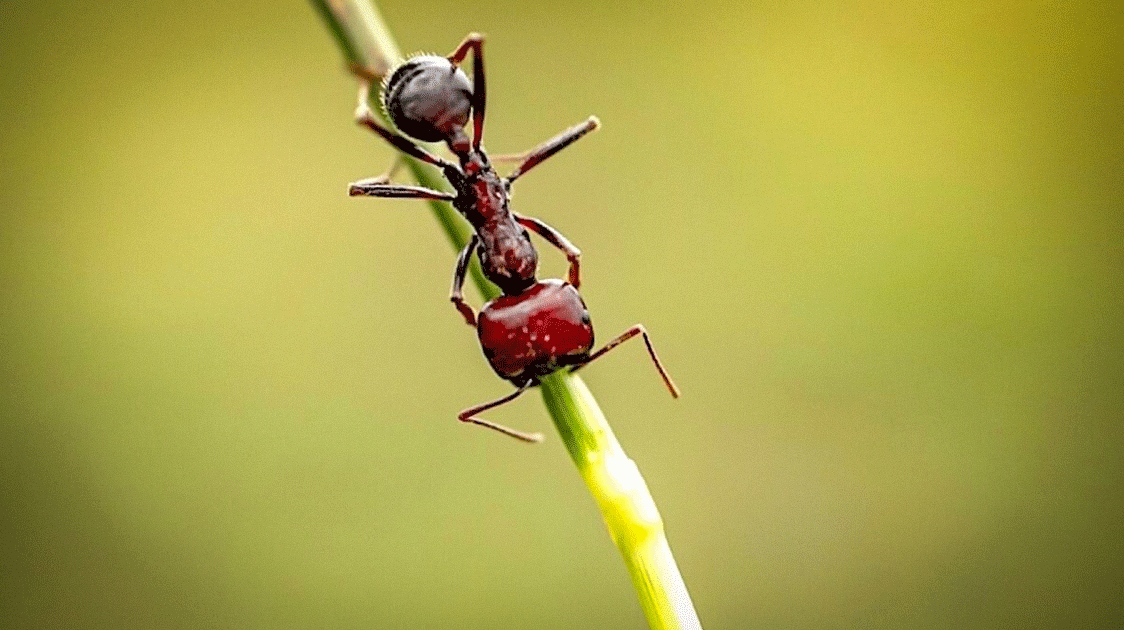
In fact, Kenya's cabinet did approve policy guidelines last year aimed at commercializing the wildlife economy, including the ant trade.
"The guidelines seek to promote sustainable-use trade of wild species such as ants to generate jobs, wealth and community livelihoods across all the counties," said Mukonyi Watai.
With careful monitoring in place, future farmers could have breeding ant nests on their land, expanding yields from their fields and orchards, and also selling lucrative queen, soldier, and worker ants.
If ant poaching and trafficking persisted, the most cost-effective method of controlling it would not be at the source, but rather at the online selling platform level of the trade chain.
Social media platforms, particularly those of Meta, should eliminate all wildlife trade, including ants. This would be the most effective anti-poaching approach.
Dr. Stiles started in anthropology and archaeology, researching past and present natural resource use among hunter-gatherers and pastoralists, and later moved to the UN system, working on desertification control. In 1999, he began investigating wildlife trade, producing reports and publications for UN agencies, the IUCN, TRAFFIC, and various NGOs.