Disruption of Ant-plant Mutualism is Sabotaging Lion Hunts in Laikipia, Kenya
By Dr Daniel Stiles
Key Takeaways:
- An invasive big-headed ant (Pheidole megacephala) is displacing the native acacia ant that defends whistling-thorn trees against elephants at Ol Pejeta.
- Big-headed ants don't bite elephants. In invaded areas, elephants break trees at five to seven times the rate of uninvaded areas.
- Less cover means fewer ambushes. Zebra kills are 2.87 times higher in uninvaded areas. Zebra density is unchanged.
- Lions adapted by switching prey. Between 2003 and 2020, zebras dropped from 67% to 42% of lion kills. Cape buffalo rose from 0 to 42%.
- One ant is rewriting predator-prey dynamics across the system. The authors argue that the disruption of mutualism may be an underappreciated driver of trophic change worldwide.
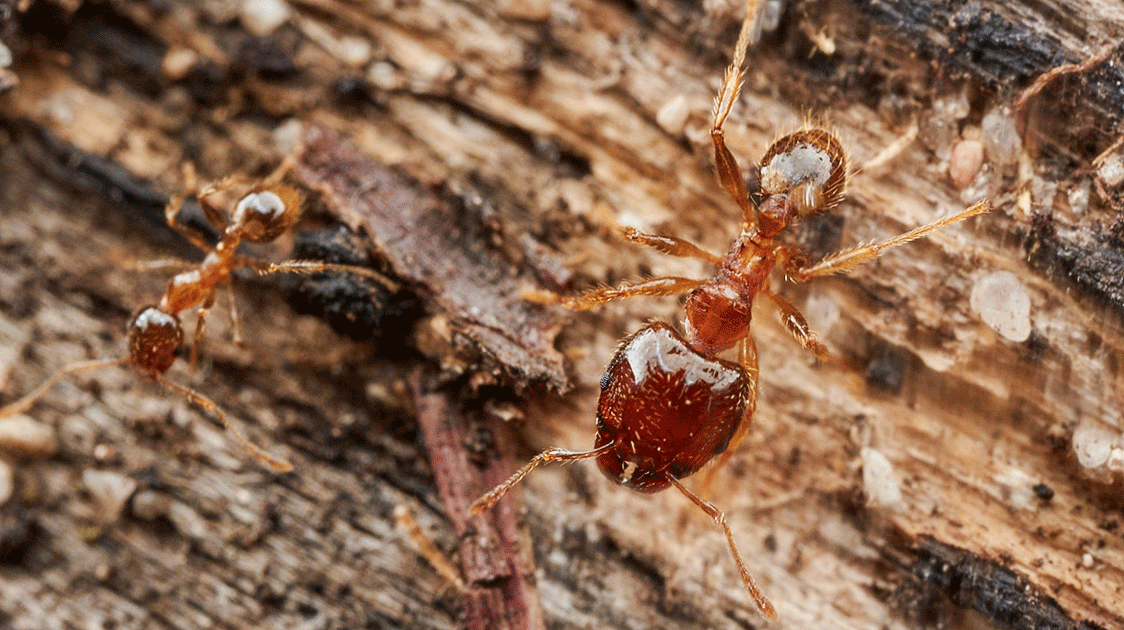
A study from Ol Pejeta Conservancy, Laikipia, Kenya, has documented how the invasive big-headed ant (Pheidole megacephala) is changing the savannah landscape, with serious consequences for some of the region’s most iconic species, lions and plains zebras.
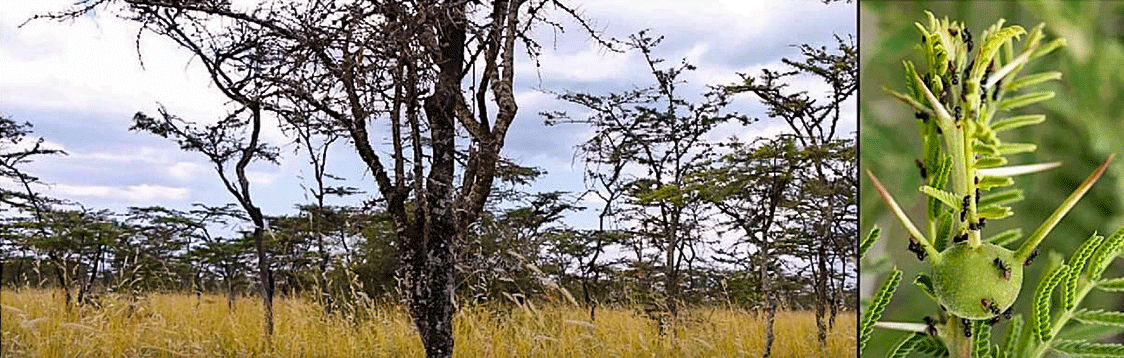
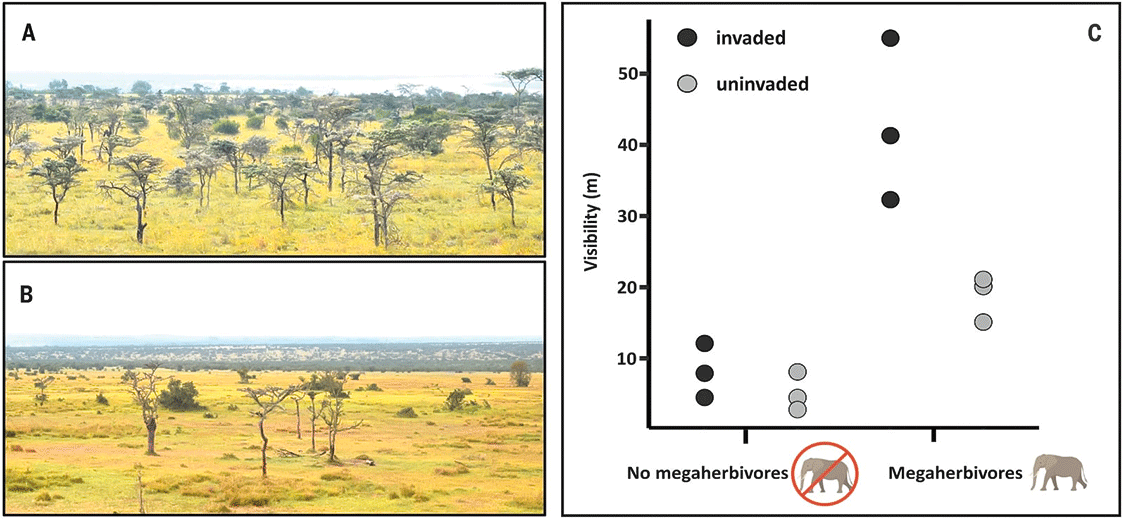
Big-headed ants disrupted the mutualism between native ants (Crematogaster spp.) and the dominant whistling-thorn tree (Vachellia drepanolobium), rendering trees vulnerable to destructive elephant browsing and resulting in landscapes with higher visibility.
However, big-headed ants do not protect whistling-thorn trees from herbivory, thereby increasing the vulnerability of invaded trees to elephant browsing.
Consequently, in invaded areas, elephants browse and break trees at five to seven times the rate of that in uninvaded areas.
Mutualism
Mutualism is the term given when two species in an ecosystem benefit each other through their behavior.
In the case of the Vachellia drepanolobium and Crematogaster ant, the tree provides food (extrafloral nectar) and shelter (swollen-thorn galls) in exchange for defense by a type of native acacia ants. (V. drepanolobium used to be known as Acacia drepanolobium.)
Protection by acacia ants is particularly effective at deterring lethal herbivory by elephants, thereby stabilizing savanna tree cover across entire landscapes. Crematogaster will crawl up elephant trunks, biting them, while big-headed ants don’t.
Elephants feed in a destructive manner on whistling thorn, where the big-headed ant has replaced the acacia ant, breaking off branches and knocking over trees.
The Pheidole megacephala-Vachellia drepanolobium relationship, therefore, is not a case of mutualism, but rather represents the big-headed ant as a parasite on the whistling thorn, resulting in its destruction by herbivory.
Ant migration
Even ants migrate.
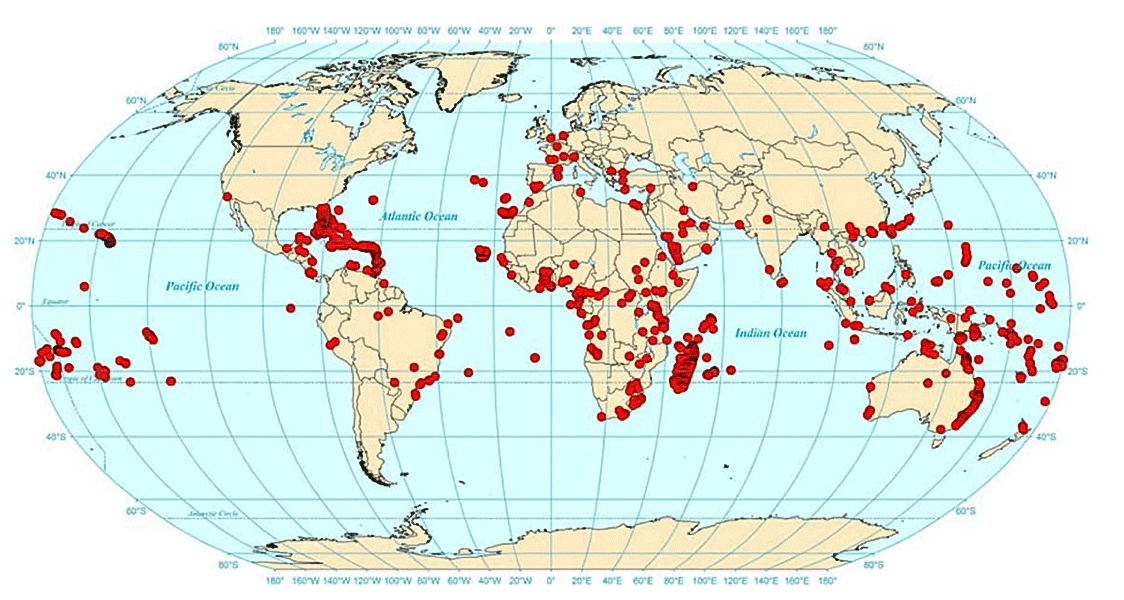
The big-headed ant was first described on the Indian Ocean island of Mauritius in 1793, but it probably did not originate there.
One uncontested research article concluded, "In all probability, Pheidole megacephala is of Ethiopian or Malagasy origin, as it shows a great development of subspecies and varieties in these two regions and nowhere else."
From its original source, the species has spread hidden away in cargo to most parts of the world.
Its rate of spread on Ol Pejeta is estimated at about 50 metres per year.
Effects of mutualism disruption on lion hunting
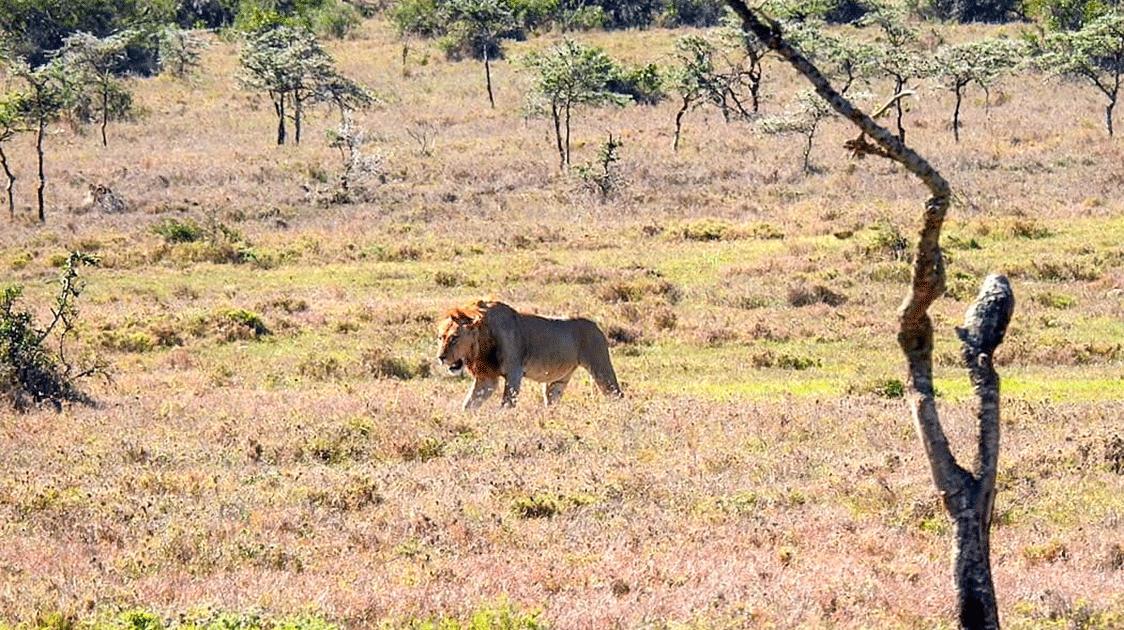
The main prey for lions on Ol Pejeta is zebras.
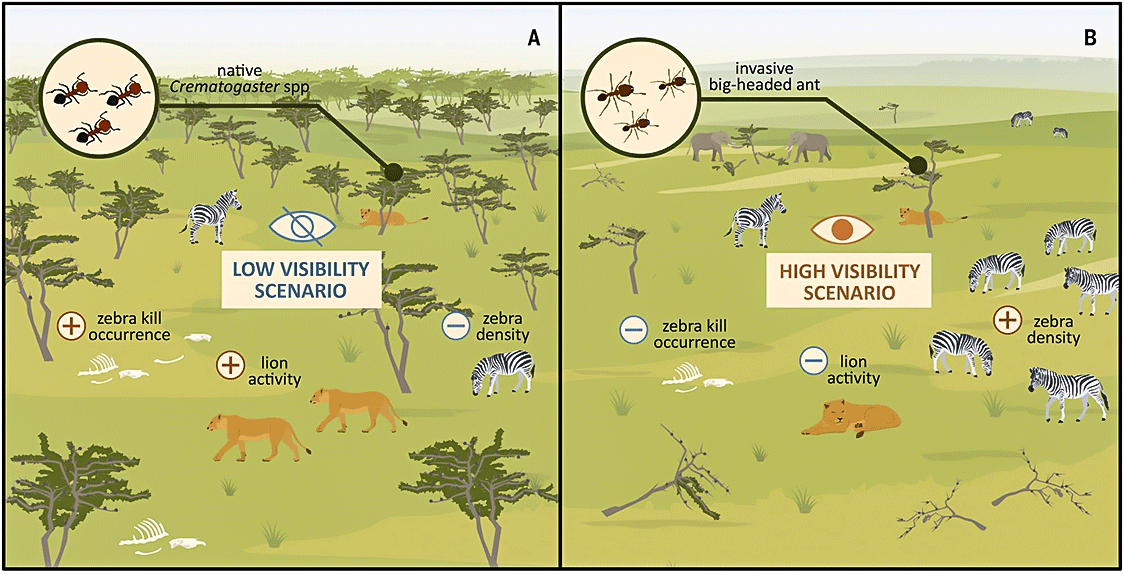
The study hypothesized that tree clearance by elephants would reduce successful lion hunts by decreasing the cover that whistling thorns provide in hunts, making the lions more visible to zebra, enabling them to take evasive action.
A corollary hypothesis is that zebra density would be higher in big-headed ant habitat than in acacia ant territory.
To test the hypothesis, the researchers quantified zebra density, lion activity, big-headed ant occurrence, and visibility at zebra kills.
Using modelling and various statistical tests, the first hypothesis was strongly supported.
Zebra kill occurrence was 2.87 times higher in uninvaded areas relative to areas invaded by big-headed ants.
However, zebra density did not change significantly between invaded and uninvaded areas.
But the reduction in successful zebra hunts did not appear to affect lion population size, which surveys have shown to have remained fairly stable at 53 +/- 2.54 SE, suggesting that zebras had been replaced by alternate prey.
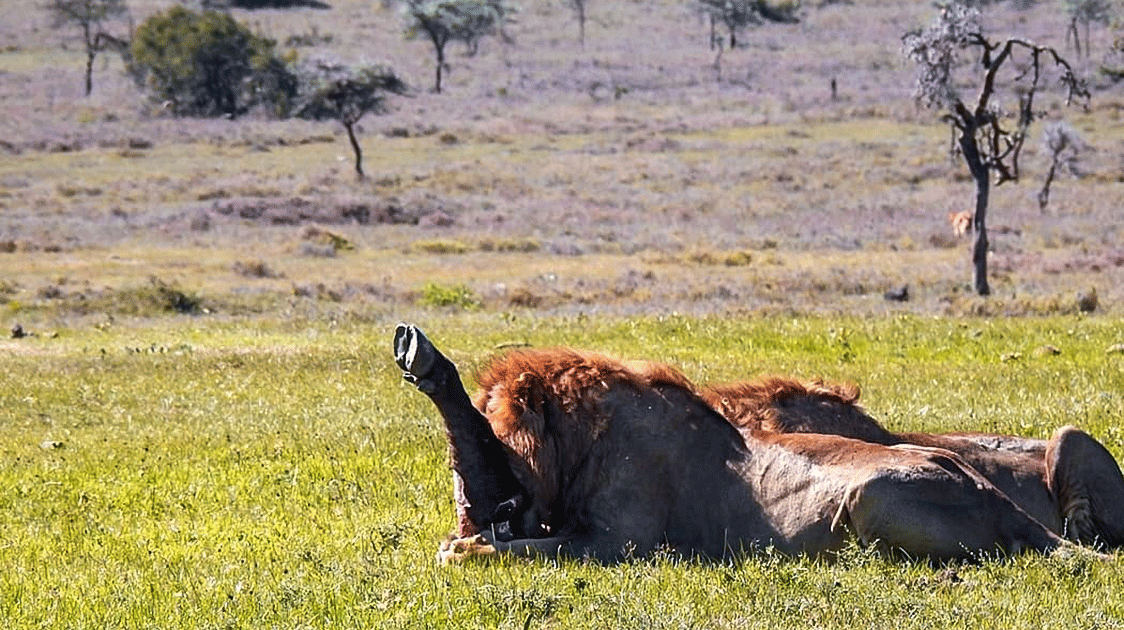
Further study revealed that from 2003 to 2020, the proportion of kills by lions that were zebras declined from 67% to 42%, while the proportion of kills that were Cape buffalo increased from 0% to 42%.
Buffalo, which are much slower and have a higher food package, had replaced zebra as the lion’s primary prey species in terms of food quantity as a result of the big-headed ant invasion.
Conclusion
The study results show that interactions between lions and their primary prey, the plains zebra, are mediated by ant-plant mutualism.
Lions and other large carnivores use tree cover to conceal themselves, such that their success in hunting plains zebra was higher where visibility was lower.
By disrupting the mutualism between whistling-thorn trees and native acacia ants, the invasion of big-headed ants renders trees more vulnerable to elephant browsing, thereby reducing tree cover and increasing visibility.
Furthermore, disrupting the mutualism between whistling-thorn trees and native acacia ants led to lion prey switching from zebra to Cape buffalo, even though hunting buffalo is more dangerous and results in more lion injuries.
The disruption of mutualisms could be an underappreciated contributor to predator-prey dynamics and trophic restructuring of the world’s ecosystems.
Dr Stiles started in anthropology and archaeology, researching past and present natural resource use among hunter-gatherers and pastoralists, and later moved to the UN system, working on desertification control. In 1999, he began investigating wildlife trade, producing reports and publications for UN agencies, the IUCN, TRAFFIC, and various NGOs.