The Link Between Meta’s Promotion of Online Wildlife Trafficking, Increasing Global Wildlife Seizures, and Ecosystem Collapse
By Dr. Daniel Stiles
Key Takeaways
- Illegal wildlife trade is a major global crime: It is a leading driver of biodiversity loss and is estimated to be worth about US$34 billion annually.
- Trafficking has shifted online: As traditional e-commerce sites restricted wildlife sales, traffickers increasingly moved to social media and private
- Meta platforms dominate the online trade: Facebook alone accounted for 71.5% of detected illegal wildlife advertisements, with WhatsApp and Instagram also heavily implicated.
- Online sales are linked to rising seizures: The article argues that many wildlife seizures are deliveries of products bought through online platforms, especially Meta services.
- The consequences extend beyond wildlife: Wildlife trafficking contributes to species extinction, ecosystem collapse, climate risks, economic instability, and national-security concerns.
Illegal wildlife trade (IWT) remains a major driver of global biodiversity loss and is considered to be one of the most lucrative forms of transnational organized crime. A widely cited valuation published by UNEP in 2014 estimated IWT's annual worth at US$7–23 billion; however, its methodology is unclear and outdated, and the world has changed significantly since it was published.
Researchers at the University of Singapore have developed a methodologically transparent and updated estimate of the global IWT value. Based on IWT seizures reported in TRAFFIC's open-access Wildlife Trade Portal, they obtained prices for each species–product combination through a systematic search and then corrected them using expansion factors to account for underreporting and under-detection. Using seizures reported between 2016 and 2021, they conservatively estimated the mean annual economic value of IWT to be US$34.0 ± 3.42 billion.
Types of wildlife traded
Wildlife items traded, whether illegally or legally, fall into two broad categories: live animal trade and derivative parts trade.
The first supplies the exotic pet and zoo industries, and the second supplies mainly the ornamental or cultural objects and traditional medicine industries.
The same species can supply both types at different life stages, most commonly live when young and parts when older.
Usually, the two types of wildlife trade involve different actors and trade-chain networks, although there are occasional overlaps, e.g., live big cats and their parts (bones, canines, claws).
The same suppliers can supply both live animals and parts, but destination buyers and locations at the demand end of the trade chain are usually different.
Illegal online wildlife trade
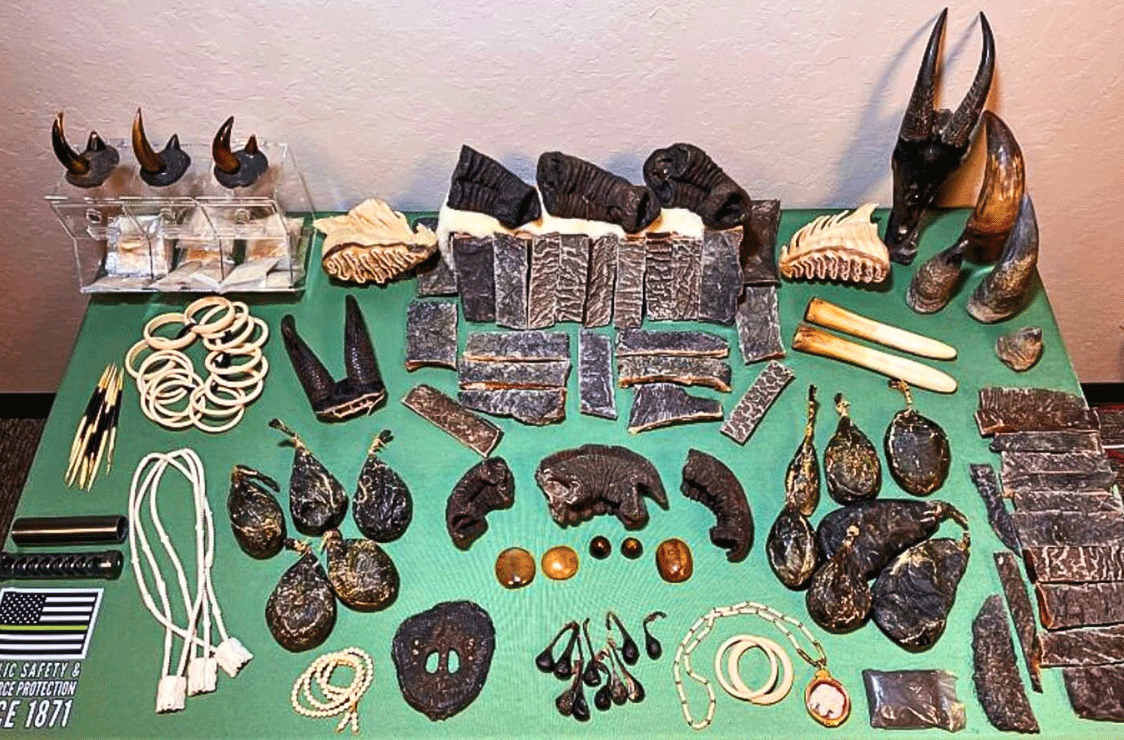
In earlier years, before the internet (roughly pre-2000), illegal wild animals and their parts (eg ivory, rhino horn, etc.) would be supplied as pets/zoo animals or body parts products by transnational criminal networks of poachers and traffickers.
Importer-brokers in destination countries would sell the products to middlemen, processors (eg ivory carving workshops, traditional medicine manufacturers) or directly to end-users.
Live animals and birds would end up in people’s homes, or some type of wildlife facility, and products would be sold to consumers in physical marketplaces or shops.
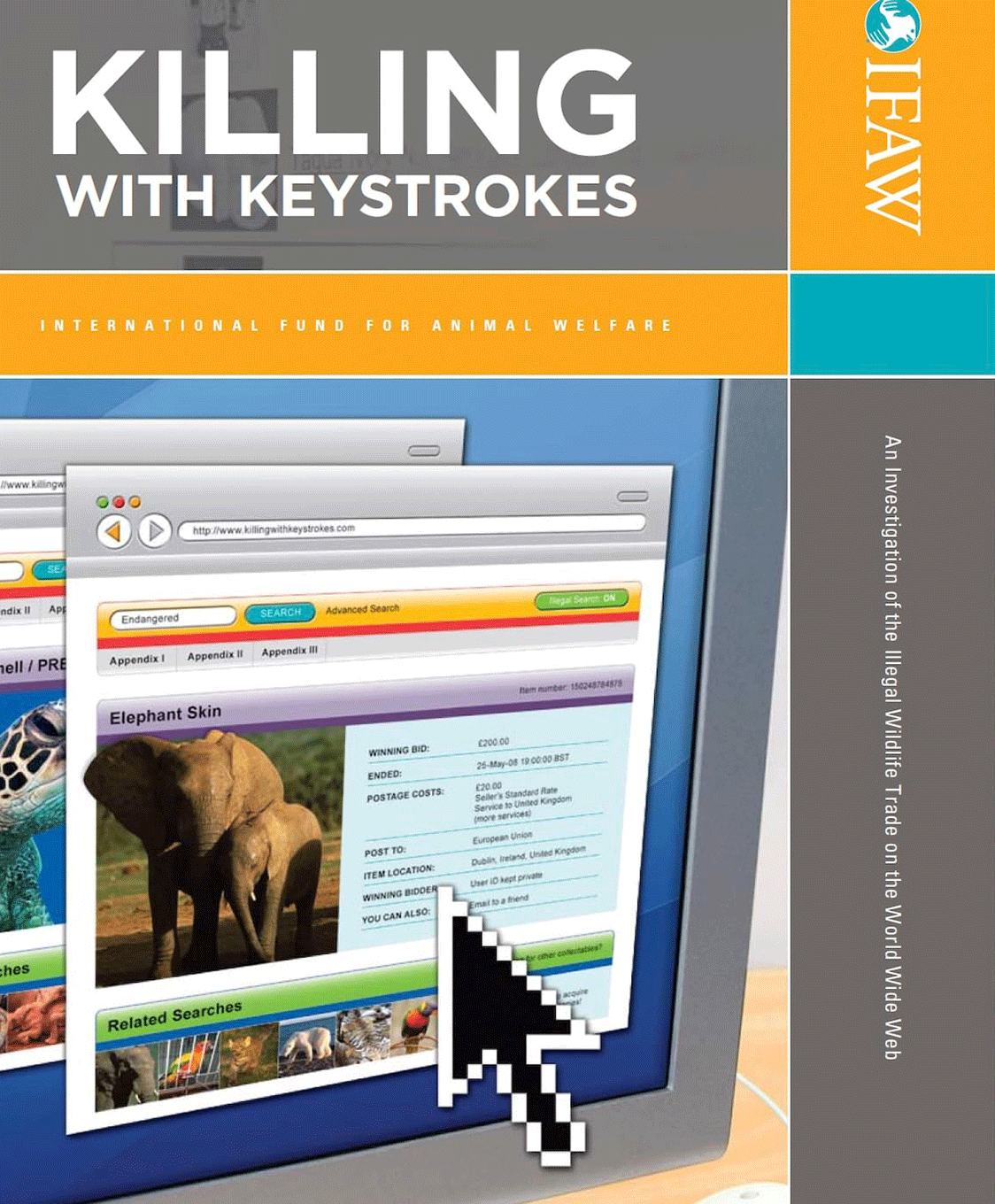
As the internet developed, e-commerce websites began appearing. Wildlife items started appearing on these websites. In 2008, IFAW published the results of a six-week snap study that found 126 websites in eight countries with 7,122 wildlife ads.
Both live wildlife and their derivative parts could now be found from the comfort of home or office on a computer in one big online marketplace.
Now, instead of a few major trade routes shipping large quantities of wildlife items, an increasing number of person-to-person trade routes transport small, internet deliveries.
E-commerce websites have one major disadvantage, however. They are highly visible and easy to search. It is impossible to conceal IWT.
Wildlife conservation NGOs, such as IFAW, began monitoring their activities, mostly illegal, and reporting the results in publications. E-commerce websites began restricting advertising of wildlife items on their platforms.
The rise of social media
Mark Zuckerberg launched Facebook to the public in 2006, which included a private messaging app called Messenger. Facebook later acquired Instagram and WhatsApp.
In 2021, they rebranded everything under the name Meta.
After eBay, Craigslist, and other e-commerce sites began restricting wildlife ads in the 2010s, traders shifted to Facebook and Instagram.
Both platforms offered flexible ways to market wildlife to buyers with varying privacy settings, plus confidential messaging apps where traders could discuss payment negotiations and shipping methods privately.
Meta developed more sophisticated algorithms and business techniques that vastly increased user numbers, engagement, and the networking of users who shared common interests, including wildlife trading.
Patrol wrote about this in its July 2026, which summarized a report released in June this year produced by a coalition of NGOs led by Freeland.
Today, the Meta family of platforms has about 3.6 billion users. Tens of thousands of wildlife poachers and traffickers post a huge variety of illegal wildlife trade (IWT) ads on these platforms.
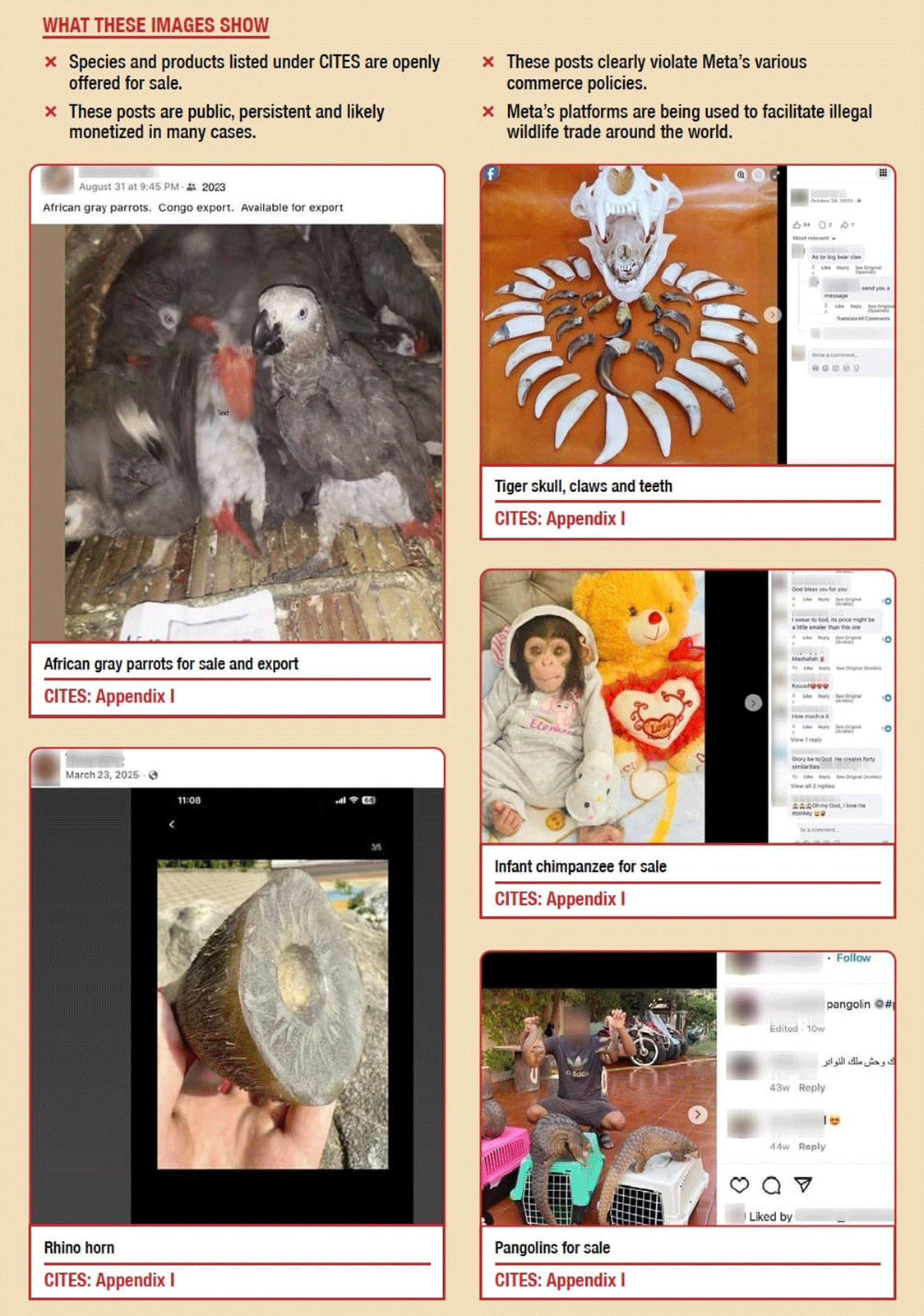
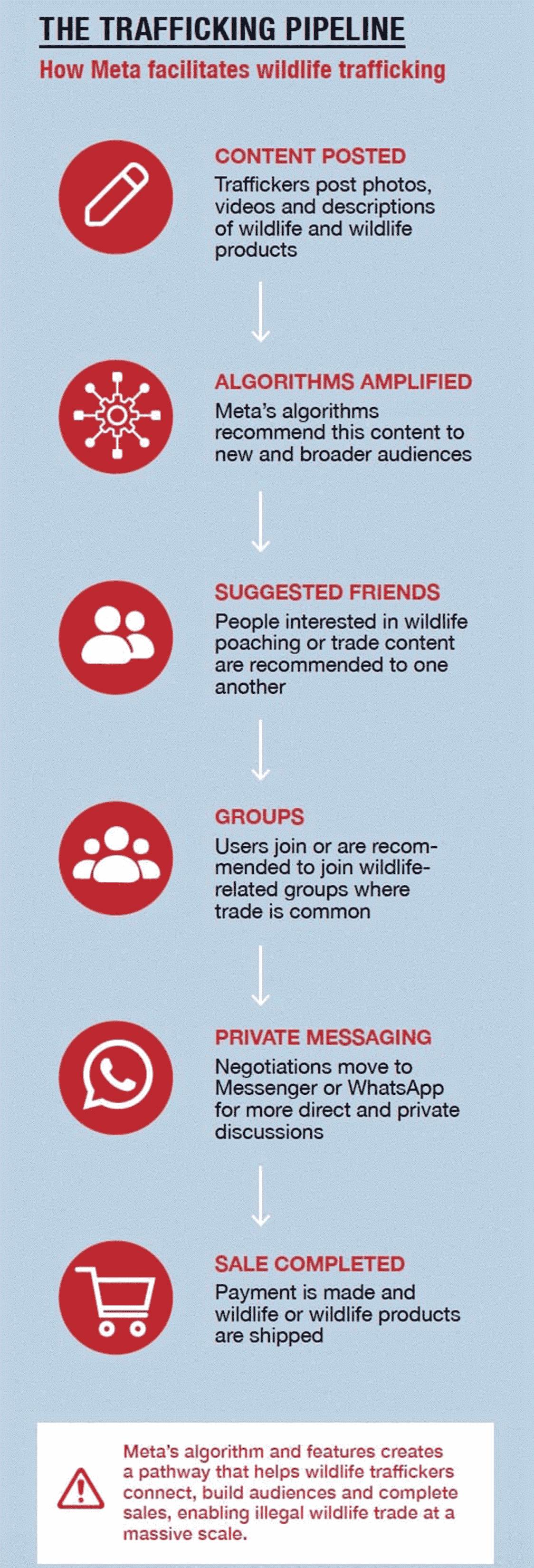
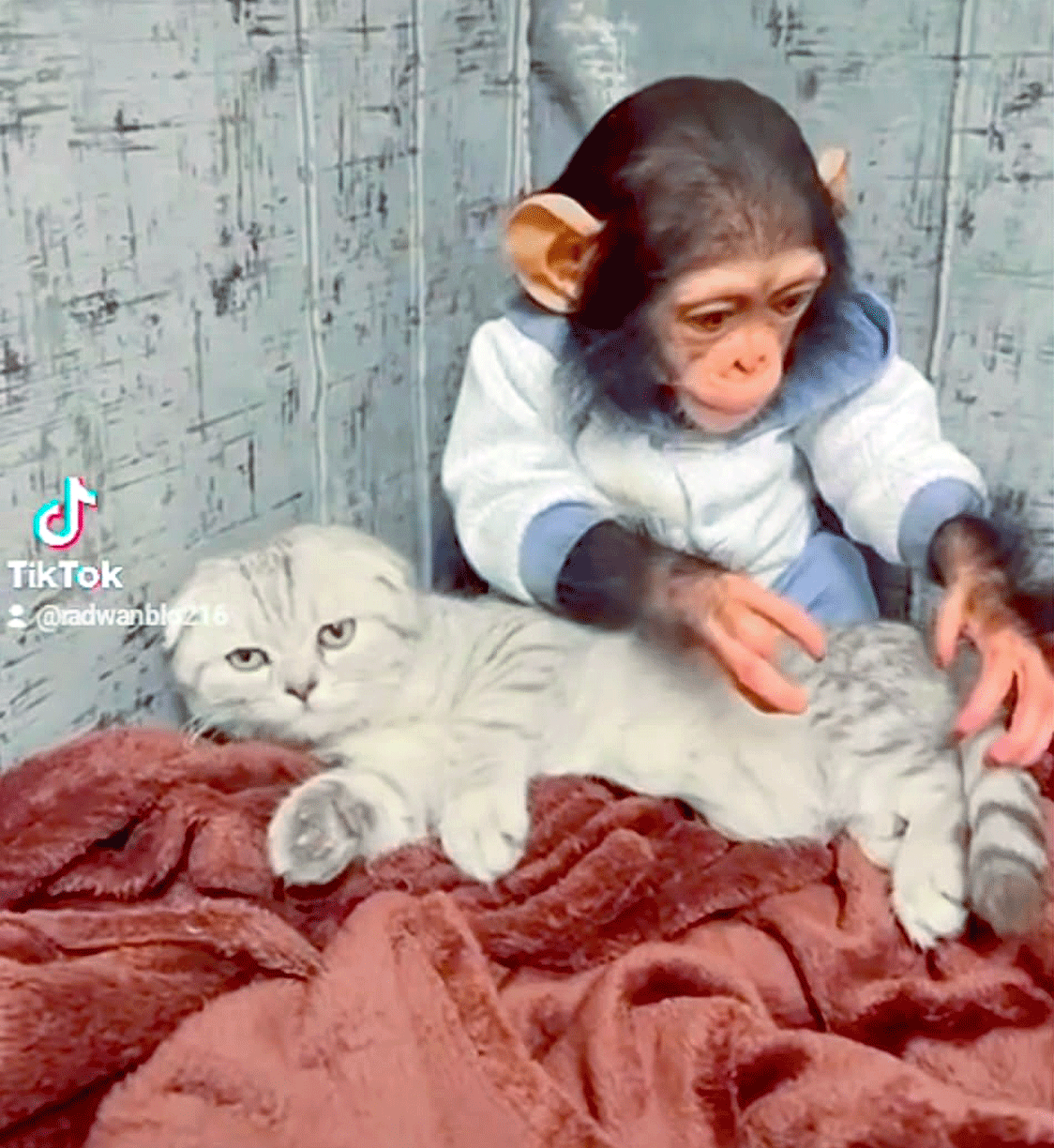
Other social media platforms such as TikTok, Telegram, Snapchat, and various Chinese ones (Taobao, Baidu, etc.) have also joined the wildlife marketplace, sometimes with the same traffickers seen on Meta.
The Global Initiative Against Transnational Organized Crime’s ECO-SOLVE project has developed a Global Monitoring System (GMS) for online IWT.
They recorded 25,350 illegal wildlife adverts online between 14 April 2024 and 30 April 2026.
These detections span 11 data hubs, 66 online platforms and 23 languages, reflecting the continued expansion of the GMS and the growing visibility of the online wildlife trade across social media, e-commerce, messaging apps, classified advertising sites and business-to-business platforms.
Across the full dataset, the GMS recorded 280,237 advertised items, products or specimens.
Parts, extracts, and derivatives accounted for 217,264 recorded items, or 77.5% of the total recorded quantity, while live animals accounted for 62,973 items, or 22.5%.
Facebook accounted for 71.5 % of all detections, making it by far the most important platform for monitoring and enforcement attention.
WhatsApp followed, while Instagram, Public Ads, Tokopedia, TikTok, YouTube, Shopee, Line and OLX also appeared among the most frequently detected platforms.
“About 60 % of detected illegal wildlife trade advertisements across the monitored platforms posted prices for illegal wildlife products. The total advertised value of detected offers representing listed prices rather than confirmed transactions or stock was $66 million, of which Facebook accounted for $65,042,748 (98 %),” the report says.
“Sellers often post proof of payments to groups and to their profiles to verify they are legitimately selling the illicit goods. Product shipment methods vary but commonly claim to use on-demand courier services (e.g. those found on apps), public bus systems and self-delivery.”
According to the new findings, the majority (84%) of adverts detected on Facebook related to CITES Appendix I species (international trade ban), and 14.6% to CITES Appendix II species (restricted trade).
Only 180 (1%) were non-CITES species.
The scale of IWT that has evolved online, particularly on social media platforms, is several orders of magnitude greater than traditional pre-internet physical marketplaces.
Wildlife seizures
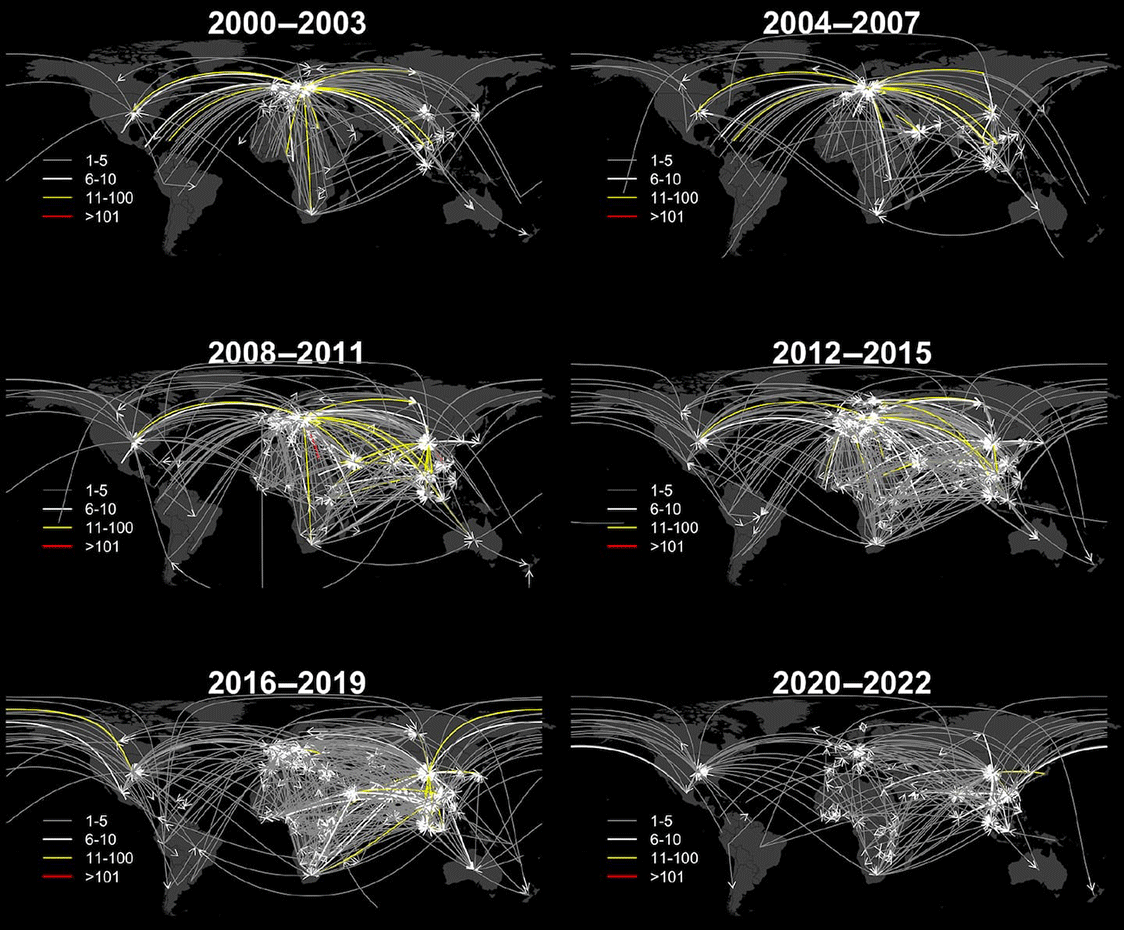
A study published this year entitled “Two decades of changes in the global network of illegal wildlife trade” covers the period 2000-2022. It used wildlife seizure data provided by the CITES Trade Database and the TRAFFIC IWT database.
The study found that the IWT network expanded significantly from 49 countries in 2000 to 110 countries in 2018.
There was a similarly dramatic increase in the number of trade connections from 2000 to 2018, highlighting the growing complexity of the trade.
During the COVID- 19 pandemic, the IWT network exhibited resiliency; there was only a gradual decline in participating countries in 2020 to 2021, which would be expected if most of the activity was online and not face-to-face.
Also, during the pandemic, network clustering and geodesic distance were maintained, underscoring IWT’s adaptability despite global disruptions.
By contrast, physical IWT marketplaces were severely disrupted by Covid-19, the infamous village of Nhi Khe in northern Vietnam being a good example.
Prior to the pandemic, thousands of Chinese tourists visited it daily to buy a range of illegal wildlife products. The village was completely closed to visitors during the pandemic shutdown in 2020-2022. Online IWT out of Nhi Khe continued unhindered, however.
Reports by Interpol, UNODC, and the UK all indicate that IWT seizures have increased in recent years.
While live animal seizures reached a record high in 2025 — driven largely by demand for exotic pets — most wildlife trafficking involved animal remains, parts and derivatives, often used in traditional medicine or specialty foods.
These findings mirror the breakdown in live animal to parts ads ECO-SOLVE found online. The positive correlation between types of wildlife (live vs. parts products) in online wildlife ads and seizures strongly suggests that the seizures are mostly deliveries of wildlife purchases made online, about 80% of which are from Meta platforms.
To provide specifics to the deliveries’ hypothesis, IFAW found that Bole Airport in Addis Ababa has emerged as a critical gateway for transnational crime networks trafficking elephant ivory, live cheetahs, African grey parrots, and other species bound for markets in the Middle East, Southeast Asia, Europe, and the United States.
A 2025 African Wildlife Foundation report stated that Bole’s canine unit searched 512 passenger flights, 529 cargo flights, and performed nearly 45,000 luggage inspections, yielding 15 major interdictions and the seizure of 1,661 kilograms of ivory.
Most, if not all, passengers arrested with wildlife were likely delivering online purchases or intended to sell the wildlife online in the destination country, as in one relevant example in Thailand.
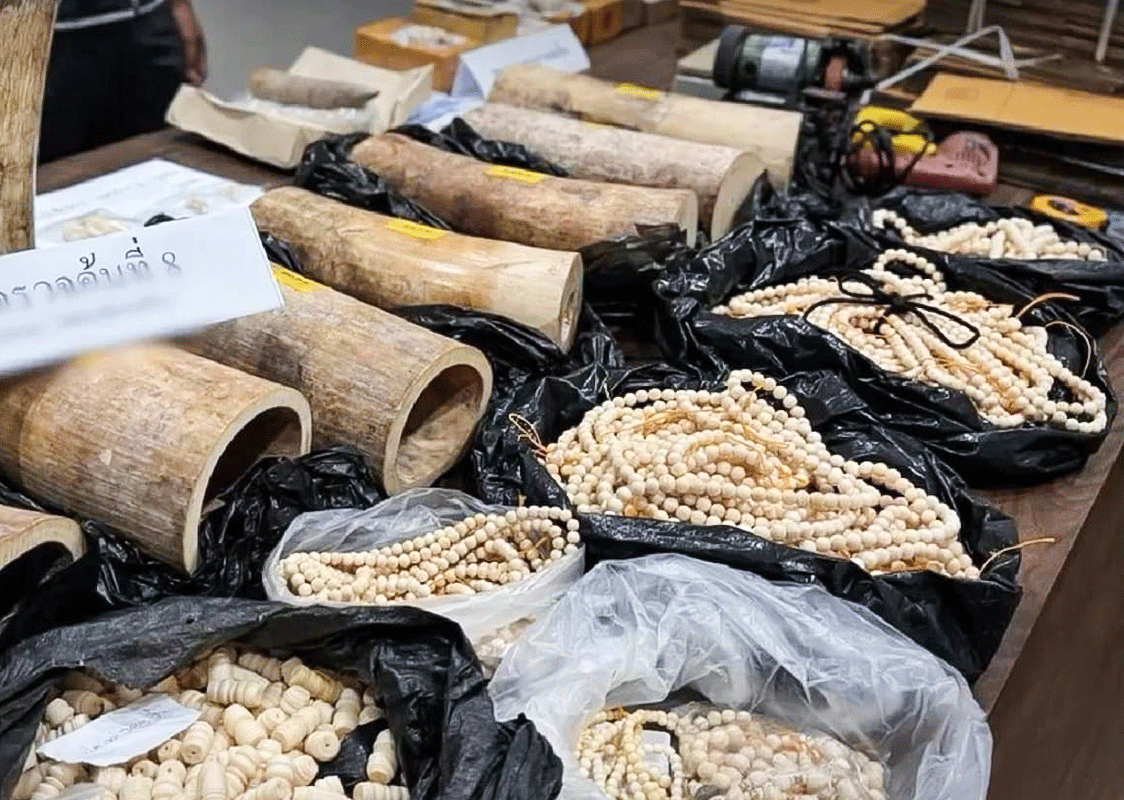
Thai police on May 11 this year announced the largest seizure of smuggled ivory in a decade, with nine people arrested and accused of trying to sell 250 kg of African elephant tusks via Facebook in a private group.
The police arrested nine Thais who were group administrators tasked with posting the ivory for sale.
Christian Plowman, a former UK law enforcement officer and IFAW’s Global Program Manager for Wildlife Cybercrime, underscored that Ethiopia is primarily a transit node rather than a consumer market.
Illicit cargo—ranging from rhino horn and ivory to live lions, cheetahs, and exotic birds—originates across Africa and moves through Addis Ababa toward high-demand markets.
Plowman stressed that policymakers widely underestimate the scale of wildlife trafficking. “It is not a small problem,” Plowman noted, placing wildlife crime on the same tier as narcotics, firearms, and human trafficking.
Implications of online IWT for biodiversity, geopolitics and national security
Several United Nations and IUCN reports in the early 2020s warned of impending threats to the global economy and political stability caused by high rates of biodiversity loss.
In a strongly worded opening address to the 2022 UN General Assembly, UN Secretary-General António Guterres told delegates that “humanity has become a weapon of mass extinction”.
Guterres further pressured attendees by describing the conference as “our chance to stop this orgy of destruction”.
In 2023, a research study entitled “Trading species to extinction: evidence of extinction linked to the wildlife trade” appeared.
It found that, in total, 511 taxa were reported as extinct in recent years at some level due to trade-related factors, with 294 reports of global extinctions, 25 species extinct in the wild, and 192 local, regional, or population extinctions.
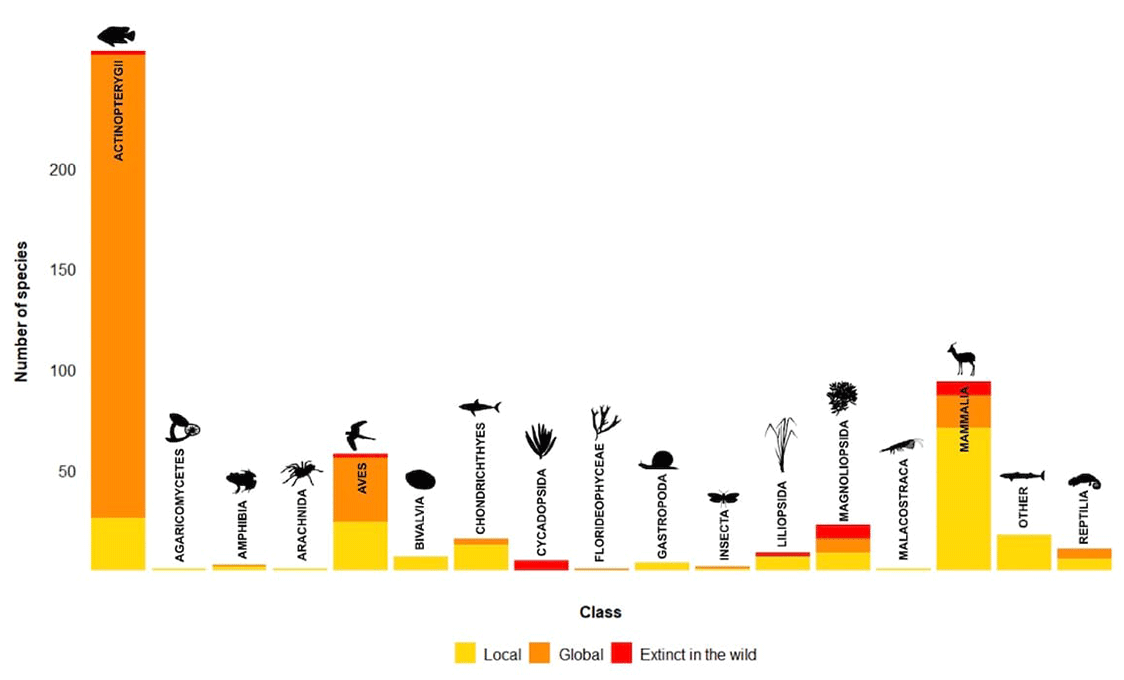
The study did not address how the trade was conducted or whether wildlife was sold through physical or online outlets, but other studies reviewed here point to the importance of online trade, especially social media platforms, as the primary trade method leading to extinctions.
A study published in 2025 relevant to the one above on extinctions reported that ecosystem function was degrading in sub-Saharan Africa as larger body-size species populations were reduced in number or became extinct, leaving more of the ecosystem functioning to be carried out by smaller-sized species.
Wildlife poaching and trafficking, facilitated by online platforms, are significant facilitators of this degradation process.
A report published in 2025 by Nature Needs More on the exotic pet trade concluded that the situation was dire for thousands of wild species of mammals, birds, reptiles, fish, and others.
“To summarize,” the report stated, “the exotic pet trade is basically unregulated (either not regulated or regulations are not enforced), is conducted by businesses for profit, is characterized by very fragmented and often long supply chains and none of the actors involved in the trade have any interest in sustainability….”
The study estimated that between 10,000 and 13,000 species are being traded as exotic pets alone.
For reptiles, nearly 4,000 species are traded, which equates to 35% of all known reptile species.
The report also stated, “There are basically no restrictions on trading in live animals on these platforms, or if they do exist, trade can easily move to closed groups (like on Facebook). The platforms have no incentive to restrict or police the trade in live animals; they profit from any engagement by users and from paid advertising. Again, with the lack of regulation and enforcement, it would be silly to presume that lobbying the social media giants and online trade platforms would have any effect on their behavior when it comes to the selling of exotic pets.”
It noted the complete failure of the Coalition Against Wildlife Trafficking Online, launched in 2018, to control wildlife trafficking online. Soon after its launch, the coalition said its goal was to cut the illegal online trade by 80% by 2020.
In progress reports since then, their website only makes statements such as, “Since our last progress update in 2021, companies have blocked an additional 12.5 million sales and accounts for prohibited wildlife, bringing the total since 2018 to 24.1 million.”
The 2021 and 2024 updates provide zero information on how these numbers are in any way connected to the goal of ‘cutting the illegal online trade by 80% '.
The report identifies numerous endangered species being driven toward extinction by online trade to supply pets.
A report released in January this year by the UK government shows how biodiversity loss, which can lead to ecosystem collapse, can disrupt food, water, health and supply chains and trigger wider geopolitical instability.
It identifies six ecosystems of strategic importance for the UK and explores how their decline could drive cascading global impacts.
Unsustainable wildlife trade is a leading cause of biodiversity loss. Although the assessment focused on UK national security, the threats are applicable to all nations.
Another 2026 study examined the economic threats biodiversity loss poses to financial markets and national debt servicing.
Environmental degradation undermines the natural foundations of economic activity, reducing productive capacity.
A partial ecosystem collapse scenario increases annual debt servicing costs by US$49 billion in India, equivalent to 2.4 % of median post-tax income, and by US$70 billion in China.
Across countries, additional annual interest payments could reach US$162 billion, nearly reaching the US$200 billion per year target for conservation support under the Global Biodiversity Framework. Angola, Bangladesh, the Democratic Republic of the Congo and Madagascar could face gross domestic product losses of more than 15 % by 2030.
The results suggest that financial markets are systematically underpricing nature-related risks, with consequences for public finances, nature and financial stability.
Deforestation and species loss alone make pandemics such as COVID-19 more likely, and estimates indicate that even partial collapses in just three ecosystem services—wild pollination, marine fisheries and tropical timber—could result in “a decline in global GDP of US$2 trillion annually by 2030”.
Another 2026 study simply provides data and reinforces the view that it is biodiversity ecosystem services that drives biodiversity ecosystem function.
Ecosystem services are, of course, performed by wild animal and plant species.
When species are reduced or eliminated entirely from an ecosystem, function suffers. As other studies have shown, degrading biodiversity leads to increased risks to global and national economies and national security.
Wild animals are even crucial for climate stability. A coalition of 287 researchers across six continents has endorsed the Scientific Consensus on Wildlife and Climate and called on governments worldwide to formally incorporate wildlife into their climate policies.
“Wild animals are some of our greatest allies in protecting the planet from climate catastrophe, yet their role has been overlooked for far too long,” said Matt Collis, Senior Director of Policy at the International Fund for Animal Welfare. “From elephants shaping forests to marine species helping store carbon in the ocean, animals keep ecosystems healthy, resilient, and functioning. This Scientific Consensus makes clear that climate policy can no longer ignore wildlife – not only for the sake of biodiversity, but for the future stability of our planet.”
Therefore, reducing the number and variety of wild animals through trafficking even contributes to climate change.
The last report signaled here is the mistitled World Wildlife Fund’s Living Planet Report 2026: The Science of Hope, released on 8 October 2026.
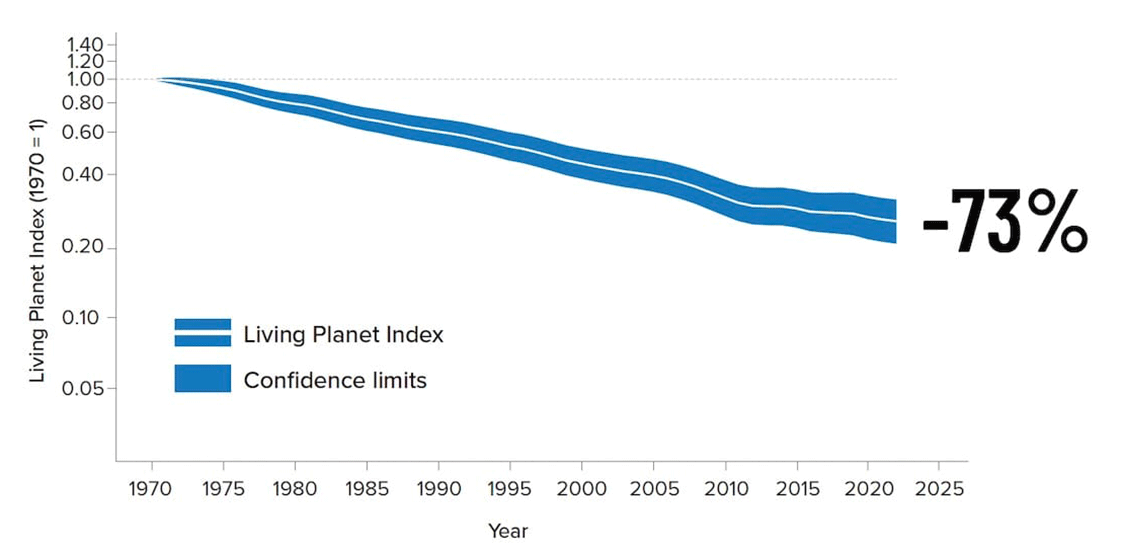
It found that the average size of monitored wildlife populations globally fell by 73 % over the 52-year period between 1970 and 2022, hardly a hopeful finding. Africa’s monitored wildlife populations declined by an average of 80 % over the same period, an even more shocking finding.
The report concluded: “The food we grow depends on pollinators and the soil microbes that keep cropland productive.”
“Drinking water depends on intact watersheds. Most medicines in our pharmacies originated in molecules first identified in plants, fungi or microorganisms. The climate we depend on is regulated by forests, oceans, peatlands and grasslands.”
“And the economy itself, expressed as a number, rests on these services: about half of global GDP, roughly US$58 trillion in 2023, comes from work that depends in some way on nature. When biodiversity is degraded, the things built on it are degraded along with it.”
“That degradation is now happening at a pace without precedent in human history.”
The Science of Hope?
Last words
The impact of IWT on global biodiversity, ecosystem functioning, climate, the economy, and security has been significantly underestimated.
And since most IWT is currently carried out online, principally on Meta platforms, the harm Meta causes by failing to enforce its own stated policies is profound.
Dr. Stiles started in anthropology and archaeology, researching past and present natural resource use among hunter-gatherers and pastoralists, and later moved to the UN system, working on desertification control. In 1999, he began investigating wildlife trade, producing reports and publications for UN agencies, the IUCN, TRAFFIC, and various NGOs.