Who Pays for America's Wildlife?

By Prof Brian Child
Key Takeaways
- Wildlife recovery requires long-term financial investment, with reliable funding mechanisms that support management, habitat protection, and enforcement.
- When local communities, landowners, and governments receive tangible economic returns, they have a powerful incentive to protect wildlife and its habitat.
- Across North America and much of southern Africa, hunting revenues have helped fund habitat restoration, wildlife management, and conservation programs for decades.
- The long-term success of any conservation model depends on accountable institutions, sound management, and ensuring that conservation benefits reach the people who bear its costs.
- The North American approach has delivered remarkable results, but its success is rooted in unique social, political, and economic conditions that cannot simply be replicated elsewhere.
Environmentalists tend to view wildlife outside protected areas through the lens of the North American Model, in which wildlife is managed as a public asset. In North America, state "Fish and Wildlife" agencies manage fish and wildlife that are resident on, or which traverse, private lands (endangered species and trade are administered federally).
This system works quite well in the unique context of North America, but it papers over the mismatch between the resource and its regimes of ownership and governance.
As with national parks, wildlife and hunting provide wide societal and economic benefits. Roosevelt's legacy was to treat hunting and fishing as a public good, as he wanted all Americans to have the right to pursue manly outdoor activities.
Low hunting fees encouraged wide participation and political support from millions of middle-class hunters.
Some 101.6 million Americans (40% of the US population aged 16 and above) participated in wildlife-related activities such as hunting, fishing, and wildlife viewing in 2016 (USFWS, 2017).
Fish and Wildlife agencies ensure a broad understanding of the economic value of hunting, which generates nearly USD 1 billion in annual fees, while its economic contribution through employment and added value far exceeds this.
Thus, Arnett and Southwick (2015) state that:
13.7 million American hunters and 2.1 million Canadian nature-recreationists spent more than USD 38.3 billion and USD 1.8 billion, respectively, on non-commercial hunting- related expenses each year ... [supporting] an estimated 680,937 jobs and USD 26.5 billion in salaries and wages [with] estimated state and local taxes [of] USD 5.4 billion, and federal taxes [of] USD 6.4 billion for 2011.
North Americans recognize that the economic value of hunting far exceeds the cost of hunting tags and have established reliable funding mechanisms to reinvest in wildlife management.
The famous Federal Aid in Wildlife Restoration Act of 1937 (the Pittman-Robertson Act) taxes hunting and fishing equipment and uses the revenue to provide about USD 300-500 million annually in matching funds to state Fish and Wildlife agencies (Arnett & Southwick, 2015).
In parallel, a large civic sector of hunting and conservation clubs and societies invests a further USD 1.6 billion annually in wildlife and land management, rehabilitation, and purchases.
Arnett and Southwick (2015) conclude that "such economic numbers cannot be ignored by decision makers". Hunters also argue that their substantial contribution to the conservation of wildlife and wild spaces far exceeds that of vocal urban environmentalists who oppose hunting and may be as much as 70% of conservation dollars (Donnall, 2010).
One of the ironies of capitalist America is the effectiveness of its well-managed public (centrally planned and socialist) system for conserving and valorizing wildlife.
Wildlife populations in North America have recovered.
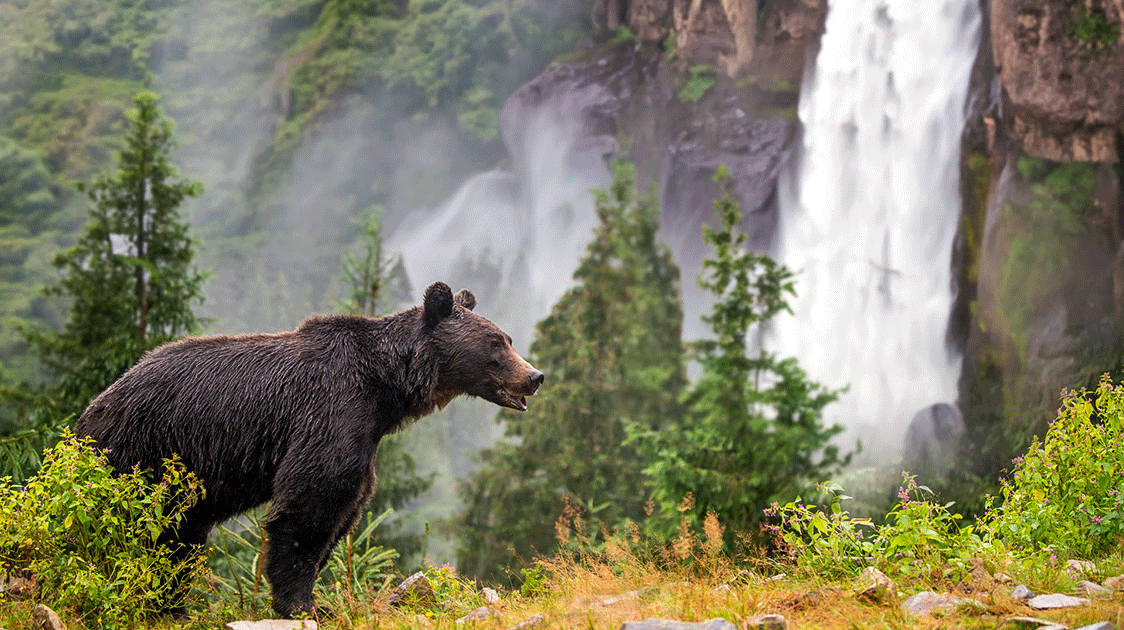
Wildlife is sufficiently important to large numbers of Americans that they hold public agencies to account, and wildlife benefits from a financing model that recognizes the economic (not only the financial) value of wildlife.
These conditions do not hold in many tropical countries. The public gets few benefits from wildlife and has few incentives or mechanisms to hold wildlife officials to account.
Moreover, officials lack the economic training to make the economic case for parks, hunting, or tourism, so parks and wildlife are invariably underfunded.
Passionate environmentalists often neglect the importance of reliable financing models.
Thus, North America's public trust model works because economic values are reflected in conservation agency budgets. Southern Africa's sustainable use model works because landholders own the wildlife and fund it by using it profitably.
What does not work is a public park model that is neither adequately resourced nor staffed.
Even less sustainable is a public model that centralizes the control and benefits of wildlife on private land, while still expecting local landholders to bear the costs.
Hunting and fishing
In recent years, hunting has become controversial, reflecting the growing divide between urban and rural people in empathy and understanding.
Urban people, somewhat disconnected from nature, forget that the livelihoods, cultures, and norms of many rural communities have been inseparable from hunting and gathering for hundreds of generations.
Moreover, since Theodore Roosevelt, the role of hunters and fishermen in wildlife recovery is undisputed, especially in North America (Donnall, 2010).

Hunting has also played a disproportionate role in rewilding much of southern Africa, including communities.
It remains a critical mechanism for financing conservation, especially in situations where wildlife is depleted; this is discussed briefly because of its disproportionate value to communities embarking on Community-Based Natural Resource Management (CBNRM).
As societies settle down into farming and urban life, hunting often transitions from a subsistence activity to one that is primarily symbolic and cultural. Arnett and Southwick (2015) describe this transition in Ancient Greece, where, like North America, hunting was largely democratic.
They suggest that hunting has considerable social importance, maintaining social networks (often through the sharing of meat), preserving cross-generational bonds and stories, providing mental and physical challenges, connecting people to the outdoors, conserving ecological knowledge, and encouraging understanding of and reinvestment in wildlife.
The inclusion of so many values is why the total economic value of sport hunting usually exceeds that of meat commodity production (e.g., bushmeat), sometimes by an order of magnitude.
However, hunting is often not so democratic.
Hunting rights are often controlled by wealthy or noble classes, as recorded in ancient Persia and Egypt (Arett & Southwick, 2015).
When the Normans conquered England under King William I, they introduced game laws that prevented Saxon commoners from hunting, thereby entrenching the elitist concept of the "King's Game" (and the Robin Hood Era), which was, in many ways, exported to European colonies.
Consequently, in much of the world, wildlife is synonymous with the exclusion of ordinary people by the ruling elite and is destroyed as much by social protest (Heffelfinger et al., 2015) as by ungoverned overuse.
Recreational or sport hunters had a major influence on the North American Model and the Public Trust Doctrine.
With the growth in wealth and leisure after the Great Depression and World War II, the number of hunters in North America increased rapidly after 1950, providing a demand for hunting that funded wild lands.
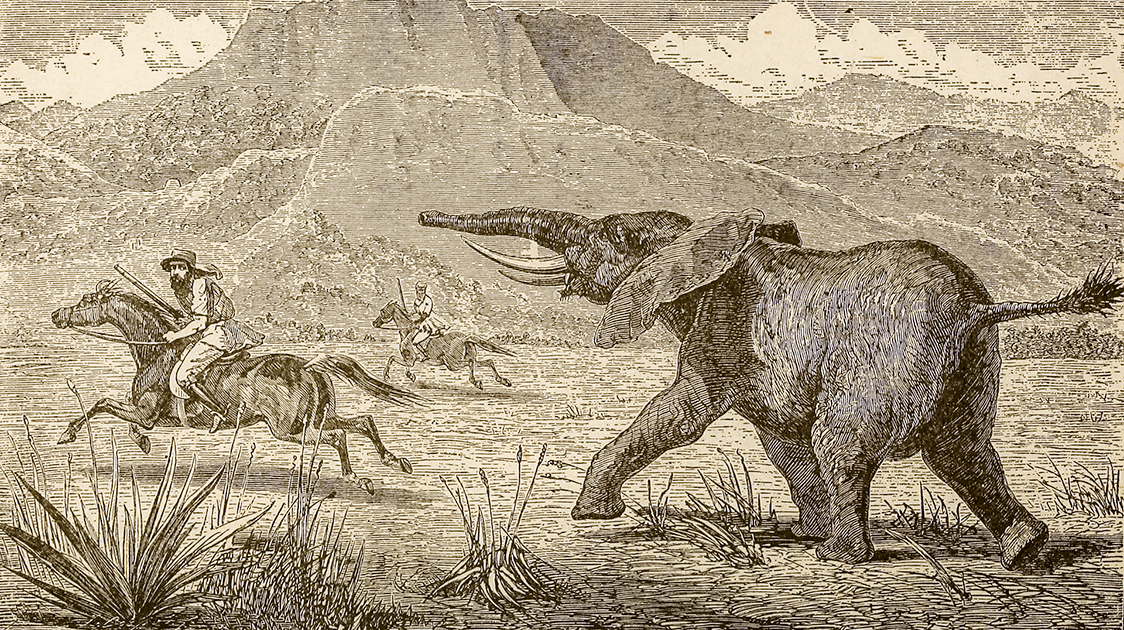
Hunters ventured into Africa and Asia, where the high fees they paid provided a vital impetus to wildlife, including recovery in southern Africa; ungulates and snow leopards in Tajikistan (Kachel et al., 2016); and Bharal sheep and Himalayan tahr in Nepal (Aryal et al., 2015).
Hunting is an invaluable tool for financing wildlife conservation because it generates high value from limited off-take and can be practiced in many areas that are unsuitable for camera-carrying tourists.
Yet there is considerable controversy about hunting for "sport". Roosevelt abhorred market hunting by ordinary people (today's "commoners") and differentiated it from "True sportsmen ... [who] do no harm whatever to game".
Today, the urban elite promote the exact opposite.
It is "politically correct to accept subsistence hunting while abhorring frivolous killing of animals just for 'sport” (Heffelfinger et al., 2015).
In the furor over “Cecil the Lion,” I compiled comments from New York Times articles to describe the complexities of hunting and anti-hunting sentiments.
Some consider trophy hunting to be pathetic, repulsive, and unsportsmanlike. Others expressed their disgust that yet another wealthy man did as he pleased without concern for the consequences.
Some saw Cecil as a road sign in the wanton destruction of the planet by 7 billion humans, crying not only for lions, but for the planet, injustice, the voiceless, and the loss of beauty.
A much smaller group made the case for legal and responsible hunting, and against the growing anthropomorphization of wildlife.
A lonely African voice (Goodwell Nzou, 4 August 2015) in a sister article said he was quite happy that there were no longer lions in his rural village, and also on the US campus where he was pursuing his doctorate.
Hunting is a powerful conservation tool because it generates high values from low offtakes. Some 60-80% of wild land outside protected areas in southern Africa is financed by hunting.
Indeed, the net effect of hunting on conservation has little to do with offtake, or even biology. What matters is the governance of hunting, and what happens to the money.
Proprietorship of wildlife is key and is measured by the return of hunting income to landholders or "producer communities," where a 100% return represents full proprietorship.
The current strident anti-hunting chorus endangers conservation as much as, if not more than, the illegal wildlife trade.
Economics and governance of the North American Model
Roosevelt framed wildlife conservation in the public sphere, resulting in the Yellowstone Model for National Parks and the North American Model of wildlife management outside parks. These models are important because of their influence on global conservation approaches.

In North America, state and federal agencies are highly accountable to citizens, who benefit by using parks and hunting opportunities at very low cost to themselves.
America's combination of vibrant democratic culture and economic education ensures that taxes are reinvested in parks and wildlife, and that management is held to high standards.
Wildlife also gets substantial support from civic organizations.
North American wildlife is a massive industry that benefits large segments of society through a multitude of values.
It is resulting in widespread recovery of wildlife and habitats through sophisticated institutions, including taxes and well-publicized economic surveys that promote the case for funding the wildlife economy.
This includes a significant investment in professional wildlife management agencies and more than 500 universities with specialized degrees in aspects of wildlife management (Mahoney & Jackson, 2015).
While the value of wildlife is transferable to many other countries, the transferability of the North American governance model is less certain, as it is predicated on social accountability, public benefit, and competent state agencies.
Prof Brian Child is an associate professor in the Department of Geography and the Center for African Studies at the University of Florida, and the director of the Life Through Wildlife Project. His book, “Sustainable Governance of Wildlife and Community-Based Natural Resource Management”, is available on Amazon.