The Court Ruled on the Calendar, Not the Locust

Key Takeaways
- The Constitutional Court dismissed SA Hunters' challenge to the "well-being" provisions in NEMBA because the case was brought too late, not because it found the definition sound.
- The Court said it was not finally deciding the constitutional merits, although it described the changes to the definition as arguably modest and the challenge's prospects as doubtful.
- The provisions remain in force, but they are not self-executing. Regulations, permit conditions, and decisions made under them can still be challenged under administrative law.
- No measurable standard yet exists for the mental health of a wild animal, and the line between the DFFE's "well-being" mandate and the Department of Agriculture's "welfare" mandate remains undrawn.
- SA Hunters has been ordered to pay the legal costs of the NSPCA and the EMS Foundation.
In June 2026, Patrol reported on a case before the Constitutional Court that turned on a single word.
Does a Locust Have Feelings? set out why the South African Hunters and Game Conservation Association (SA Hunters) wanted the definition of animal "well-being" struck from the National Environmental Management: Biodiversity Act (NEMBA), or suspended for public consultation.
On 9 October 2026, the Court handed down its judgment in South African Hunters and Game Conservation Association v Speaker of the National Assembly and Others (CCT 270/24) [2026] ZACC 42.
In a unanimous decision written by Justice Owen Rogers, the Court dismissed the application.
Animal protection groups called it a victory for wild animals. Four Paws said the ruling confirmed that wild animals are sentient beings and that their mental states must count in wildlife management.
But there’s more to it than just that.
Dismissed on delay
The National Environmental Management Laws Amendment Act 2 of 2022, which inserted "well-being" into NEMBA, received presidential assent on 21 June 2022. The relevant provisions took effect on 30 June 2023. SA Hunters launched its application in July 2024.
The Court counted the delay from the date of assent, not the date the provisions took effect. That put the gap at a little more than 25 months, which the Court found unreasonable and not satisfactorily explained, according to Mail & Guardian's account of the judgment.
SA Hunters had spent part of that period in policy discussions with the Department of Forestry, Fisheries and the Environment (DFFE). The Court held that such discussions could not undo legislation already passed and did not justify holding back a challenge.
The Court accepted that the delay had caused no evidential prejudice.
It declined to overlook the delay anyway, citing among other factors the disruption that setting the provisions aside would cause, since they had already informed government policy, regulatory work, and wildlife litigation.
In its media release on the judgment, SA Hunters says it respects the ruling and acknowledges the importance of bringing legal proceedings within a reasonable time.
What the Court did not decide
The Court considered the merits only as far as needed to decide whether to excuse the delay.
It stated that it was not finally deciding the constitutional challenge.
On that limited assessment, it described the change to the definition as arguably modest and SA Hunters' prospects as doubtful. The earlier version of the Bill defined well-being as "a state where the living conditions of a faunal biological resource are conducive to its health".
The final Act refers to "the holistic circumstances and conditions of an animal" conducive to its "physical, physiological and mental health and quality of life, including the ability to cope with its environment".
On public participation, the Court held that not every amendment to a Bill triggers a fresh round of consultation. Whether one is needed is, in the Court's words, "a matter of degree, having regard to what is objectively reasonable."
The Court did not rule on whether the expanded definition is scientifically sound or workable for free-roaming wildlife.
That question is still open.
Parliament's position did not decide the case
The June article noted that Parliament and the DFFE had supported a 24-month suspension of the provisions to allow public participation. Neither Parliament nor the Minister opposed SA Hunters' application.
Two intervening parties opposed it: the National Council of SPCAs (NSPCA) and the EMS Foundation.
The Court said Parliament and the Minister's position was not decisive.
Not self-executing
The most consequential line in the judgment for wildlife managers is that the well-being provisions are not self-executing.
The definition does not by itself prohibit or require anything.
It takes effect through ministerial decisions, regulations, norms and standards, and permit conditions, and each of those can be challenged under administrative law.
This moves the dispute from how Parliament made the law to how the DFFE applies it.
The other side is already preparing for that stage.
The EMS Foundation has called on the Minister to reconvene the Wildlife Wellbeing Forum and advance the provisions through regulations, policy, permitting, and decision-making.
The questions still open
The practical problems raised in June remain.
No measurable benchmark exists for the mental health or quality of life of a wild animal, from a fish to an elephant. A veterinarian can assess body condition, injury, disease, and nutrition.
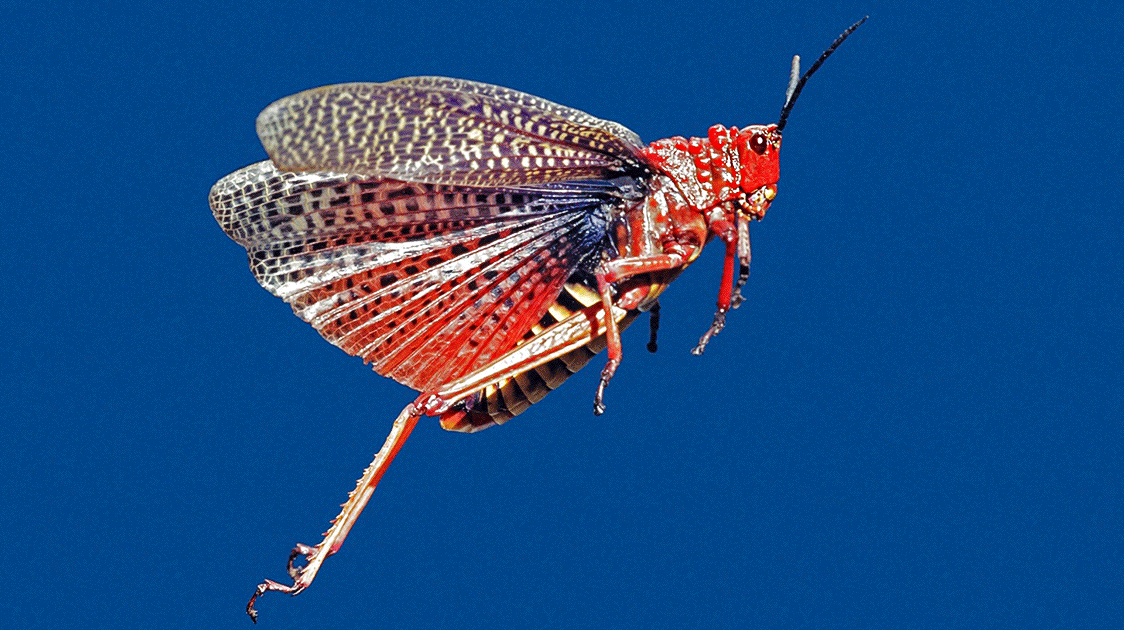
No tool exists to assess a locust's mental state.
The jurisdictional overlap also stands. The Department of Agriculture administers animal welfare under the Animals Protection Act of 1962. NEMBA now gives the DFFE a separate well-being mandate. Neither the Act nor the judgment draws the line between them.
SA Hunters lists the activities that permit conditions may now be measured against: population control, translocation, veterinary interventions, hunting quotas, fishing, tourism, agricultural practice, and community harvesting of natural resources for food.
Without a clear standard, officials and landowners face uncertainty about what counts as compliance.
The likely results are delayed approvals, more litigation, and less investment in private and community conservation.
The sums involved are large. As reported in June, SA Hunters puts the contribution of local and international hunters at about R44 billion a year.
The wider wildlife and biodiversity sector employs more than 418,000 people, and the fisheries sector turns over around R6 billion a year with more than 27,000 direct jobs.
What SA Hunters wants next
SA Hunters says future regulations and guidelines on animal well-being should provide:
- Clear, measurable, science-based criteria tailored to different species and ecological conditions
- Recognition of conservation realities, including active wildlife management and sustainable use
- Clear institutional responsibilities and cooperation between environmental and agricultural authorities
- Meaningful consultation with affected stakeholders before new requirements are introduced
The association says it brought the case not to question animal welfare, which its policies support, but to get a workable definition through proper consultation.
The bill
SA Hunters was ordered to pay the costs of the NSPCA and the EMS Foundation, including the costs of two counsel for the NSPCA.
Where to from here
The judgment settles that the word stays in the Act. It does not settle what the word requires on the ground.
That will be decided in the drafting of regulations and permit conditions, and in review applications against specific decisions. Wildlife managers, game ranchers, hunters, fishers, and rural communities who want a workable standard will need to be part of that process when it opens, with data in hand.
They will also need to act on time.
That was the Court's clearest message, not whether a locust has feelings.