The Tsavo Story: A Natural Cycle or a Broken System

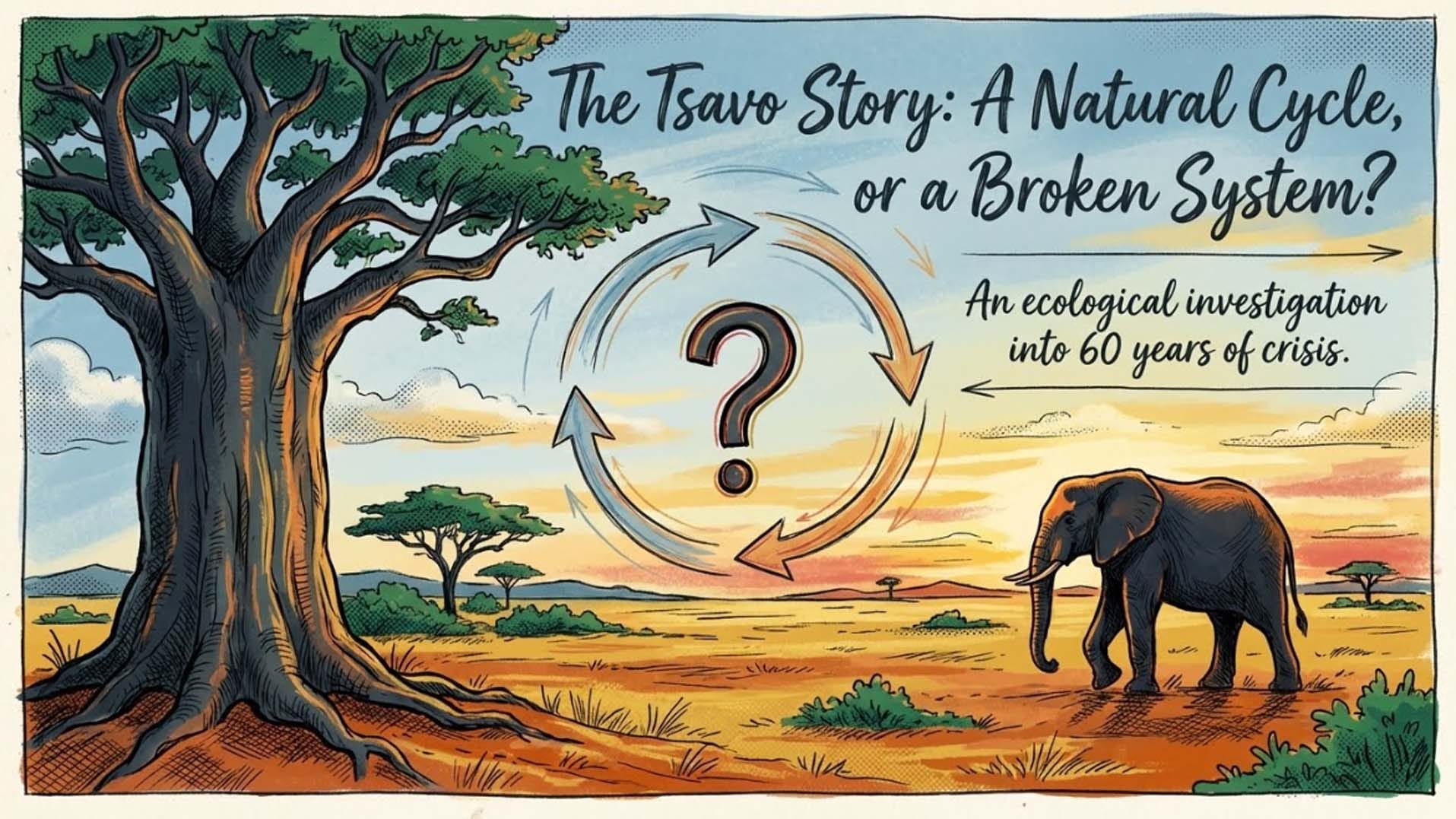
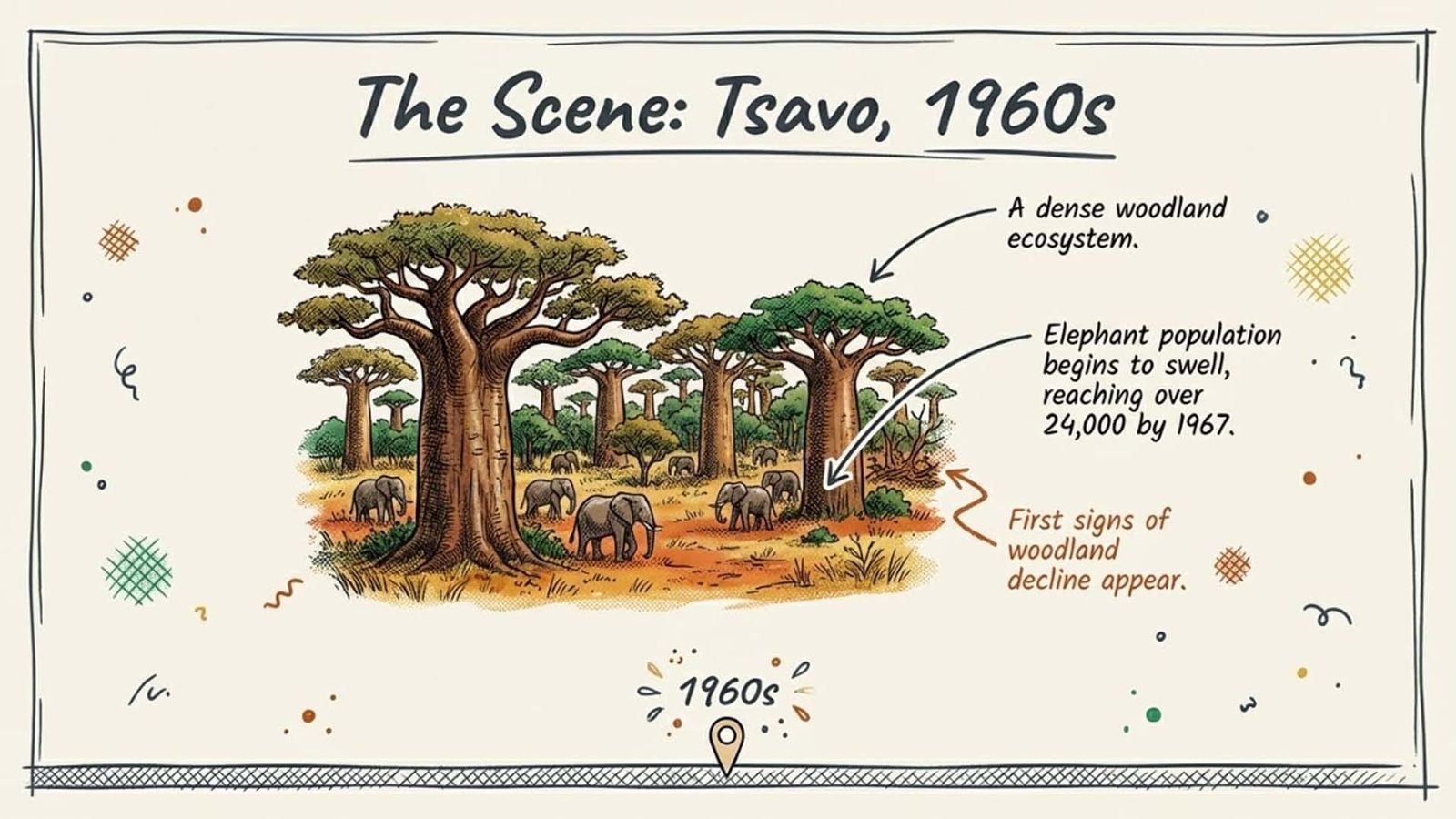
Kenya's Tsavo National Park was established in 1948. It was a vast sanctuary of Commiphora–Acacia woodland, dotted with iconic baobab trees.
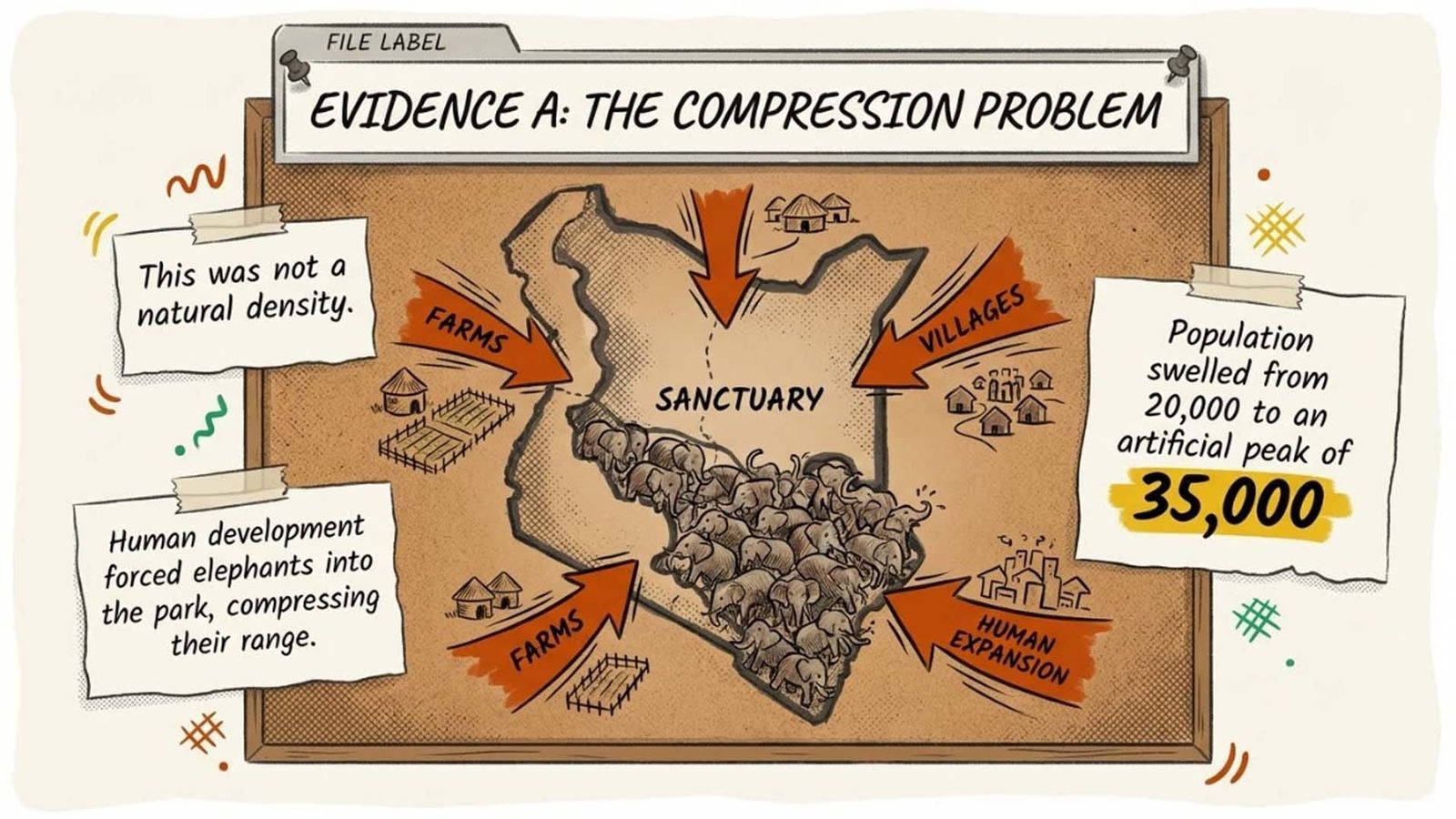
At the time, elephants moved across a vast landscape, but as human settlement and agriculture expanded beyond the park’s boundaries, their historical range contracted.
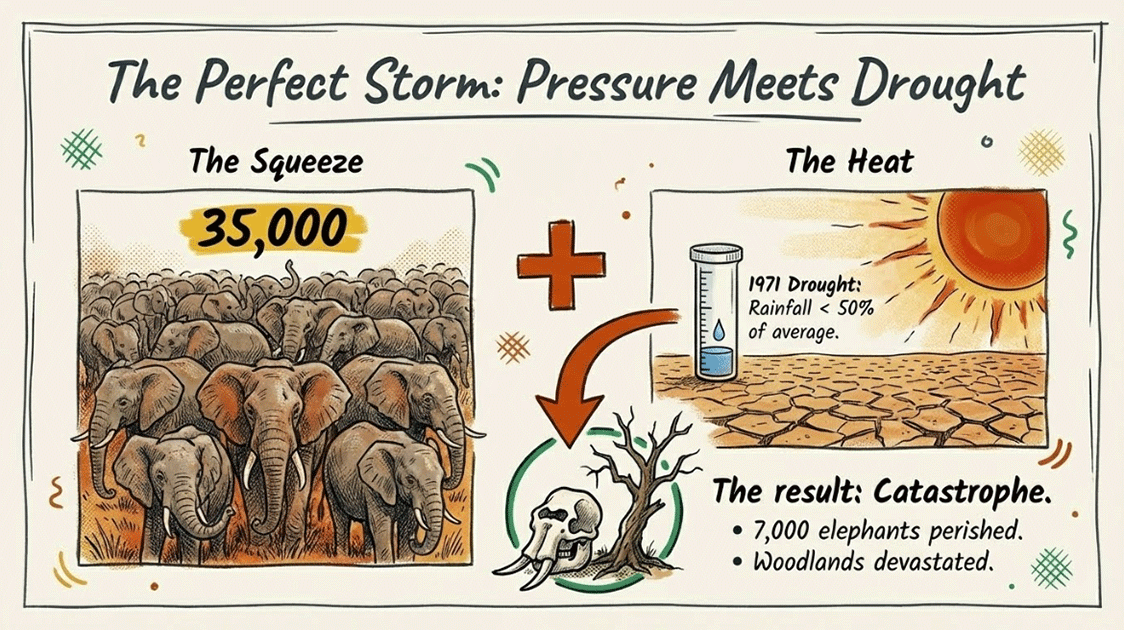
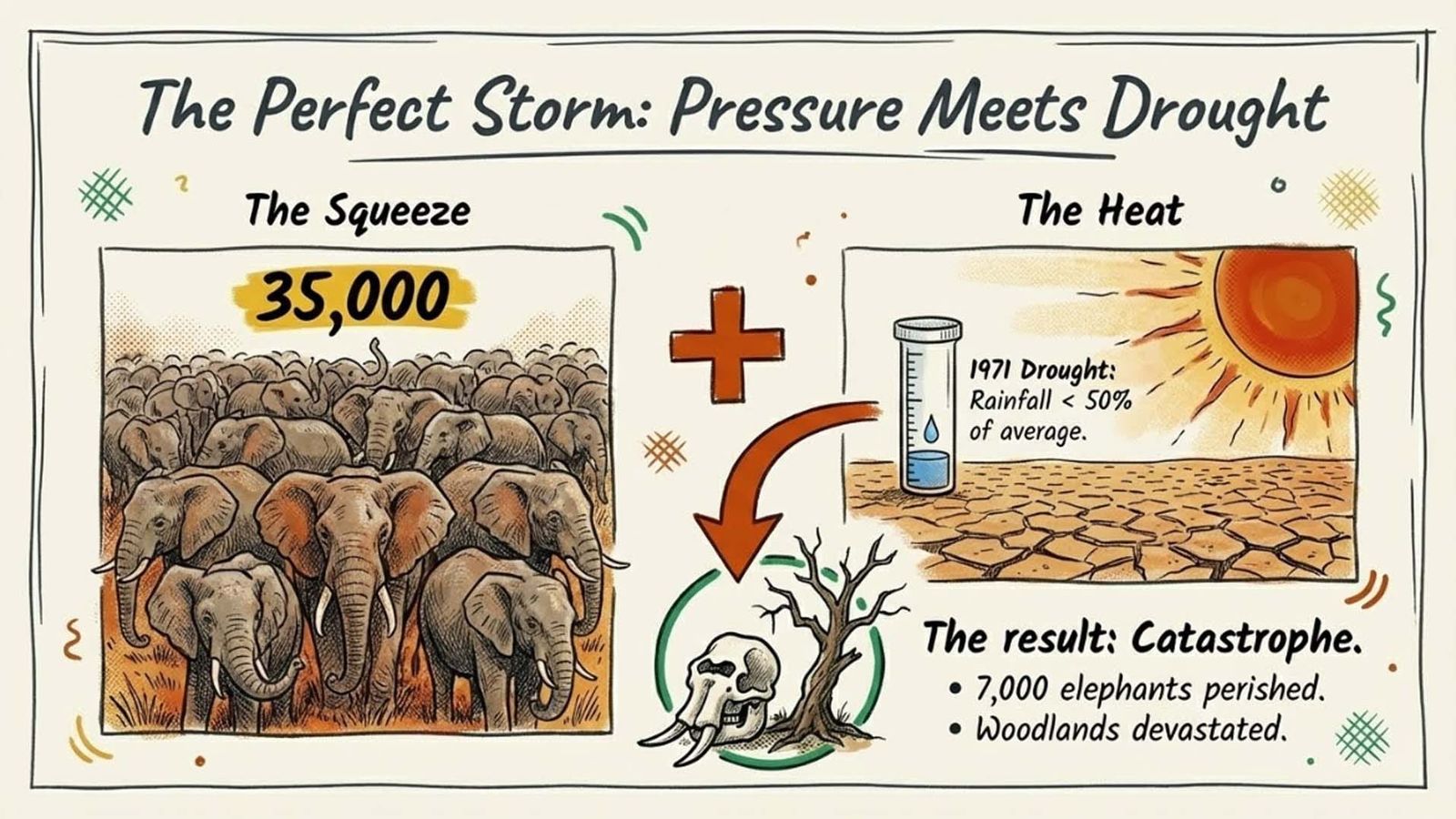
Elephants were increasingly compressed into the protected area, creating an extraordinary concentration of animals within a confined ecosystem.
By the 1960s, Tsavo held between 25,000 and 35,000 elephants.
Their growing numbers placed intense pressure on the park’s vegetation, especially during dry seasons.
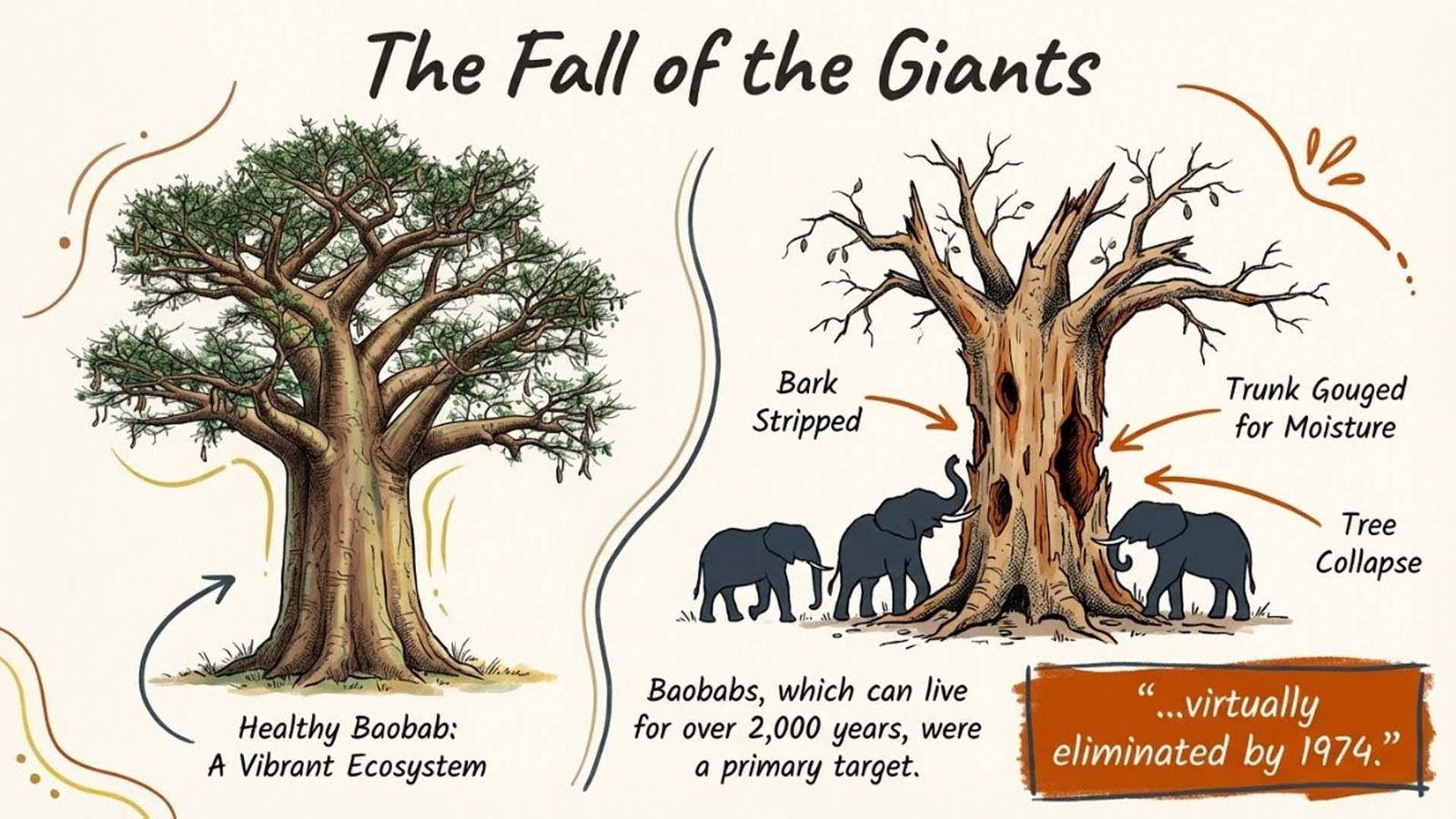
Baobabs were particularly vulnerable.
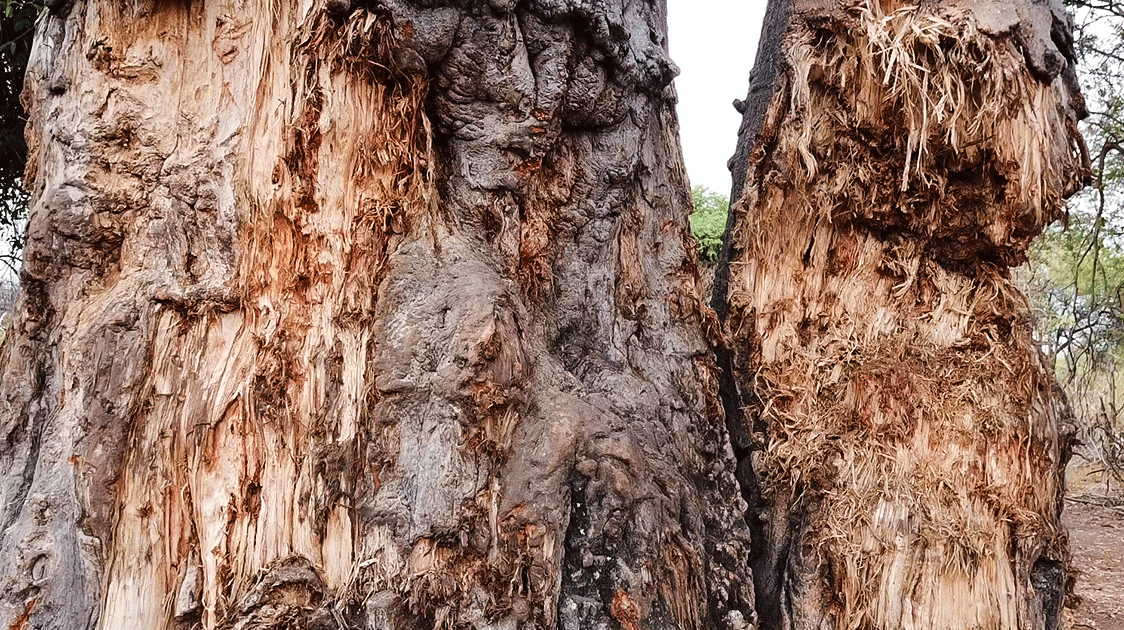
Elephants stripped their bark, consumed fruit and branches, and used their tusks to gouge moisture-rich wood from the trunks.
Trees were often left severely damaged or collapsed entirely.
The park’s officials at the time refused to make any intervention through elephant culling, believing that “nature would take its course”.
Then came the devastating drought of 1971.
Rainfall fell to less than half the long-term average, and thousands of elephants died.
Estimates vary by area and methodology, from about 6,000 in Tsavo National Park to around 9,000 across the wider ecosystem.
The effects on the woodland were equally dramatic.
The density of taller umbrella thorn trees declined by 65 percent between 1970 and 1974, while baobabs were virtually eliminated from parts of Tsavo.
The landscape that had once been characterized by dense bush and towering trees became a stark expanse of bare ground and struggling grasses, scattered with the remains of fallen trees.
The loss of the baobabs was not simply a visual transformation. It represented the removal of an ancient and irreplaceable ecological resource.
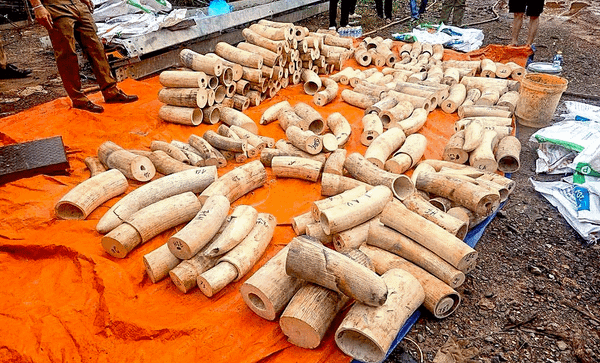
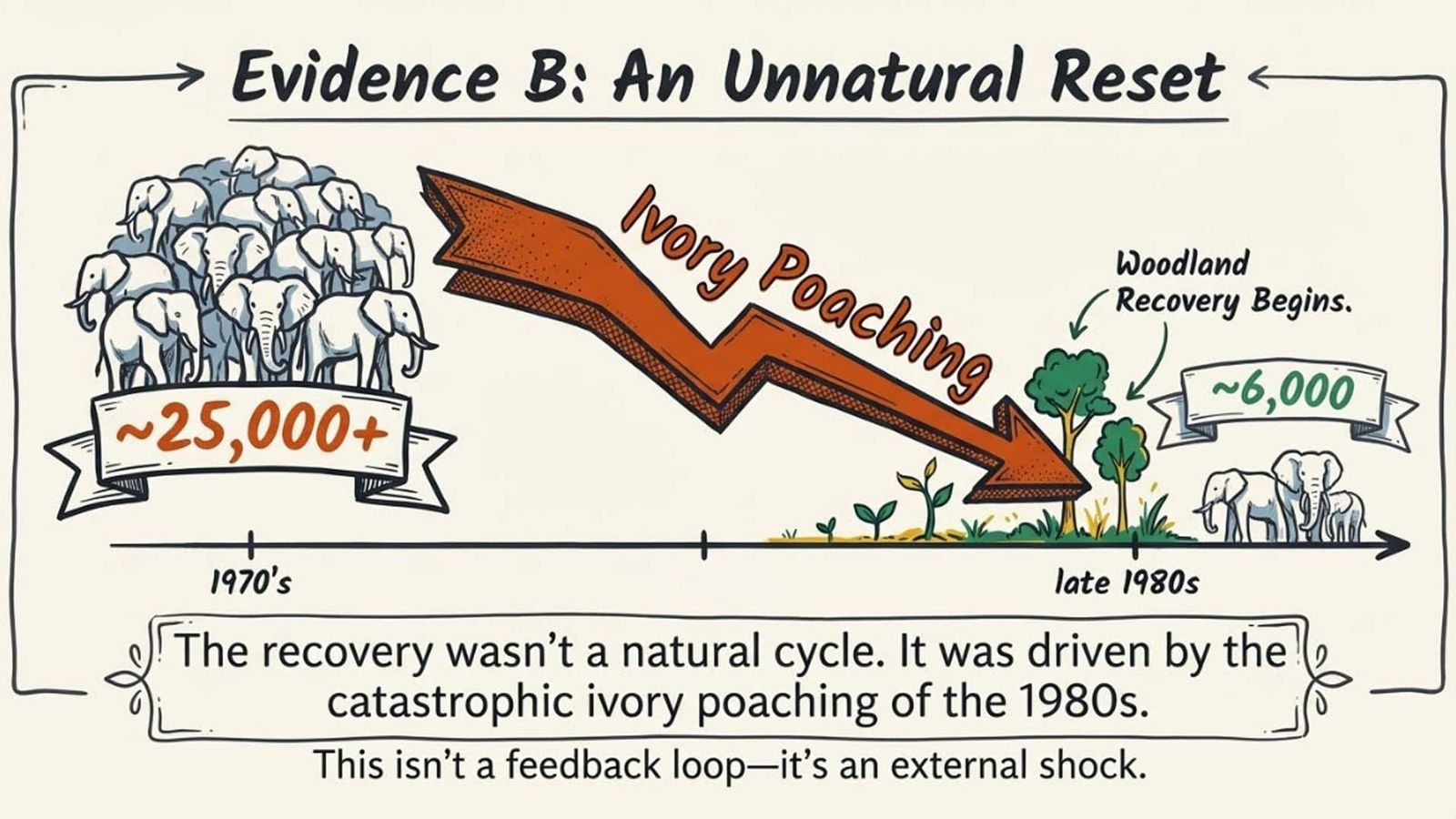
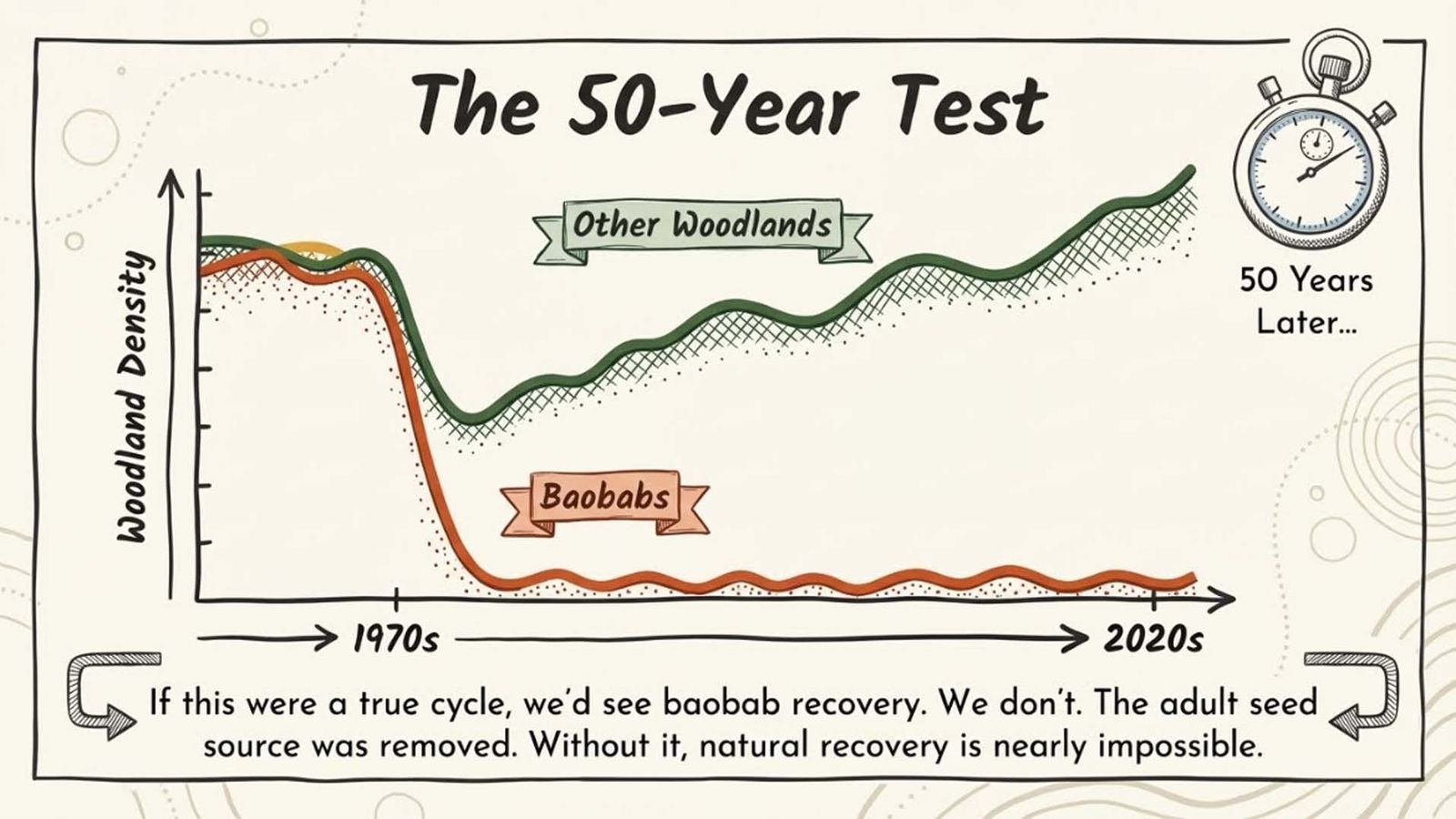
During the 1980s, ivory poaching reduced Tsavo’s elephant population to around 6,000 animals. This created an unintended opportunity for the vegetation to recover.
Photographic comparisons made between 1970 and 1994 showed that trees and shrubs had returned at many locations as elephant pressure declined. Walter Leuthold’s study documented this recovery in Tsavo National Park between 1970 and 1994.
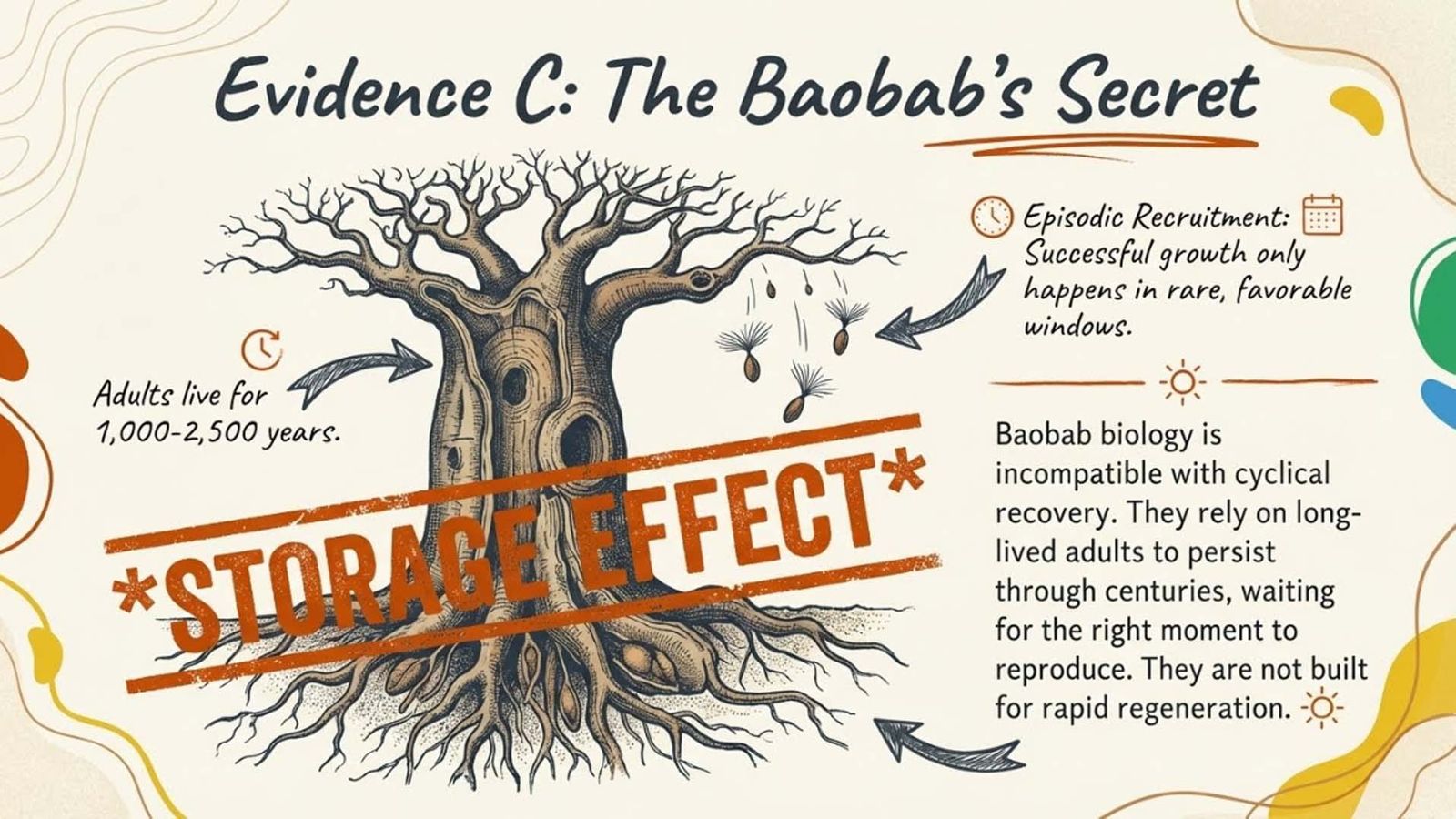
The baobabs did not recover.
The reason lies in their biology. Baobabs can live for more than 2,000 years and depend on long-lived adult trees to produce seeds over centuries.
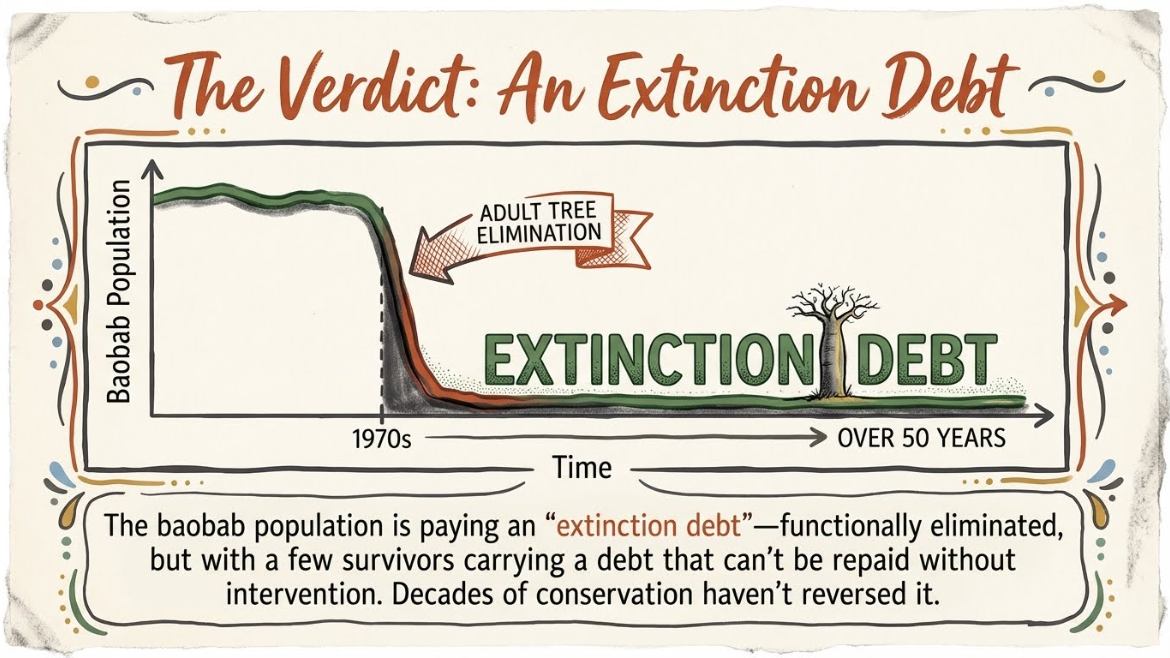
Successful recruitment may occur only during occasional favorable conditions. When adult trees disappear, the seed source disappears with them.
The population loses not only its present generation, but also its ability to rebuild.
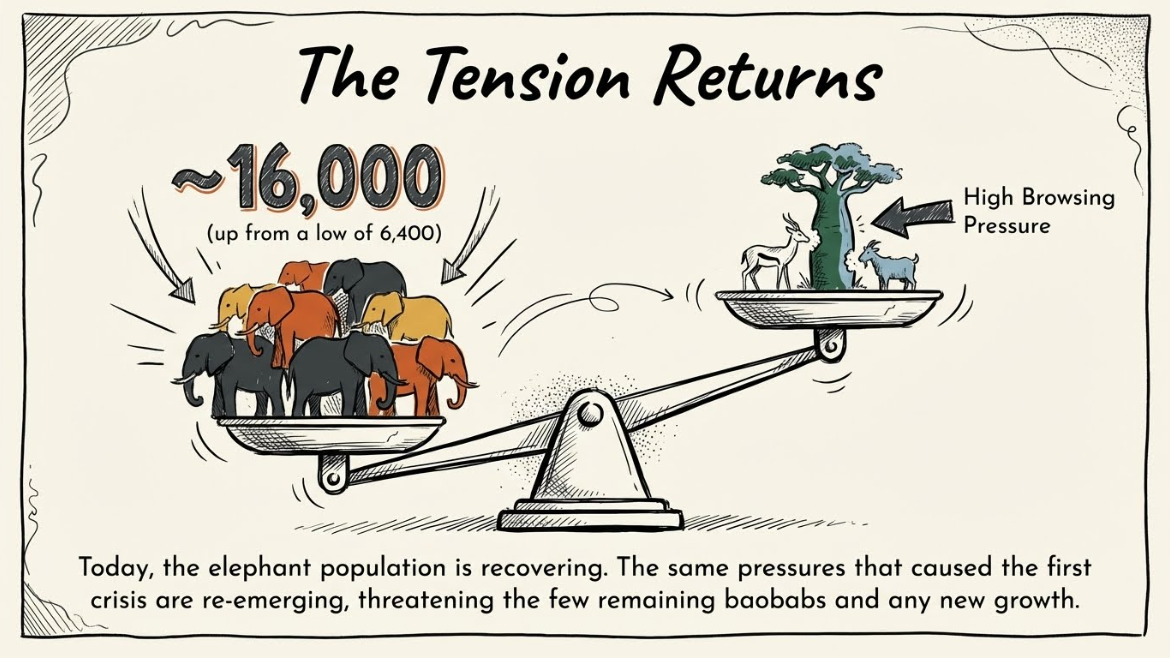
The available census record shows a substantial elephant recovery: approximately 6,399 elephants were counted in the Tsavo–Mkomazi ecosystem in 1988, compared with 12,573 in 2011.
While a boon for elephants, it highlights the continuing challenge of managing their impact on slow-growing trees.
The baobabs remain far below their former abundance. Young trees also face continued browsing from elephants, wildlife, and domestic livestock, making natural recovery impossible.
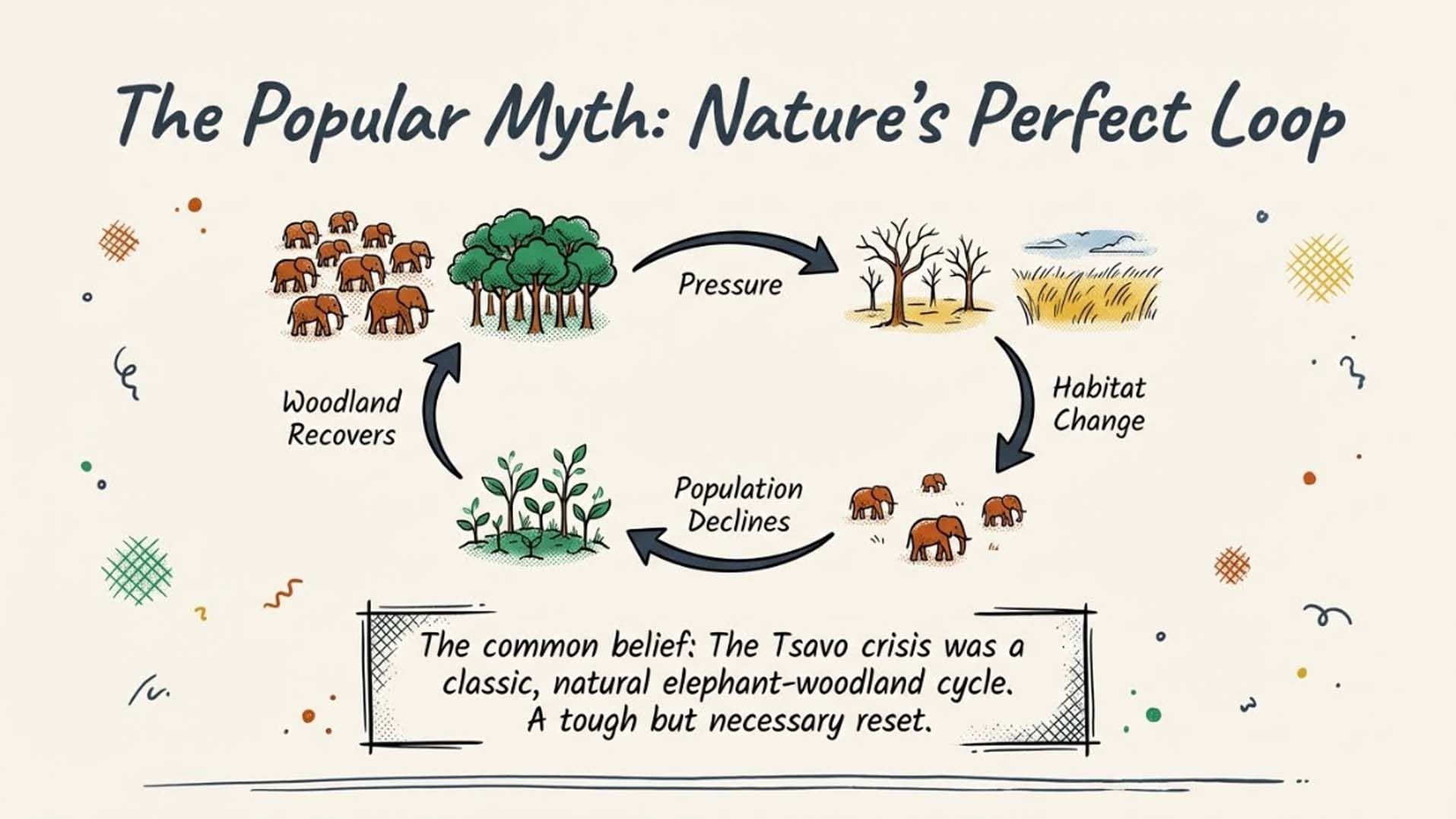
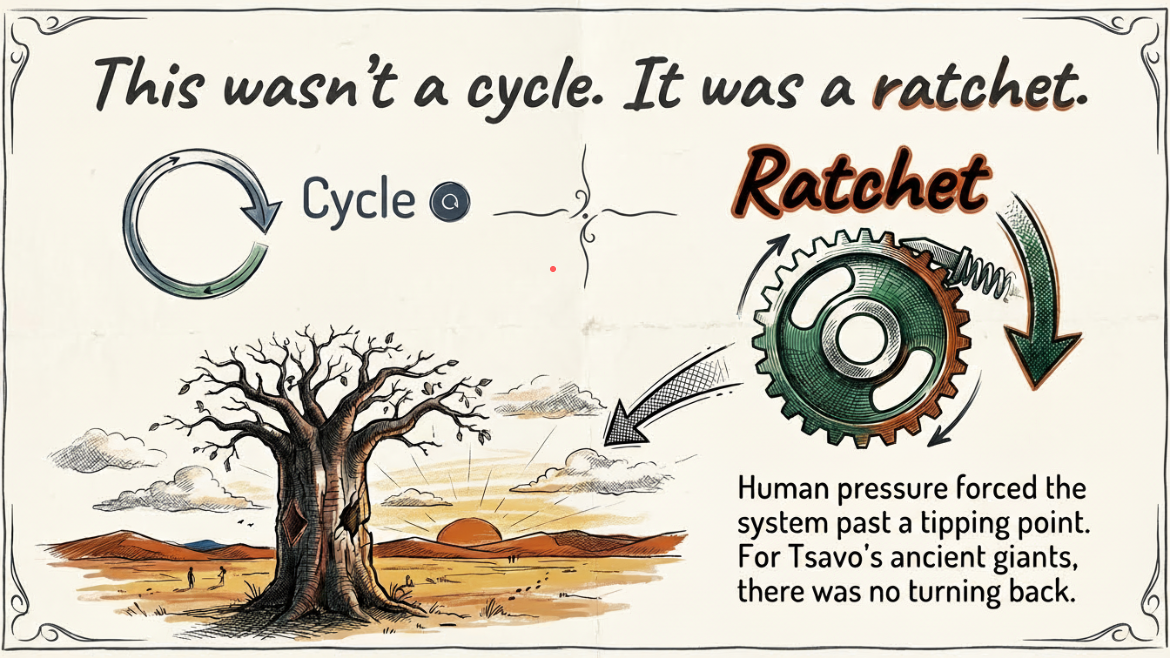
The Tsavo saga challenges the idea that woodland destruction is a simple, self-correcting natural cycle.
The vegetation recovered only after drought and catastrophic human-driven poaching reduced elephant numbers.
The system did not reset through a reliable ecological feedback mechanism.
Instead, an artificially concentrated elephant population pushed a slow-growing, long-lived tree beyond the tipping point.
The story of Tsavo’s baobabs is ultimately a warning about ecological thresholds.
Once ancient trees disappear, protection alone may not be enough to restore them.
In a landscape shaped by human land use, water management, wildlife protection, and surrounding development, conservation must address not only elephant numbers, but also the space and conditions that allow both elephants and baobabs to survive.