Is Ivory Trafficking on the Verge of Another Surge?
By Dr Daniel Stiles
Key Takeaways
- The 2008-2018 ivory crisis was widely thought to be over, but a run of large 2026 seizures suggests otherwise.
- Four major busts this year (Zambia, Tanzania, Vietnam, Laos) point to organized crime, not isolated incidents.
- With seizures estimated at only ~10% of trafficked volume, the real death toll may exceed recent poaching data.
- Experts disagree on the source: leaked stockpiles versus freshly poached ivory from the KAZA region.
- Enforcement is hampered by restricted DNA analysis and by past traffickers now released from prison.
The general consensus has been that the “ivory crisis” that began in 2008 was over. Well over 100,000 elephants were poached between 2008 and 2018.
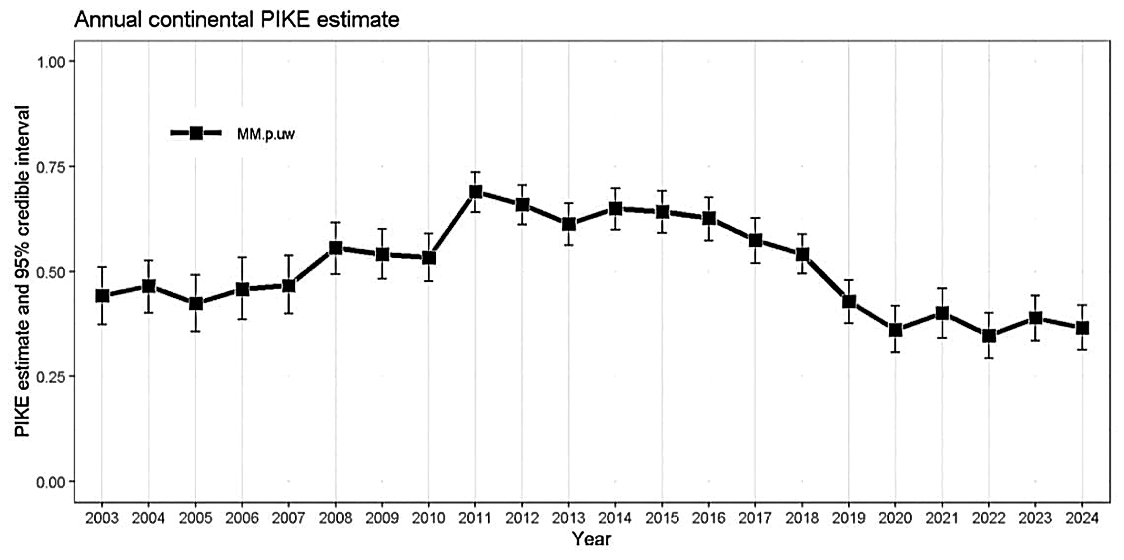
Data from the Monitoring the Illegal Killing of Elephants (MIKE) program of the Convention on International Trade in Endangered Species of Wild Fauna and Flora (CITES) show that from 2008 to 2018 more than 50% of all elephant carcasses found in their sample sites were illegally killed.
Since 2018, the ratio has fallen well below that, indicating natural causes of death now exceed poaching.
In August this year, Mary Rice, executive director of the Environmental Investigation Agency, wrote a commentary in Mongabay in which she warned;
“Ivory trafficking remains a highly organized and adaptable threat. Sustained, intelligence-driven enforcement across the supply chain is therefore essential to protect elephants and disrupt criminal networks.”
In other words, do not think that the ivory trafficking war has been won and become complacent.
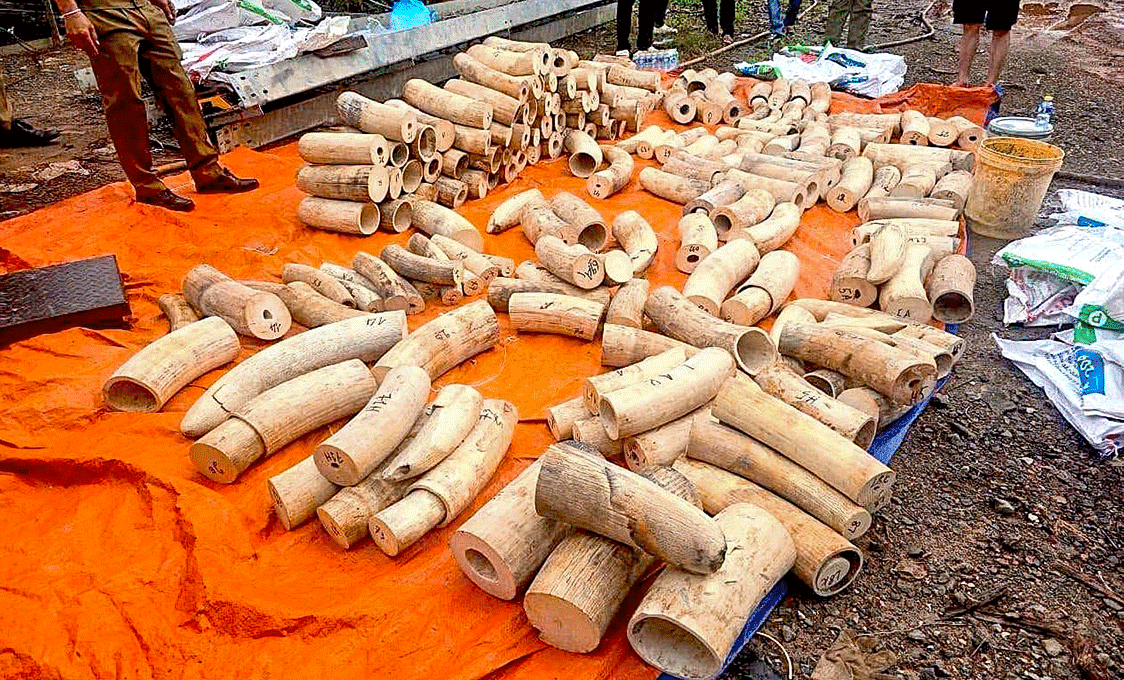
But this year there have been a number of more than 500 kg seizures, the weight that defines ‘large-scale’ and is indicative of organized crime, both in Africa and Southeast Asia.
Seizure Locations
The first was in March in Zambia, where 10 people were arrested in possession of 550 kilograms of ivory. One of the suspects involved in the case was convicted in 2019 for possession of more than 200 kg of ivory and was sentenced to five years in prison in 2020. He was released after a matter of months and has continued trading ivory ever since.
The second was in Tanzania in April, a huge seizure of 504 tusks and the arrest of a North Korean man, Un Hyok Ra.
The authorities never made the weight public, but that many poached tusks would normally weigh well over 2,500 kg.
Tanzanian police did not respond to questions about the origins of the seized ivory or who Ra allegedly planned to sell it to. Ra never showed up in court and was mysteriously subsequently “deported".
The third was in Vietnam in early August, where authorities found 221 pieces of ivory weighing 1,193kg in total, concealed inside hollowed-out logs.
The shipment had come from the Brazzaville port up the Congo River, transiting from the Democratic Republic of the Congo (DRC). Most of the ivory probably originated in southern Africa.
The fourth was in Laos in mid-August, where 1,756 kg of ivory was seized and 11 foreign nationals arrested.
In late June, authorities seized more than 110 kg of suspected illegal wildlife products in Luang Prabang, including ivory, rhino horn and pangolin items.
This followed earlier operations in early June that uncovered 60 kg of illegal wildlife products in Luang Prabang and nearly 300 live animals trafficked across borders.
In addition, there have been many smaller ones recently:
- On 18 May, Lao authorities raided a Chinese-owned restaurant in Vientiane, seizing 25.5 kg of illegal wildlife products, including bear paws, pangolin parts and a live snake. A Chinese national was arrested as the case highlights ongoing illegal wildlife trade targeting foreign tour groups.
- In May, officers seized 130.9 kg of ivory and 29 kg of animal remains en route to Laos, a case linked to the arrest of a Lao woman. In February, a Vietnamese man was caught transporting over 11 kg of rhino horn concealed in meat from the Democratic Republic of Congo to Laos via Thailand, in a case tied to an international trafficking network.
- In May 2026, Thai authorities arrested nine administrators of a Facebook group in 11 locations around Thailand aimed at Thai and Vietnamese nationals that had been posting mainly African elephant ivory for sale. They seized 250 kg of ivory cut pieces and tusk fragments, as well as prayer beads, jewelry, knife handles, etc.
- On August 18, 2026, the Lao Wildlife Enforcement Network (LAO-WEN) and relevant authorities seized over 30 kg of suspected prohibited wildlife products—including ivory, rhino horn, and pangolin scales—from a Chinese trader in Vientiane, the Lao capital.
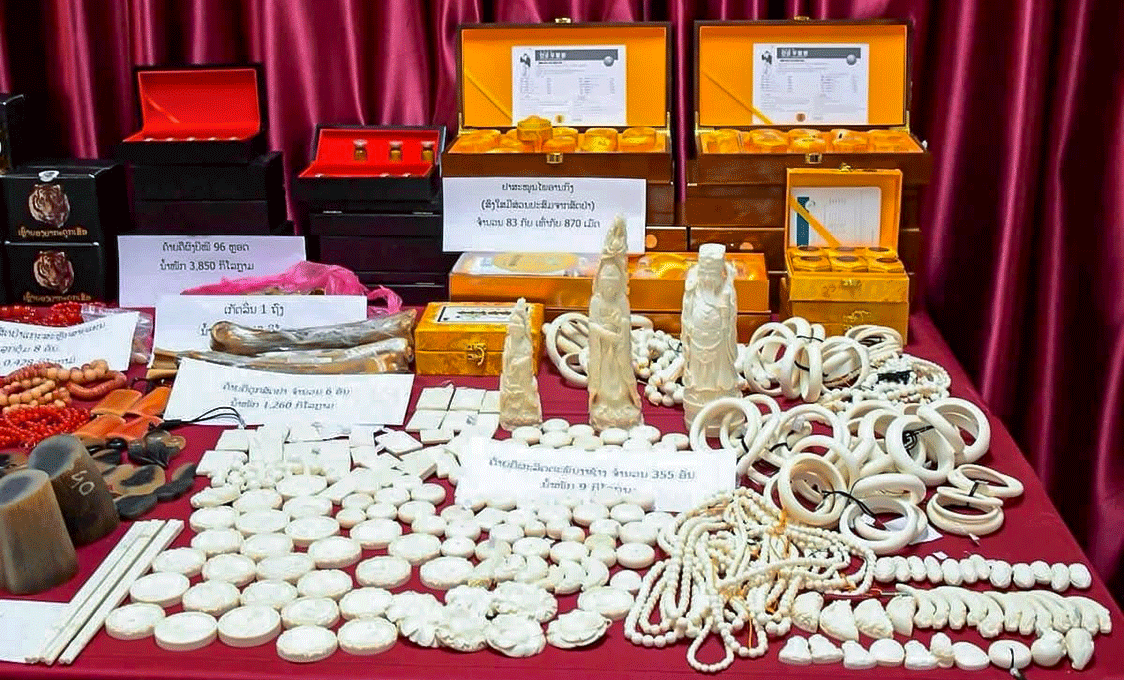
These cases show that ivory trafficking remains a systemic and organized crime problem, rather than a series of isolated incidents, and it continues to impact multiple countries. They seem to run counter to the MIKE poaching data, given that seizures are estimated to comprise approximately 10% of total trafficked goods.
In other words, the quantities seized would appear to suggest a number of elephants killed that exceeds recent poaching data.
Sources of the trafficked ivory
Experts believe most of the Vietnam and Laos ivory came from southern Africa, and the Zambia seizure ivory did as well.
The origin of the biggest seizure, circa 2,500 kg in Tanzania, is unknown, without DNA analysis.
Samuel Wasser of the University of Washington, USA, has established an elephant DNA genotype database and a forensic laboratory that can analyze DNA samples taken from tusks.
With the results, he can assign the tusk origin to a geographic location.
If he were allowed to take timely samples of seized tusks, he would be able to identify the origin of the Vietnam and Laos seizures, which would assist the relevant authorities in investigating who the traffickers may have been.
In mid-August, speaking to Patrol, Wasser commented;
“It is a shame that we can’t get authorities to allow analyses of these large seizures. CITES called for their analysis in 2010 but one has to fight tooth and nail to get them.
I wish there was a way that AfESG [the IUCN African Elephant Specialist Group] could pressure countries to cooperate.
DNA analysis beyond species ID can provide a huge amount of information from these seizures, and especially on the criminal networks moving them. It is really great when large seizures are made but a travesty when nothing comes of them.
Almost no countries allow these analyses. With a few exceptions (e.g., Singapore), those that do allow them only after the court case is closed; that prevents the evidence from being used in court proceedings.
So much more progress could be made if that trend were changed.”
Wasser went on to say;
“We estimate that we get about 20% of the large seizures (those ≥ 0.5 tonnes). However, the vast majority of those are obtained after the court case has closed. That needs to change.
However, even older seizures are worth analyzing because a small number of transnational criminal organizations are moving the majority of large shipments.
The more seizures we analyze, the more complete the picture. These results empower law enforcement and are key to combatting corruption that maintains the flow of ivory.”
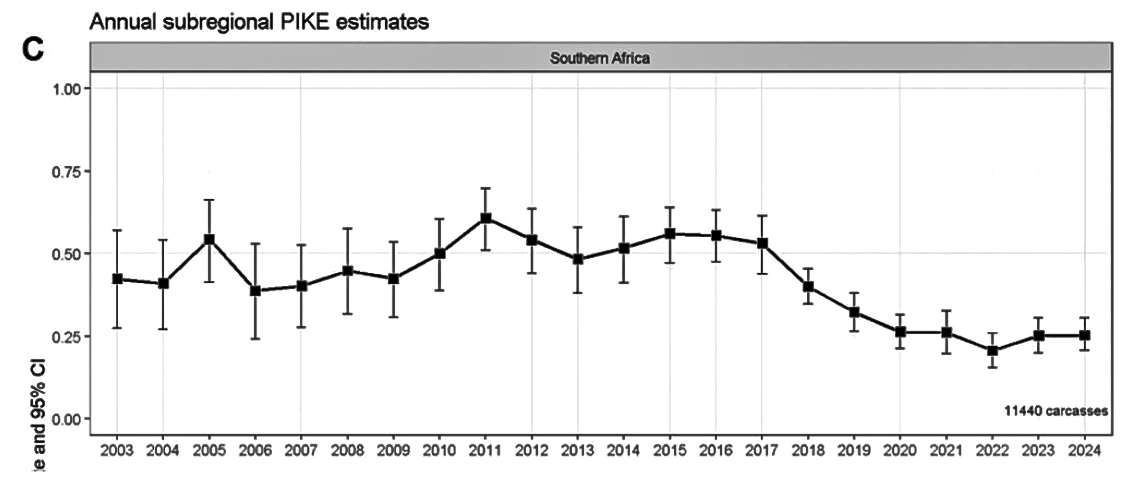
Patrol suggested to Wasser that perhaps most of the seized ivory likely came from leaked stockpiles, given the relatively low rate of recent poaching.
Wasser responded;
“I don’t think the Laos seizure or the Vietnam seizures are leaked stockpiles. Based on similar shipments we’ve analyzed, shipped from the same export countries, and photos of the tusks in the unanalyzed seizures, I believe the majority of these recent seizures are coming out of the KAZA [Kavango Zambezi Transfrontier Conservation Area].
We have carbon-dated many seizures and find most contain ivory from elephants killed within 2-3 years of the seizure.
Given that most large ivory shipments are exported from a different country than where they were poached, and that they are delivered to export countries in small amounts over multiple routes, most of this ivory reflects a continued supply of poached ivory.
That may change, and if it does, that too is important to know, which is why we have also been working with countries to genotype their stockpiled seizures.”
Last Thoughts
An added factor to take into account is the fact that all of the bad actors arrested and convicted of ivory trafficking during the “poaching for ivory crisis” years, breaking up the Kromah Network, are now out of prison.
Are they back at it?
As Mary Rice said in her commentary, “The current narrative that the situation is under control should not be accepted without question.”
Dr. Stiles started in anthropology and archaeology, researching past and present natural resource use among hunter-gatherers and pastoralists, and later moved to the UN system, working on desertification control. In 1999, he began investigating wildlife trade, producing reports and publications for UN agencies, the IUCN, TRAFFIC, and various NGOs.