The Bushmeat Trade in Africa: How a Multi-Billion Dollar Market Actually Works
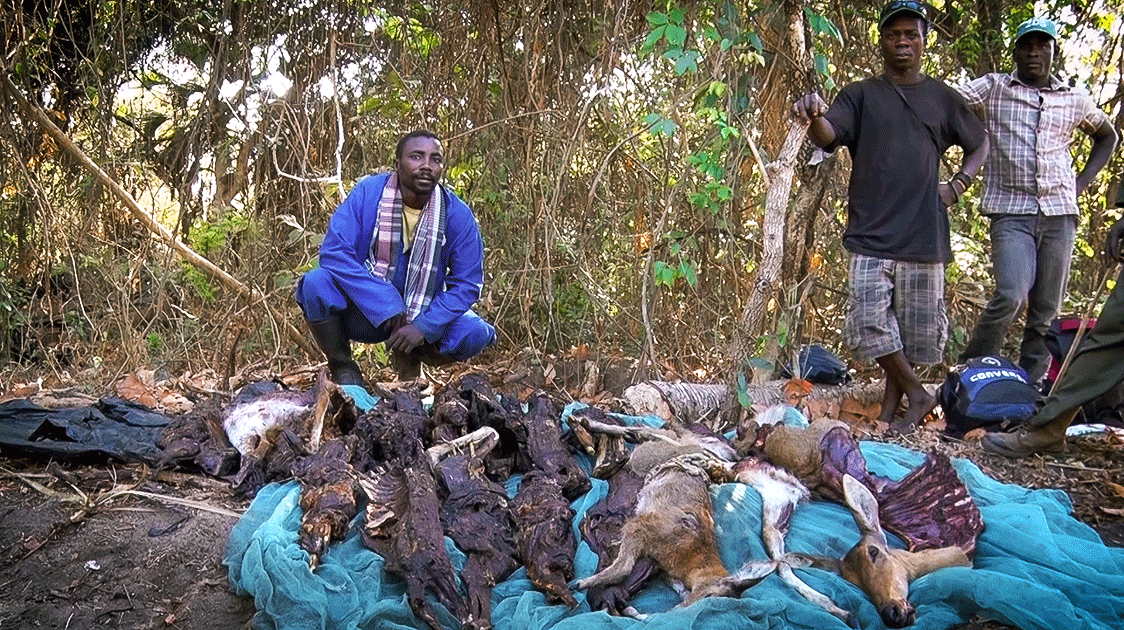
Bushmeat is the largest illegal wildlife trade in Africa. By volume, it outweighs ivory, rhino horn and pangolin scales combined. West and Central Africa alone account for an estimated 1 to 5 million tonnes per year.
Most of it never reaches a port or a customs declaration.
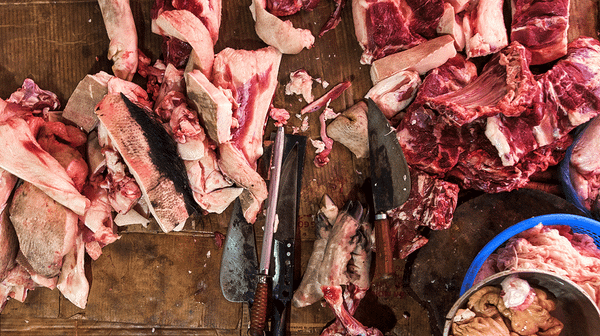
It moves by motorbike, bicycle, minibus and on foot, from snare lines outside protected areas into the markets and restaurants of cities like Kinshasa, Yaoundé, Accra and Maputo.
Three Patrol pieces sit alongside this overview.
The Hidden Crisis explains why the volume is so much larger than the headline poaching numbers suggest.
Treat the Symptoms or Solve the Problem? traces a single antelope from snare to plate.
The Economics of Protein Supply in Africa is the wider market backdrop.
How big is it?
Hard numbers are scarce because the trade is informal and most of it is illegal. The figures come from confiscation records, market surveys, and household interviews. They are conservative.
• Congo Basin: around 2.2 million tonnes of wild meat extracted per year. This is the largest single regional system.
• Tanzania: 2,078 tonnes of bushmeat confiscated annually, with a market value above US$50 million. Confiscations are a small fraction of the total flow.
• Central African Republic: an estimated 59,000 tonnes sold illegally per year.
• Mozambique: 182,000 to 365,000 tonnes consumed annually, worth US$365 to US$730 million.
• Zimbabwe: more than 50,000 tonnes sold each year illegally (Lindsey et al., 2013).
• Serengeti–Mara migration: 120,000 to 160,000 wildebeest are estimated to be lost to snaring annually around the migration corridor.
For context, the trade is not a fringe activity. The Wildlife Conservation Society identifies unsustainable bushmeat hunting as one of the most serious threats to wildlife populations across Central, West and East Africa.
Snares are the dominant tool
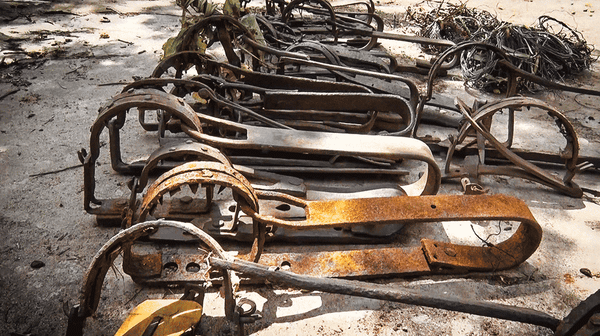
Snaring is the most common method of bushmeat hunting in both forest and savanna Africa. It is the cheapest, quietest, and most scalable hunting tool available, and it requires no training, ammunition, or permit.
A snare is a wire noose anchored to a sturdy bush, tree or fence post, set across a game trail or at a water point. Modern snares are made from:
• Fencing wire pulled off cattle and game fences.
• Telephone and electricity cable, often cut down for the wire.
• Bicycle brake cables and motorcycle clutch and brake cables. Patrol covered this supply chain in The Curse of Boda Boda.
• Steel cable cut from old tyres after burning.
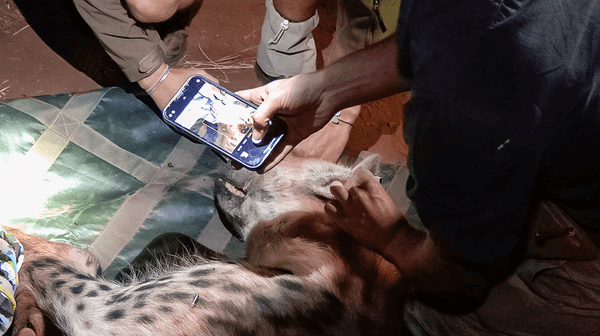
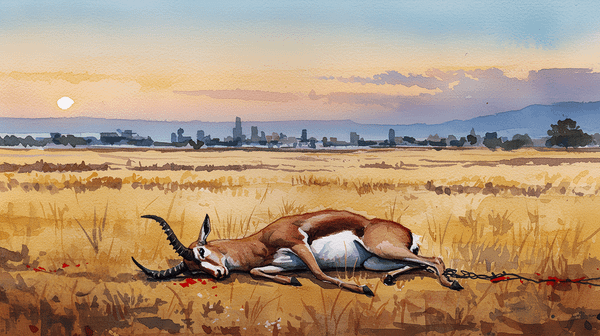
Snares do not select. A snare set for a duiker will hold an elephant calf, a leopard, a wild dog or a person. The Mara Elephant Project estimates that around 90 percent of snared animals are never collected.
They die in the wire, are taken by hyenas before the hunter returns, or escape with the snare embedded in their flesh.
The Phalaborwa Natural Heritage Foundation has accumulated more than 10,000 snares on its snare poles since May 2013. That is the work of a single non-profit on the Kruger border.
Patrol covered it in Snare Wars Casualties.
The value chain
A common framing in the bushmeat literature is that rural hunters capture most of the profit. The picture in the field is more mixed.
Per kilogram of meat sold in an urban market, the rural hunter typically gets the smallest share. Intermediate traders, transport, market stallholders and final retail each take a margin.
What the studies showing "hunters earn more" actually compare is not the per-kilogram margin but total household income from hunting versus household income from non-participation.
In Zambia, the median monthly income of hunters involved in the bushmeat trade was US$48, compared to US$15 for non-participants.
That is a wage comparison, not a margin comparison.
Research on West African commodity chains maps the chain as follows. Rural hunters supply local middlemen who consolidate volume.
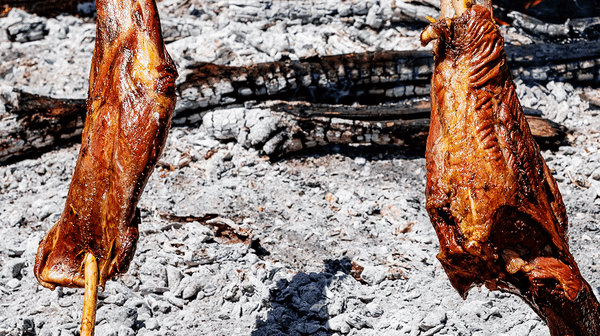
Transporters move the meat, often smoked, by minibus or motorbike. Urban traders, frequently working in kin networks where businesses are inherited and employees are family, distribute through formal market stalls and informal restaurant supply.
Nearly half of all bushmeat traders inherit their businesses. The trade is hard to disrupt because it is a profession, not a sideline.
What drives demand
Bushmeat consumption in African cities is not primarily driven by poverty. The clearest evidence is the price.
In Accra, a kilogram of bushmeat costs more than a kilogram of premium beef. People buy it anyway.
Patrol covered the dynamic in Beyond Economics. The urban consumer is paying a cultural premium for a connection to a rural origin.
In Yaoundé and Libreville, restaurant orders for bushmeat skew towards higher-income clientele. In Kinshasa, smoked monkey is a delicacy.
This matters for policy. A trade that is purely subsistence responds to alternative protein. A trade that is partly aspirational does not.
What drives supply
Three factors have driven trade since the 1980s.
Roads
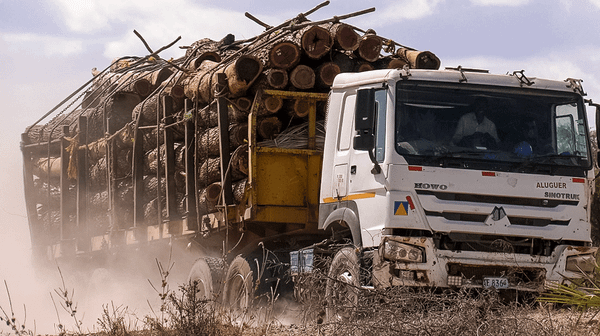
Commercial logging cut access into previously closed forest. The same logging trucks that carry timber out carry bushmeat back. The US Fish and Wildlife Service set this out clearly in its analysis of the trade.
Concessions like Congolaise Industrielle du Bois in the Republic of Congo have since partnered with conservation organisations to regulate offtake within their footprint, but the road-as-conduit dynamic remains the underlying problem across the Congo Basin.
Economic fallback
Bushmeat trading is a counter-cyclical livelihood. It expands during dry seasons, agricultural off-years and economic shocks.
It contracted in some West African markets during COVID but expanded in others where enforcement collapsed faster than supply chains.
Research across West and Central Africa found that vendors in Côte d’Ivoire were hit hard by bans, vendors in Cameroon stockpiled and continued, and vendors in Benin lost supply more than demand.
Snare-grade wire
The two-wheeler boom across East and West Africa over the last fifteen years has produced enormous volumes of discarded clutch and brake cables. That cable is the raw material for the modern snare. The supply of poachers may be elastic, but the supply of snare wire is now effectively unlimited.
Regional differences
West Africa
In northern Ghana, prices ranged from GHS 4 (USD 0.74) for a whole giant rat to GHS 42 (USD 7.82) per piece of warthog meat.
Seasonality and species preferences vary across ecosystems. Ghanaian demand is also linked to fish stock collapse: as commercial fisheries pulled fish out of West African waters, household protein shifted to wildlife.
Over 30 years of data show that sharp declines in mammal populations correlate with declines in marine fish supply.
Central Africa
Yaoundé and Kinshasa are the regional hubs. The estimated annual value is in the hundreds of millions of US dollars across the Congo Basin trade. Logging concessions are the connecting infrastructure.
Major species in the trade include duikers, monkeys, bushpig, red river hog and great apes.
Southern Africa
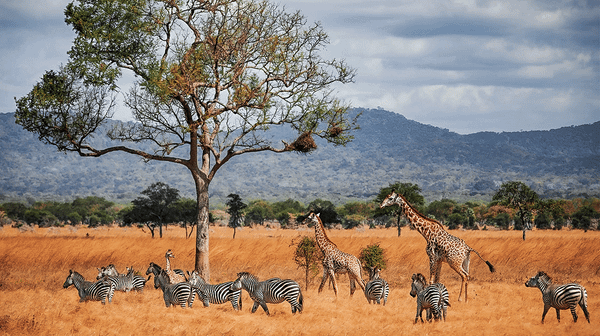
Mozambique, Zimbabwe and South Africa carry a heavy snaring load on the savanna. The dominant species in catches are impala, common duiker, warthog, bushbuck and bushpig. Larger species, including buffalo and elephant, are also taken.
Mozambique alone accounts for more than 200,000 tonnes of illegal bushmeat sales annually.
Cameroon’s Bénoué Complex
See The $200 Poacher vs The $50,000 Safari Hunter for what the economic math looks like in a single ecosystem, and Conservation vs Livelihoods for the Cameroon enforcement case study, where 25 poachers were arrested and 260 hunting camps destroyed, yet hunting pressure resumed as soon as patrols pulled back.
Sustainability
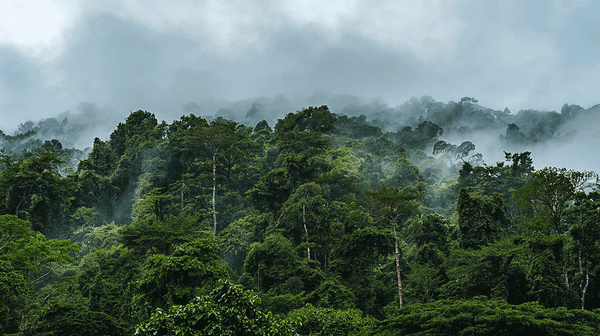
West and Central African rainforests are extracted at around 5 million tonnes a year. Fa et al. projected supply from these forests would fall by 81 percent over 50 years at current rates. That projection is from 2003. We are now more than two decades into it.
In practical terms, wildlife in much of the Congo Basin is being mined rather than harvested.
Biological replacement rates are far below offtake rates. Once the larger-bodied, slow-breeding species are gone (great apes, forest elephants, large duikers), the trade either collapses into rodents and reptiles or moves into the next forest.
The opportunity cost matters. A live elephant generates more revenue over its lifetime through photographic tourism or regulated hunting than its carcass is worth as meat.
The same is true of most large mammals. Bushmeat hunting captures only a fraction of the animal's financial value and converts it into a one-off payment that flows mostly through intermediaries.
Policy
The bushmeat trade is "regulated" in the formal sense in most African countries. Hunting requires a licence, quotas exist, and certain species are protected.
In the informal sense, enforcement is patchy. The U.S. Fish and Wildlife Service analysis describes a regulatory vacuum.
Vacuum is the wrong word. The rules exist. The capacity to apply them does not.
Nigeria’s Endangered Species Conservation and Protection Bill passed its third reading in May 2025. Whether it is enforced is the test.
Two structural points come up repeatedly in the research:
• Blanket bans without an alternative protein supply tend to push the trade underground without reducing it. COVID-era bans in several West African countries demonstrated this.
• Devolution of wildlife rights to landholders, private or communal, is the only model that has reliably reduced unsustainable offtake at scale. See Prof Brian Child’s piece, Property Rights and Economic Efficiency.
Frequently asked questions
Is the bushmeat trade entirely illegal?
No. Most African countries permit regulated hunting of named species by licensed hunters. The illegal portion is commercial-scale offtake, protected species, and meat moved without permits. By volume, that is most of the trade.
Is bushmeat cheaper than beef or chicken?
Not in most urban markets. In Accra, Lagos and Yaoundé, it costs more. The premium reflects cultural preference and perceived quality. Where bushmeat is cheaper, it is usually because the alternatives are absent or unreliable, not because the meat itself is low-value.
Why don’t governments just ban it?
Several have. Côte d’Ivoire’s COVID-era ban hit vendors but did not stop the trade. Bans without enforcement do not work. Bans without alternative protein options hurt poor households while failing to protect wildlife.
What about subsistence hunting?
Subsistence hunting by traditional communities is generally low-impact and culturally embedded. The crisis is commercial hunting, where the buyer is in a city, the meat is moved by vehicle, and the hunter is supplying a market rather than a household.
Are snares more important than guns?
Yes. Most bushmeat is taken with snares, not firearms. Firearms are used for larger animals and elephants. Snares dominate the trade by volume and by ecological footprint.
What is the conservation impact?
Snaring removes wildlife indiscriminately. Across protected areas in southern Africa, snares kill more wildlife than guns.
They are also a leading cause of injury for non-target species, including lions, leopards and African wild dogs. The Mara Elephant Project estimates that around 90 percent of snared animals are never recovered by the hunter.
Is the trade growing or shrinking?
Growing in absolute terms. Africa’s urban population is increasing, road and motorbike networks are expanding, and snare-grade wire is more readily available than 20 years ago.
Regional declines, where they occur, follow specific interventions.
They are not part of a continental trend.
Where Patrol covers this
The articles below treat specific pieces of the picture above in more depth.
• The Hidden Crisis: Africa’s Largest Wildlife Crime. Why bushmeat dwarfs ivory in volume.
• Treat the Symptoms or Solve the Problem?. The bushmeat pipeline traced from snare to plate.
• The Economics of Protein Supply in Africa. The protein market backdrop.
• Beyond Economics. Why bushmeat costs more than beef in Accra.
• The $200 Poacher vs. The $50,000 Safari Hunter. Bénoué Complex economics.
• Conservation vs. Livelihoods. Cameroon enforcement case study.
• Property Rights and Economic Efficiency. Prof Brian Child on devolved rights.
• Snare Wars Casualties. 10,000 snares on the Kruger border.
• The Curse of Boda Boda. Motorbike cables as the snare supply chain.
• Tackling Illegal Activities. LUWIRE, Niassa Special Reserve, Mozambique.