From Killing Fields to Carbon Credits: The Reinvention of Chinko

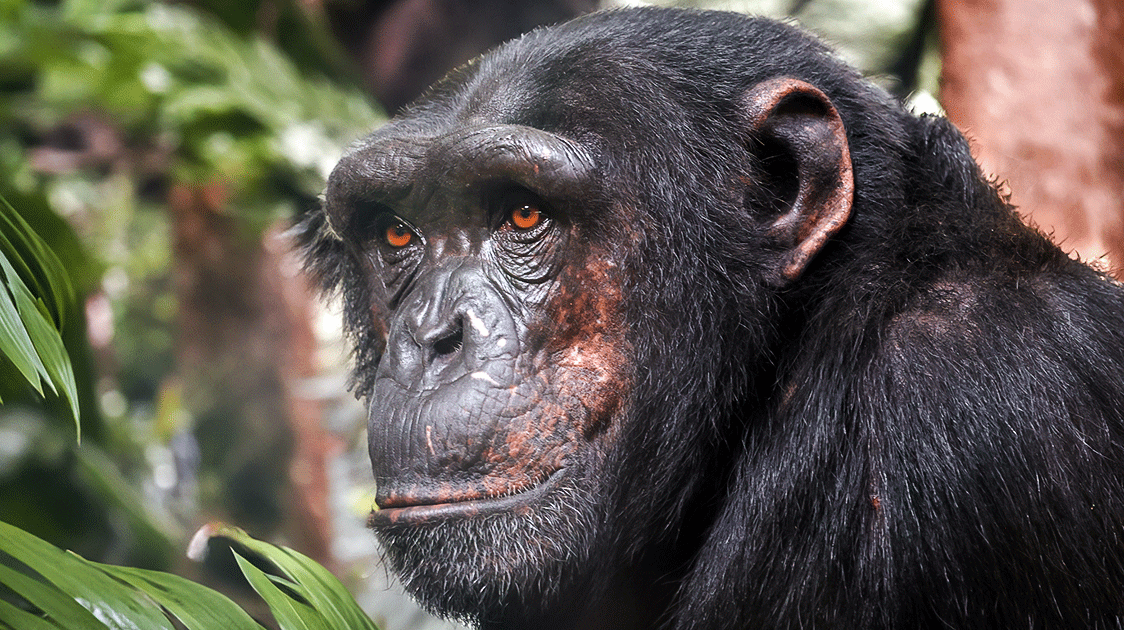
By Zig Mackintosh
In a forgotten corner of eastern Central African Republic (CAR) bordering the Democratic Republic of the Congo (DRC) to the south, South Sudan to the east, and Sudan to the north lies Chinko, a 64,000 km² wilderness.
The area sits at 610 meters above sea level on an ancient volcanic plateau where millions of years of weathering have produced deep, fertile soils.
The Chinko River system forms Africa’s largest tropical drainage with no permanent human settlement and supports a continuous mosaic of savannah and rainforest across an area larger than Croatia.
Dozens of endemic fish species, including the goliath tigerfish, are found in these waters.
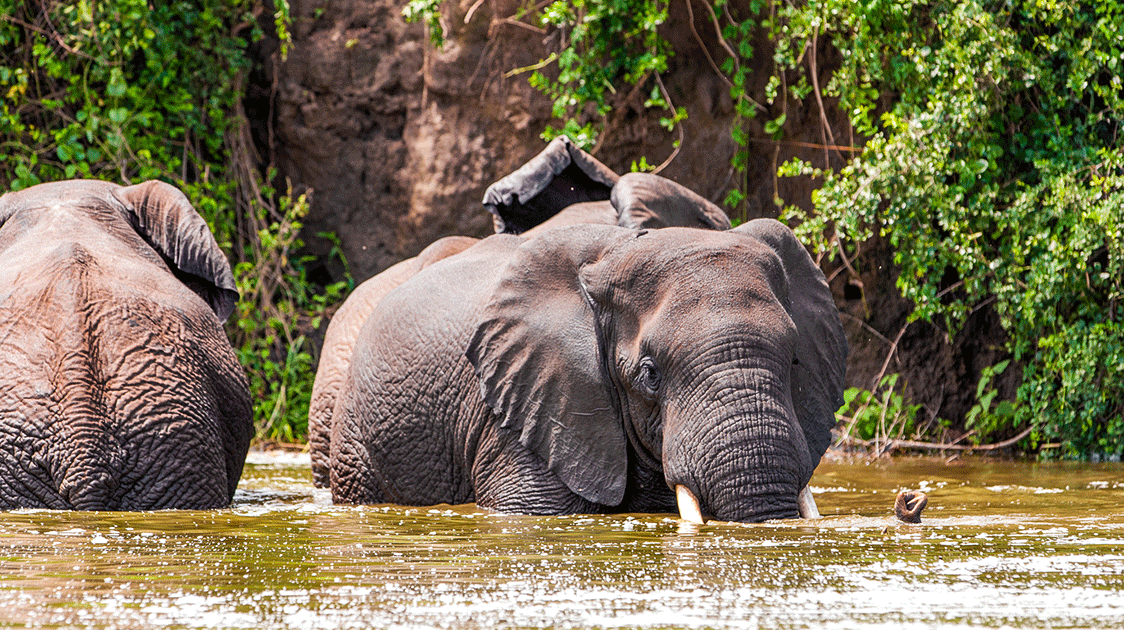
Chinko is one of the only protected areas in the world where both forest and savannah elephants occur.
The landscape also supports transition species adapted to both forest and open habitats, among them the lowland bongo, giant forest hog, and yellow-backed duiker.
The area supports all four African pangolin species, as well as more than 10 primate, 21 carnivore, and over 400 bird species.
A landscape stripped bare
In 1889, American hunter William Stamps Cherry, a 20-year-old from Missouri, inspired by the exploits of Henry Morton Stanley, travelled through the region and described a land brimming with wildlife, writing that there was “no way of estimating the number of elephants in the interior”.
The region had been depopulated by centuries of the slave trade.
During the 20th century, safari hunting was the main economic activity.
David Simpson arrived in eastern CAR in 2010 as a bush pilot for the Mararv family’s safari hunting operation, Central African Wildlife Adventures. The following year, he became the area’s general manager, but before long, everything came crashing down.

In late 2012, a coalition of predominantly Muslim rebels from the north, known as the Séléka, launched a rebellion that overthrew President François Bozizé in March 2013, plunging the country into civil war.
Fractured armed factions carved up eastern CAR between them with tit-for-tat massacres between Christians and Muslims.
Simultaneously, thousands of Fulani pastoralists, mainly Mbororo herders from South Darfur, began migrating south each dry season into eastern CAR's still-intact savannahs.
Driven by decades of political instability, population growth, and the drying of grazing lands in Sudan and Chad, they arrived armed and with hundreds of thousands of cattle.
They burned grassland to create fresh grazing, cut trees, spread disease from livestock to wildlife, and hunted and poisoned animals for bushmeat.
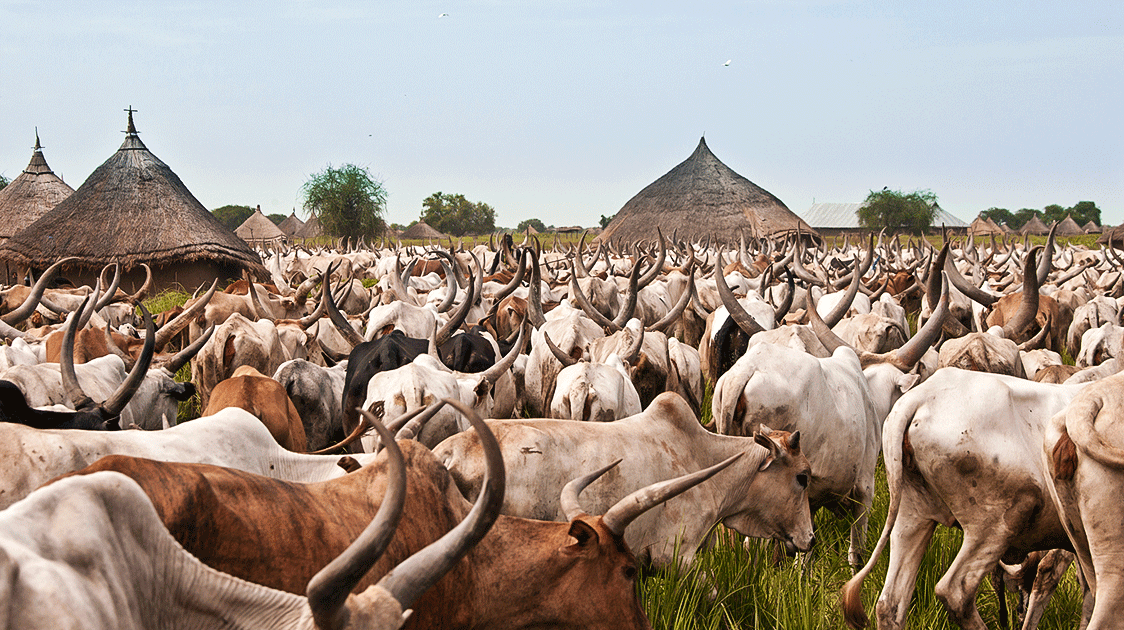
This unregulated transhumance movement escalated into the primary driver of erosion of the Chinko ecosystem, resulting in deforestation and desertification.
The situation became untenable, and all that remained was the infrastructure, a skeleton crew, and Simpson.
In 2014, African Parks signed a management agreement with the CAR government for Chinko, and Simpson remained as park manager.
Despite decades of devastating exploitation, remnant populations of key species persisted due to the immensity of the landscape.
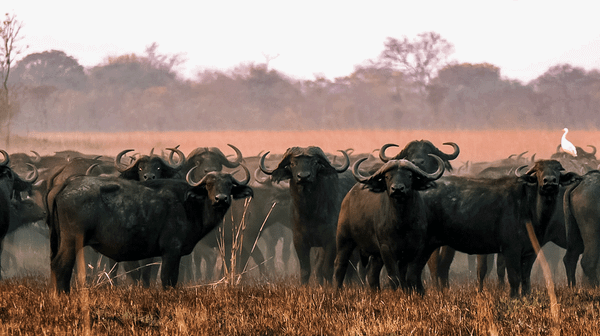
Most large wildlife had been reduced by over 80%, the local lion population had declined by more than 95%, and fewer than 100 elephants remained from tens of thousands in the 1970s.
The nearest government outpost was 250 kilometres away, along roads that wash out for half the year. There was no law enforcement presence of any kind.
By 2017, the security situation had deteriorated further. The Séléka coalition had fractured into rival armed factions competing for territory and resources across eastern CAR.
Militants attacked a nearby town, forcing more than 300 civilians, mainly women and children, into the reserve, where African Parks rangers sheltered them for over a year.

Armed poachers and herders moved through the region, rustling livestock, smuggling alluvial gold and diamonds, and poaching and trading in ivory and bushmeat.
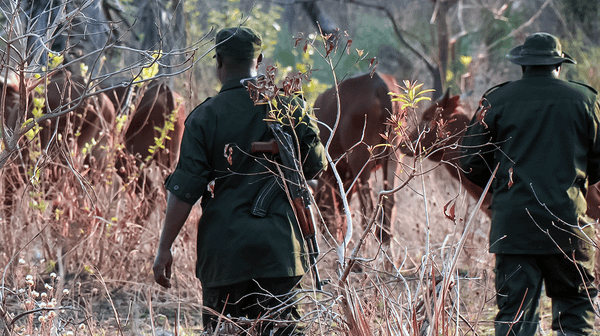
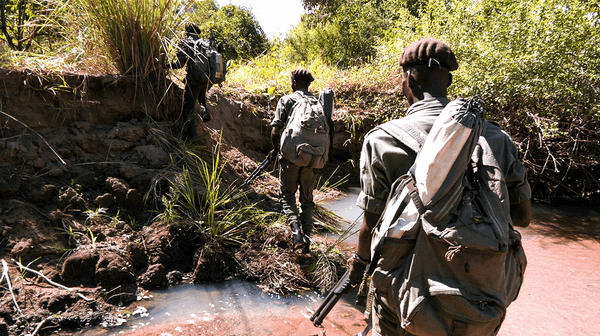
During these exceptionally difficult times, Simpson built a ranger force from the ground up, recruiting former poachers and herdsmen from surrounding communities.
Security improved enormously, and the use of firearms in community conflict around Chinko was almost eradicated.
A team of Transhumance Engagement Officers, recruited from local herding communities and known as TANGO agents, now works directly with pastoralists to promote sustainable grazing and respect for protected area boundaries.
The model recognizes that transhumance is the main driver of deforestation in the region and that enforcement alone will not solve the problem.
By 2024, Chinko employed over 350 nationals, the largest employer outside the capital, Bangui. The area free of cattle and active poaching expanded from 5,000 to over 26,000 km²
A revenue stream that doesn't need tourists
Funding is a perennial problem in conservation, and African Parks has turned to carbon credits as an alternative.

It is a revenue stream that is not dependent on camera-toting tourists, on donor cycles renewing, or on charismatic species generating media attention.
A forest absorbs carbon whether anyone visits it or not, and a grassland sequesters soil carbon whether it has elephants or not.
For protected areas in conflict zones, carbon may be the first funding mechanism that works.
The carbon credit project, co-developed with South Pole and certified under Verra’s Verified Carbon Standard and Climate, Community & Biodiversity Standards, generated its first sales at the end of 2023.
According to Mongabay, African Parks confirmed that it had generated USD 7.35 million in carbon credit revenue from Chinko by mid-2025.
The project’s monitoring report from March 2025 documented carbon savings of more than 1 million tons of CO₂ between 2021 and 2024.
The distribution of revenue is transparent and follows a structured model.
A dedicated Chinko Community Fund benefits approximately 170,000 people living around the protected area. Decisions on fund allocation are made by a committee drawn from civil society, traditional and religious leaders, and representatives of diverse interest groups.
Ten percent of carbon revenue flows directly to communities. The remainder supports park operations, staff capacity, and contributions to the national government, the kind of sustained, multi-stakeholder funding architecture that project-based grants rarely achieve.
French food company Bel is among the corporate purchasers of Chinko’s verified credits, funding conservation through their sustainability commitments rather than through traditional philanthropic channels.
This is important because it connects conservation finance to corporate supply chains, a revenue source that scales with market demand rather than donor sentiment.
A new currency for conservation
African Parks is developing a parallel instrument that may prove more effective in the long run: the Verifiable Nature Unit, or VNU.
The model addresses a limitation of carbon credits. REDD+ projects measure avoided deforestation and carbon sequestration, which are important metrics but are narrow in scope.
The full value of what a functioning protected area delivers: biodiversity, watershed protection, climate resilience and community livelihoods, is not captured.
A VNU is designed to represent the broader ecological value of effectively managed land, not just its carbon content.
The first VNU pilot was launched in Majete Wildlife Reserve, Malawi, where African Parks has more than 20 years of management experience.
Seven hundred and eleven VNUs were issued in 2024 and reissued in 2025, with initial transactions completed through philanthropic partners purchasing units to test the model.
Three additional large-scale projects are now underway in Odzala-Kokoua National Park in the Republic of Congo, Garamba National Park in the Democratic Republic of Congo, and Zakouma National Park in Chad.
VNUs for these parks, issued in 2025 and again in 2026, cover a combined area of 1.37 million hectares. The next phase will focus on scaling implementation into the surrounding community landscapes.
The design is intentionally simple. According to African Parks, the VNU is intended for regions with governance challenges and weak infrastructure, where the environment is most at risk and desperately needs funding.
The instrument does not require complex baseline modelling, which has caused problems for some REDD+ projects. It measures outcomes rather than counterfactuals.
Whether VNUs gain traction in corporate and institutional markets remains to be seen. The voluntary carbon market is worth billions.
A market for verified nature outcomes does not yet exist at scale.
But the logic is sound.
If we are serious about reaching the UN Convention on Biological Diversity’s 30×30 target, protecting 30% of the planet’s land and oceans by 2030, we need financial instruments that work in the places where conservation is hardest, not just where it is easiest.
The credibility question
The broader carbon market is under scrutiny.
The Kariba REDD+ project in Zimbabwe, once one of the world’s largest, was suspended in 2023 after investigative reporting revealed serious concerns, and Verra's own review later confirmed that 57% of credits were issued in excess.
That episode damaged confidence in REDD+ projects generally and raised questions about Verra’s oversight capacity.
Can it scale?
The story of Chinko is inspirational.
A landscape that was stripped of its wildlife through armed poaching, uncontrolled transhumance, and institutional neglect has been stabilized and is recovering.
The mechanism that made this possible was sustained, adequate funding, first from traditional donors, now increasingly from carbon markets.
Its remoteness preserved the habitat, and the carbon value of Chinko is directly linked to this.
The continuous tropical woodland, the undisturbed drainage system, and the forest-savannah mosaic stores the carbon sold on international markets.
The wildlife was decimated, but the ecosystem structure survived.
This is why carbon credits are viable here in a way they wouldn’t be in a landscape that had been physically converted.
But can this model scale beyond a single organization’s portfolio?
African Parks manages 24 protected areas in 13 countries. Africa has vast tracts of wilderness, and most of it is underfunded.
A single NGO cannot cover carbon and nature finance.
The model needs to become systemic, embedded in how governments, donors, and markets value conservation work.
Carbon credits have become an increasingly important funding mechanism for parks like Chinko. A market downturn could replicate the same vulnerability that tourism dependence created during COVID-19.
Diversification across carbon, VNUs, tourism (including safari hunting), government contributions, and traditional donor funding is imperative.
Zimbabwean native Zig Mackintosh has been involved in wildlife conservation and filmmaking for 40 years. Over the years, he has traveled to more than 30 countries, documenting various aspects of wildlife conservation. The sustainable use of natural resources as an essential conservation tool is a fundamental theme in the film productions with which he is associated.